Introduction –
At the end of 2024, I met Dan, who was an A320 Captain for a European Airline. Dan was a regular follower of my YouTube channel and X account, which started a conversation about meeting up and sharing my experiences. It’s always beneficial to meet people in aviation who possess a wealth of knowledge and understanding, as it allows you to improve your own.
This set up a conversation about a trip in G-ZANY, which was at risk due to the aforementioned issues of the aircraft being AOG. As my planned winter break began, the aircraft experienced an incident that required replacement parts before it could fly again. The one trip that had been planned in my diary was a fourth visit to the infamous German Bier Festival in Erlangen. Erlangen Bergkirchweih is one of the oldest festivals in Germany; it is similar to Oktoberfest but usually with better weather.
In the previous years, we had stopped in Prague, then the second year with a stop in Kosice, before heading to Nuremberg and last year, probably one of the most difficult trips I have flown since I got the Instrument Rating, with a lot of changeable weather to deal with, carrying 3 passengers over long distances
Planning –
Over the years, my pilgrimages to the Erlangen Bergkirchweih have evolved from scenic tours into complex logistical challenges. My first journey was a true celebration of touring, where I turned a simple festival visit into a European adventure with a weekend stay in Prague and a scenic return via Baden-Baden for lunch. I followed this up with a “thousand-mile journey to the edge of Europe,” pushing further east to Košice, Slovakia. That trip was blessed with benign weather and stunning views of the Tatra Mountains, proving the capabilities of the aircraft—and my oxygen system—over long distances.
In contrast, my most recent trip was a demanding reality check on IFR decision-making. What I intended to be a simple run to Germany became a complex puzzle of weight and balance management and severe weather avoidance. Instead of direct routings, I was forced to constantly replan, executing tactical stops in Rotterdam, Paderborn, Saarbrücken, and Le Touquet to safely navigate around slow-moving thunderstorms and heavy rain. It became a trip defined less by the destination and more by the rigorous airmanship I needed to exercise to get us there and back safely.

The original plan was to, for the first time, fly direct from the UK to Nuremberg. Stay two nights in Erlangen, then proceed back to the UK, with a caveat that if the usual strong westerly winds prevailed, we could stop for fuel on the return sector. We would be full tanks both ways to save costs, but there are some fuel saving measures, as well as taking longer, but more economical routes, to enable a direct flight. This is especially helpful in the Summer if weather conditions prevent a more direct routing.
The logistics for this trip are less hassle because we would be direct both ways, and would only need to plan in some contingency routes if the weather didn’t allow. The flight outbound would take place Saturday Morning and the return on Monday evening to allow for the maximum amount of stay.
Airport Choices –
The choice of airport for IFR flights is determined by several criteria, such as reasonable handling fees, accessibility (both customs and police), and a recently implemented restriction: Some airports do not allow aircraft categorised as Category A. Airports like Barcelona El Prat prohibit this, and in some cases, even though they are not allowed to, they do so informally and charge you outrageous costs. For the type of aircraft we operate, Jet A1 availability is not a problem at most major international airports.
Nuremberg EDDN –
There are two reasonable options: the first was IFR – Nuremberg Airport, the second busiest airport in Bavaria after Munich Airport and the 10th busiest in Germany, or the alternative was Herzogenaurach Airport, which was VFR. This year, flying into Nuremberg was different
Handling/Airport Quotations –
There were no quotations for EDDN, but it’s still prudent to check the fees before embarking on a trip or check with the GAT.
Airport Charges (airport-nuernberg.de)
Accommodation –
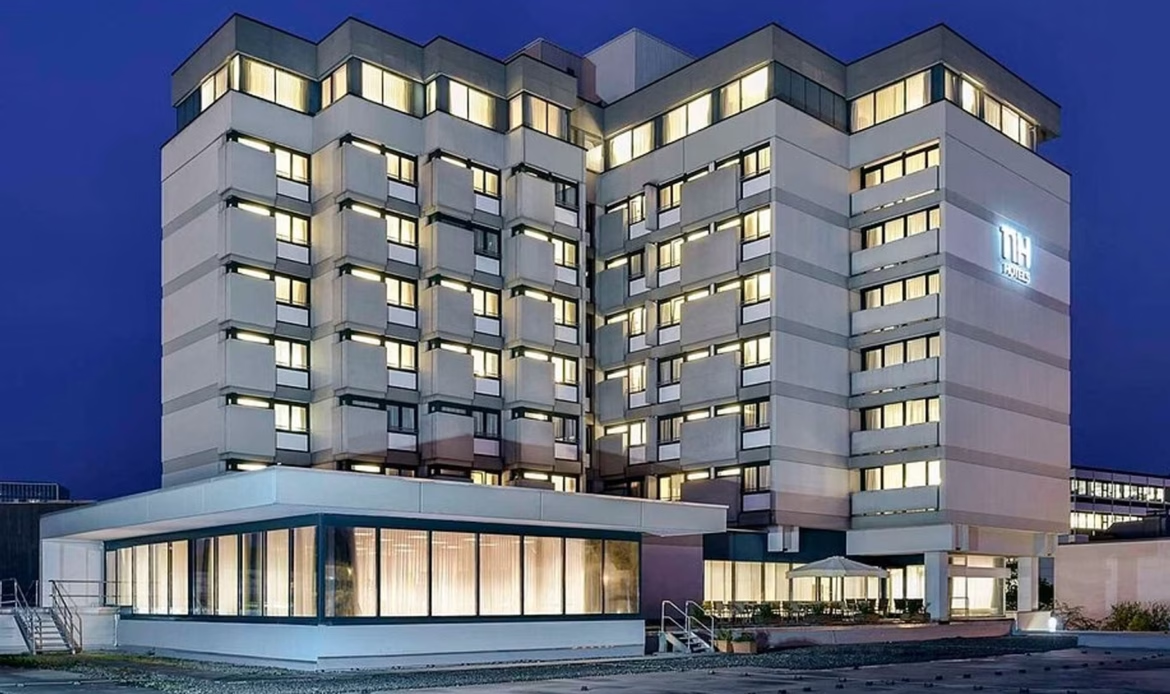
The NH Erlangen is a modern 4-star hotel located in central Erlangen, conveniently right by the city’s lively pedestrian zone, within short walking distance of many attractions, including the Conference Centre, university, theatre, boutiques and a shopping centre. The hotel is roughly 30 30-minute walk from the Berg.
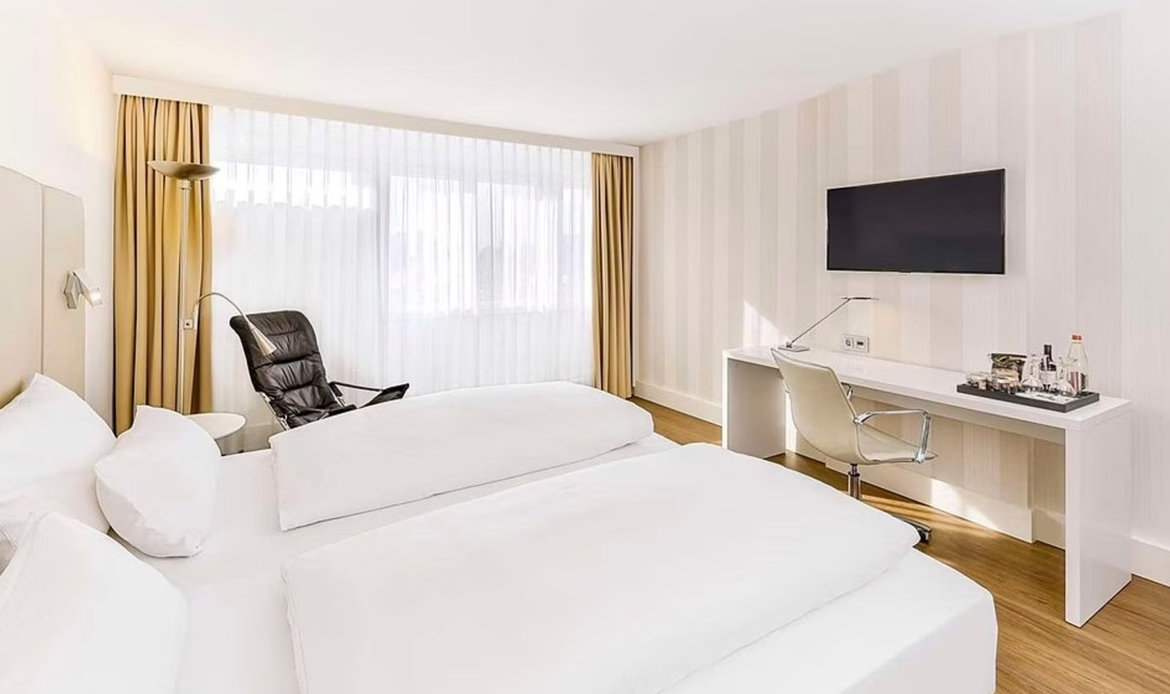
Comfortable rooms are designed for a restful night’s sleep, boasting a friendly bar serving drinks, snacks and meals, as well as a 24/7 fitness area and sauna – this modern hotel has everything you need.
Weather Forecast –
The forecast for Saturday wasn’t great; multiple fronts would have to be traversed, including an occlusion and a trough that would be reached by the top of the climb. Even stronger weather across mainland Europe was forecast with a cold front from Berlin to Bilbao and a trough south of Nuremberg. It was a hard choice of when to depart, but the usual caveat of stronger weather later in the day.
The departure time leaving the UK was key, depart earlier into the occlusion to avoid strong convection or fly over the top of the occlusion and see and avoid any convective weather as we arrived just after lunchtime.

TAF EGSS 070452Z 0706/0812 19005KT 9999 SCT048 BECMG 0706/0708 25010KT TEMPO 0706/0708 7000 RA SHRA BKN014 PROB30 TEMPO 0706/0707 4000 RADZ BKN009 TEMPO 0709/0711 7000 SHRA TEMPO 0711/0719 3000 +SHRA BKN014 BKN025CB PROB30 TEMPO 0711/0719 27015G25KT +TSRA TSGS PROB40 TEMPO 0719/0723 4000 +SHRA BECMG 0723/0802 31005KT PROB30 TEMPO 0810/0812 6000 SHRA=
TAF for London Stansted, Southend and Nuremberg on 7th of June 2025
TAF EGMC 070456Z 0706/0715 22010KT 9999 FEW009 SCT030 TEMPO 0706/0708 6000 RA SHRA BKN015 TEMPO 0709/0715 6000 SHRA PROB40 TEMPO 0711/0715 24016G27KT 3000 +SHRA +TSGS BKN015 BKN030CB=
TAF AMD EDDN 070634Z 0706/0806 22005KT 9999 FEW015 BKN030 TEMPO 0706/0710 SHRA SCT020 BKN030CB BECMG 0707/0709 24010KT TEMPO 0712/0716 24015G25KT SHRA SCT020 BKN030CB PROB30 TEMPO 0712/0715 3500 TSRA BECMG 0718/0721 21005KT BECMG 0804/0806 24010KT PROB30 TEMPO 0804/0806 SHRA BKN030CB=
The Journey to Bavaria –
The Journey to the airfield was an early one, having to leave home just before 05.30, a bus to London Bridge before taking a train to Westcombe Park so that Dan could give a lift to Stapleford, arriving by 7 am for an 8 am departure. The aircraft was refuelled the day before, and all the cameras were fitted, so it was just a case of checking the airframe, checking the oil, and ensuring the fuel levels had remained the same.
The aircraft was notably wet, which may or may not be important later – this was from the occlusion that had come overnight, along with the preceding days’ weather. It had been an extremely changeable period, similar to what I’ve documented on this BLOG, where the UK has experienced significant rainfall in the last two years, with 2024 being the 13th wettest year since 1836.

The weather from overnight had moved through a bit quicker, so we would have more time before crossing that weather, and could achieve a better flight level to see and avoid. Interestingly enough, there still was the odd shower about which looked fairly lumpy, but having the experience of Dan onboard, I knew we could easily navigate the airspace. It was Summer so I was surprised to get no SLOT.
We taxied to Runway 21L and departed near enough on time, with a left turn towards Detling [DET VOR] and on frequency with Thames Radar to await our entry into Controlled Airspace, quickly entering IMC before given further climb with a left vector. We were then turned back towards Detling and given a further climb before a shortcut towards Belgium. We got above the weather fairly quickly, but it did look very convective, and the forecast Thunderstorms in the afternoon looked like they would come to fruition.
Climbing through the weather fairly quickly gave us more rainfall onto the airframe, again, fairly important later. We were moving very quickly due to the strong tailwinds from the associated front and had to make a deviation to check the weather ahead that looked fairly ominous. The Golze weather system noted a lot of weather to navigate, but would mostly be a “See and avoid” principle, avoiding the most intense parts of precipitation.
There was a notable haze outside the aircraft, but we assumed this wouldn’t cause any icing issues, and with two pairs of eyes we checked quite regularly and did not see ice in the usual spots, on the front windscreen and or the wing. There was no loss in airspeed from icing on the pitot or from any airframe buildup. We reached the top of the climb within 30 minutes, fairly quick for FL150 and at max take-off weight.
As usual, with the top of climbs, I log the time to climb and usually start planning fuel endurance for the remainder of the flight based on full power setting to flight level cruise from take-off. Two things happened, one ATC gave us a route direct as we were nearing the edge of its airspace, and tw,o we had an audible alert of “Trim in motion”, multiple occasions later this was followed by “Pitch Trim”.

The only times I had experienced “Trim in motion” were during a high speed down the ILS and reducing power suddenly to reduce to approach speed. The only time I heard an audible alert for Pitch trim was when there was a faulty sensor on the electrical trim button on the stick. This felt like a reboot was required, but not any issues that would result in a divert situation.
The frequency was unusually busy, as it was approaching the peak summer season and was fairly early in the morning. We were also being interacted with quite often, with ATC giving us shortcuts, and approaching the front below us meant that we would have to monitor the situation very carefully. As this wasn’t really a checklist item, nor something I came across, I didn’t want to take away my attention from a fairly critical phase of this flight, navigating severe weather below. After investigating every single issue that could have caused these audible alerts, on the third attempt at checking for a possible solution, the autopilot disconnected with a noticeable nose up.
One of the things to bear in mind is that when you are up high, above all the weather, you sometimes need to check the issue before making a solid decision to divert because you need to know the weather picture and if it’s safer to continue to a VMC condition before diverting with a tech defect into solid IMC conditions, and in the case of this flight we had a 40 knot tailwind so we would reach better weather far quicker than descending into solid IMC or staying high up with a strong headwind.

Of course, if it’s a situation where it’s urgent and you need to be on the ground more expediously, then this is a different train of thought, but a radar check, knowing better weather ahead, fax charts showing better weather ahead, the decision to continue was far more important to have than to put ourselves in a situation that would be.
We continued up until Dan asked if we had full control of the aircraft, full control of the trim, which I did, but on further investigating the trim, I could not trim nose down more than an inch before it would reset to neutral, the same observation I made with the electric trim. After pulling the circuit breakers on the autopilot a few times, I decided enough was enough and approaching the next band of weather in the Frankfurt area, we would divert to Liege.
Some quick thinking, positive control of the aircraft and Dan’s assistance, we did a 180 to the south, followed by a further vector back towards Liege for an ILS approach. ATC were very helpful, but the ATC frequency was extremely busy, and this made it even more challenging. We were both thinking, this is not right, what could cause an issue that didn’t impact us in the climb out from London?
As we descended into Liege, ATC gave us some vectors to set us up for a right downwind for runway 22L, and as we were only 20NM away, this required a fairly steep descent, notably difficult due to the nose-up tendency. This wasn’t an issue, for now, and ATC did ask the question if it would impact us on the approach and landing, but we didn’t think so, as we still had full control of the aircraft.
As we were approaching the warmest levels, a few lumps and bumps at the boundary layer and the start of some IMC from the back of the cold front, but no issues with the trim. I looked at Dan and said, ” It’s back to normal.” He paused, looked at me, and I said, “Ice” – what could be the cause other than this? But how? Didn’t we notice any ice buildup?
We continued our approach to land, but elected to check the trim and how far we could move the controls. Dan also checked and acknowledged that it was in working order. With a long approach to land, we decided to fly a circuit at 1500-2000ft and check all controls before we landed, but then proceeded with the thought we could continue, as we had a) Sufficient fuel, b) full control movement authority and c) Autopilot engaged and in working order.
After a lengthy discussion with the controller, we flew to the right after overflying the airfield and remained in the circuit, continuing to test all functions of the autopilot. We informed them of our intentions and the last cleared point of our flight plan, which Brussels was happy for us to continue to. We negotiated a climb back into CAS as VFR in the weather forecast would probably not be ideal.
With a few step climbs into CAS, we quickly got up to FL80 and elected to stay at that level in the warmer air. The only issue would be the weather up ahead, and lots of rain showers within it. ATC gave us different waypoints to our flight plan and appeared to be heading due south of our original flight plan, overhead Frankfurt Hahn, rather than the routing over Frankfurt Main.
We kept a careful eye on the weather radar and tried for frequent updates, as we navigated through the front. It wasn’t ideal considering the ordeal we just had, but the aircraft was flying nicely, and we did icing checks very regularly with two pairs of eyes. The odd yellow return gave us light-moderate chop and the odd lift out of our seats, but it wasn’t too bad.

It was now time to recalculate fuel and look at the alternatives, including Hahn below, which was reporting some significant weather. Intermittently, we occasionally popped out of IMC and could see clouds much taller than us in the weather we were flying through. It was finally nice to get into some routine, despite the intense weather conditions and choppy weather, but with two pairs of eyes, we could focus on the flight now.
We were bouncing around in the tops now and requested with Langen Radar for further climb up to FL90 to clear some weather, but also to see the CBs forecast and currently near Nuremberg. This climb allowed us to start preparing for the arrival, and between us, a discussion of the clearest route towards Nuremberg. The routing took us toward Manheim before heading in an easterly direction towards Nuremberg.

TAF AMD EDDN 071014Z 0710/0806 25009KT 9999 FEW015 BKN030 TEMPO 0710/0716 24015G25KT 4000 SHRA SCT020 BKN030CB PROB30 TEMPO 0712/0715 TSRA BECMG 0718/0721 21004KT BECMG 0804/0806 24010KT PROB30 TEMPO 0804/0806 SHRA BKN030CB=
Updated TAF for Nuremberg on 7th of June 2025
We made some deviations around some build-ups with the focus on the wall of weather overhead the airfield. We elected to climb up to Fl100, which would only be required for a short time, as the rest of the route was thin layers of clouds before we reached the airfield. ATC seemed to be vectoring us for a right downwind for Runway 28, following the RNAV STAR into EDDN.
| TIMESTAMP | METAR OUTPUT |
| 07/06/2025 11:50-> | METAR EDDN 071150Z AUTO 25008KT 230V290 9999 FEW019 BKN040 17/14 Q1013 RESHRA TEMPO 27015G25KT SHRA BKN020TCU= |
| 07/06/2025 11:20-> | METAR EDDN 071120Z AUTO 25007KT 200V280 9999 +SHRA FEW033 SCT048 FEW///CB 16/15 Q1012 TEMPO SHRA= |
| 07/06/2025 10:50-> | METAR EDDN 071050Z AUTO 29010KT 9999 +SHRA FEW031 SCT042 SCT///CB 16/14 Q1012 TEMPO SHRA= |
The frequency was fairly busy with traffic being vectored around the weather, A WhizzAir Malta, a Ryanair and a Corendon Airlines, which were all attempting approaches and breaking off. According to the flight plan, we would have 15-20 minutes of flying before reaching the IAF or the point where ATC would vector us for an approach, so we elected to hold to the north west of the aerodrome whilst the others appeared to be holding due south east on the other side of this weather.
The airport reported that the RCC (Runway condition code) was 2. Which is Slush or standing water. This was quite notable as the shower, or Thunderstorms had dumped approx 5mm of standing water on the runway, which exacerbated the situation with aircraft holding away from the airfield.

After some debate with ATC on what runway we could use, knowing that there was a clear route to Runway 10, other aircraft started also requesting this approach into Nuremberg, but ATC stated they had multiple departures that were wanting departure and that the runway in use was Runway 28. After multiple issues with aircraft being unable to approach the airfield due to weather, and our suggestion that the route was clear towards runway 10, the airliners made a successful approach towards Runway 10.
ATC routed us to waypoint DODAS, which coincidentally is on the STAR and held there for a brief moment whilst the airliners commenced the approach into Runway 10. Dan taught me one important lesson that I will take away from this moment, and that’s you must listen carefully to what other aircraft are doing, as it helps you make decisions based on that situational awareness. Our initial descent to remain VMC was 5000ft as ATC could not descend us any further.
This had been a fairly difficult flight and was almost 1 hour longer than the planned time. Frustratingly, this meant any fuel we had in addition would require a bigger uplift in Germany now, as we burnt through our additional uplift in the precautionary diversion and some holding fuel. This wasn’t an issue, but more an expensive flight that was unnecessary and a fuel uplift that would be some £40 more expensive.


After one hold at DODAS, we were vectored towards the IAF for approach into Runway 10, and the weather ahead was absolutely awful; there would have been no safe way for us to approach in that direction, considering aircraft with multi-million-pound weather radar systems couldn’t navigate the weather to land on Runway 28 and elected for Runway 10 just shows that we made the right decision.
A fairly bumpy but fast approach due to the tailwind, with the associated front, we landed on the runway with multiple bounces due to being just a tad too fast, a common problem when trying to land such a floaty aircraft with a big wing with a tailwind. We vacated via taxiway C, taxied along M3, J, S4 and T2 for our usual parking spot. The aircraft that landed before us had only just started deboarding.
It was time to tidy up the aircraft and head to the terminal to enter Schengen and have our passports stamped in, something that will soon change when a visa is required to enter Europe. There wasn’t much in the way of aircraft here, and we were parked very close to the fence of the T2 parking area – but we had a good opportunity to quickly check the controls of the aircraft before leaving it for a few days. We would give it some testing in a few days before departing back to the UK, but for now, it was time to enjoy.
After a quick stamp and check of the passports, we headed to the GAT for check-in with the staff and to have a debrief whilst we awaited the taxi to Nuremberg.

ATC Flight plan and route flown –
N0130F150 LAM L10 DVR L9 KONAN L607 UBIDU L984 RUDUS DCT CINDY L603
Filed ATC flight plan for EGSG-EDDN
DINKU N869 LETKU LETKU1V

Alternate Routes for Weather –
Due to the changeable weather conditions forecast in the week before, I had considered planning some alternative routes if the weather was worse in particular areas. One route took us via Amsterdam, then down via Dortmund and Paderborn, avoiding big amounts of airspace near Belgium and the western parts of Germany. An alternative route, if the weather were only bad over Kent, would take us out via BRAIN, then across into Belgium
N0128F130 LAM DCT BRAIN M197 REDFA L620 SONEB Z841 MEVEL/N0128F110 Z841 TUVTI/N0126F110 M170 BARAG Z858 ESADU P12 WRB Z190 VELIS T194 DODAS DODAS1V
ALTN Flight Plan via EHAA (Amsterdam FIR) – EGSG-EDDN
N0126F110 BRAIN P44 DAGGA/N0126F150 P44 CLN/N0130F150 L608 LOGAN/N0130F110 L608 SASKI/N0126F110 L179 HELEN DCT BUB DCT SPI DCT ARCKY L607 SUXIM/N0126F140 L607 UBIDU/N0129F140 L984 RUDUS DCT CINDY/N0129F130 L603 DINKU N869 LETKU LETKU1V
ALTN Flight Plan via North Sea (LOGAN) & BRUSSELS – EGSG-EDDN
The Fourth Berg Visit –
The taxi journey from the airport to Erlangen is approx 20-25 minutes. The journey is naturally quick as the airport is to the north of the city of Nuremberg and the slip road from the nearest motorway is less than 2 mins drive away. We arrived at the hotel, the second time in a row that I’ve stayed at this location, due to its convenience of being less than 30 seconds from the Hauptstraße (The Main Street) that takes you all the way up to the Berg.
We both had a further debrief in the hotel of the events of the day, and a required local beer from a nearby supermarket was required before we headed to the Berg. My friend Stefan did not attend this year’s Berg, unlike the previous 3 and it would be the second one I haven’t taken him on. For Dan, this was his first time at a beer festival and in Erlangen itself. There’s plenty to do in this town, being a university town with plenty of tradition and plenty to drink and eat outside of the festival. There is a list available here and here.
Whilst there are plenty of places lined up and down the main street, one place I’ve never tried, and there are many different varieties of them, was the Original Berliner Döner Erlangen, offering multiple options of the ability to experience an authentic, freshly prepared Berlin Döner. There are also many shops and bars along here for you to get involved with the street drinking that takes place. The practice, often referred to as “Wegbier” (path beer) when consumed while walking, is a common cultural norm.
As always, when you enter the Berg, you have to explore the place. As I’ve commonly done from one end to the other, a street named An den Kellern is where all the magic takes place. I tend to walk down to Erich Keller and base myself down this end, it’s far away from the funfair and has a good amount of shared seating and music to provide a huge atmosphere. Whilst you can try all the Kellers here, this one I’ve been nurtured into drinking and tastes good.
This year, we had pretty much two days of drinking before flying home on Monday. With a visit to the Brasserie for lunch on the Sunday, for good measure, before another session of drinking, a traditional Curry Wurst to assist the start. However, I was very keen on booking a dinner this year at a traditional restaurant, which we struggled with on a Sunday. We found Kitzmann Bräuschänke, which is hearty German food and a good tradition.
Whilst initially they didn’t let us book, they did say that at 8 pm we could come back, and we should have a space available for us. The Berg empties out a lot later at 11 pm, so the chances of us falling foul and missing a spot here would be slim.


We headed back to the Berg for our last day, the weather was a lot cooler than my previous years, similarly to last year, very convective but a lot cooler than the first two. We headed to a stall in the Berg that boasts the longest sausage at a foot long. This, of course, comes with some curry sauce on top in a bun, not forgetting another portion of Pommes. We went to our usual spot and consumed some more Beer in moderation, bearing in mind an early night.
In the distance were strong showers, but none that would enroach the Berg. We headed back to our restaurant for some good food, a different type of local beer and a Jägerschnitzel (Schnitzel with Mushroom Gravy). We also both tried a Kartoffelklöße (German Potato Dumpling). Dessert, we both were pretty full but decided to share some Hausgemachte fränkische Apfelküchle (Battered deep fried apple slices coated with sugar and cinnamon, topped with vanilla ice cream and whipped cream)
It was 21:30, and it had been a long weekend; we wanted to go back to the Berg tomorrow and visit it sober and on its last Monday before closing for the year. It was forecast to be a fairly long flight back to the UK due to strong headwinds from the trough situated over and close to the UK. There was just no escaping the headwind.

The next morning, we packed and then headed out to the Brasserie for a late Brunch after checking out of the hotel and storing our bags at reception. This was followed by a stroll to the Berg in order to witness it one last time and take in all the action that was about to happen without us. It would have been nice to stay just one more night, but ahead of us was a lengthy flight, and that was the first big trip of 2025.
Because the winds kept changing, I did not confirm the route till on the morning, and did last minute preperation for the flight back on the taxi to the airport. We were leaving the hotel at 2 pm for a 5 pm departure. This was to give us plenty of time for a quick check of the movement of the control surfaces, and if we were to have any issues, have them resolved before departure by a local engineer, or if that wasn’t possible, find alternative transport home to the UK.
Planning the return –
For the return sector, similarly to the outbound, we had alternative routes planned – this was to ensure we landed back within a reasonable hour, but also ensured we had suitable routings for the weather. One was planned to route via Frankfurt, but then avoid the Dover area by crossing the North Sea back to the UK. The other was a more northerly routing via Amsterdam, then across to the UK. The filed flight plan was the quicker routing via Frankfurt and then across to Detling [DET VOR] into Stapleford.
N0131F160 SUKAD1G SUKAD Y165 EDUDU Y101 OSBIT L984 BOMBI Z75 NOKDI Z104 OLGIL Z656 IDOVI Z104 GESLO N852 LNO L607 GILOM M624 NIK L179 LAM/N0117F160
ALTN Flight Plan via Frankfurt and L179 (North Sea) – EDDN-EGSG
N0127F120 SULUS1G SULUS L604 MASEK Z52 ARPEG Z850 HMM L602 RKN L980 TENLI/N0127F100 L980 LAM/N0117F100
ALTN flight plan via EHAA (Amsterdam FIR) – EDDN-EGSG
Weather Forecast –
The weather for the return sector was notable in that high pressure was centred over both Hungary and the Balearic Islands, with strong Atlantic systems out in the distance. The jetstream was nearby, so strong headwinds meant a fairly long flight time back to the UK of just over 4 and a half hours. High pressure after many months of consistent rainfall meant hazy visibility in the strong peak-Summer sunshine.

TAF for Nuremberg, London Stansted and Southend on 9th of June 2025
TAF EDDN 091100Z 0912/1012 28007KT CAVOK BECMG 0916/0918 VRB02KT TEMPO 1000/1006 11005KT BECMG 1009/1011 25008KT=
TAF EGSS 091058Z 0912/1018 24010KT 9999 SCT035 BECMG 1002/1005 BKN010 TEMPO 1005/1008 4000 -RADZ BKN006 TEMPO 1008/1012 7000 -SHRA BECMG 1009/1012 SCT025=
TAF EGMC 091101Z 0912/0921 23012KT 9999 SCT045=
Return Flight to UK –
Once all the planning had been completed, it would just be a quick, cursory check of the flight route and weather ahead, along with any NOTAMS and a discussion on the route alternatives, there were many, and the weather was forecast to be generally good, but it’s important to stick to habit and not forget the basics. Whilst FL160 was filed, for the most optimum routing, a slightly quicker flight time would be had at FL140, something we would negotiate with ATC.

We went to the Aircraft and conducted the usual pre-flight checks before departure, refuelled and then headed back to the GAT to pay for the landing, parking, and other charges as required. One thing we did differently was check multiple times the function of the trim, because of the incident on the way to Germany, nothing was noteworthy, and everything was intact as you’d expect it to be. We were happy that we could clear customs and passport control and head back to the UK.
We headed back to the aircraft after one last use of the toilet, got in our seats and checked all the doors were secure. On the view of the left wing at the gate was a mother and her son watching as we departed, remembering that once upon a time I was that person dreaming in awe of the pilots who flew before me. We taxied out to the runway and departed Runway 28 for the 4 and a half hour flight to the UK.
With not much runway required, a fairly breezy westerly we rorated into the hazy sky and within minutes were climbing through the haze with a good rate of climb, with the usual initial flight level till we get to Langens airspace. We got a nice shortcut away from the SID before being handed over to the next sector. As usual, that sector would climb us up to FL140, our final requested cruise for today.
Flying conditions were pretty smooth today, despite being the hottest time of the day, with very few thermals being encountered, and so we were pretty happy with that and continued with a further shortcut or two, lining us up for a flight south of Frankfurt Main. This was a complete deviation from the flight plan, but it is expected as ATC routes you away from any arrivals or departures from the busy airport.

The winds were pretty strong, some 39 knots – a little bit more than forecast, so a quick request to Langen, whom couldnt grant initially, and after a short delay, a request to Frankfurt Director was quickly declined due to high traffic levels below us. Below these levels, routings with the most efficiency to form the bulk of Germany, the Czech Republic and Austria usually route via this airspace, including flights to Turkey and Greece. The lower levels are mostly forbidden to traffic due to the complex arrival procedures below FL140
Passing Liege after 2 and a half hours, it was interesting to remember what happened a few days ago on our way to the Berg, an important thought for how aviation can give you memories wherever you fly – a rather uncanny reflection of time. We were getting shortcuts galore, but more of those that favoured ATC, but we were forever chasing a better ETA back to the UK and spoke to ATC about a descent which was additionally refused by Brussels Control due to our routing over the main airport.

Once clear due west of Brussels, ATC gave us descent to FL120, but this didn’t improve much except 2 or 3 knots, as winds were similar – in fact, the higher TAS at FL140 or maybe even FL160 would have probably shaved 5-10 minutes from the flight time. After 3 hours 30 minutes, we were coasting out over Northern France and handed over to London control, who, as usuall were pretty damn busy.
It was the Home stretch, but damn was the weather hazy in the UK. We stayed at FL100 till almost Catnebury before being given a further descent and handed over to Thames Radar, whom issue further descents and vectors towards Stapleford. We set ourselves up for a left base for Runway 21L, with an expeditious approach and landing just after 19.30 after almost 4 hours and 25 minutes flying time.

ATC Flight plan and route flown –
N0131F160 SUKAD1G SUKAD Y165 EDUDU Y101 OSBIT L984 BOMBI Z75 NOKDI Z104 OLGIL Z656 IDOVI Z104 AGBUL/N0131F120 Z104 LULAT/N0127F100 Z104 TIPUT/N0125F100 DCT SPI DCT GILOM L607 KONAN L9 DVR L6 DET
Filed ATC flight plan for EDDN-EGSG

Conclusion –
Doing the trip direct was fun; it wasn’t as good as multiple legs and exploring other places, but it worked out well in the time we had, a short weekend away rather than a long weekend away from home. It’s the first time I’ve flown direct both directions, but more importantly, a trip with multiple steep learning curves.
- A rain soaked airplane could cause issues when climbing into cold air aloft
- Decision-making is a continuous process
- The checklist needs to include the autopilot issues in the Abnormal Operations (The KAP140 manual has Pitch Trim/Trim in motion) as a subtitle.
- With the weather at the destination airport, active listening is key to building situational awareness. This can be said for all phases of flight.
- Flying with more experienced pilots is definitely desirable, as I’ve learned on previous trips with Stefan. It doesn’t just build confidence, it builds knowledge
Having a strategy, alternative plans and the information to hand is always beneficial for a safe flight – being ahead of the aircraft is always prudent, especially in the demands of IFR, that of one without a FIKI aircraft or pressurisation.

Nuremberg Airport Costs –
The final bill was split into the following;
Nuremberg Fees
- Take-off charge €9.35
- Parking charge GAT €27.84
- GAT-Basic fee up to 2,000kg MTOM €24.95
- Emission Charge – €1.04
- Credit Card Expenses €3.01
Sub-Total: €78.19 incl. VAT (£66.04)
Jet A1 Uplift: €257.75 EUR (£218.16 (100 Litres) @£2.18 litre
Sub-Total: €335.94
Erlangen Costs –
Food, Drink & Leisure Costs: £213.49 (Food/Taxi’s split amongst us)
Accommodation Costs: £89.50 per night per person
Total Accommodation Costs: £358
Sub-Total: £571.49
Flying Costs –
Aircraft Charges: £1801.93 (@ £204 per hour (08 hours 50 minutes flown))
Airport Fees: £66.04 (As above)
Nav Charges: £33.00 (DFS Nav Charges)
Oxygen Refill – £25.00
JetA1: £218.16
(Wet Rate drawback) Credited £94.50 (-) (GZANY) (100 litres at EGSG rate) £0.945
Total Cost –
Total Costs (Non-Aviation): £571.49
Total Costs (Aviation): £2049.63
Total Costs (All): £2621.12
Version 1.1 – Last Updated 18/02/26
Aircraft –
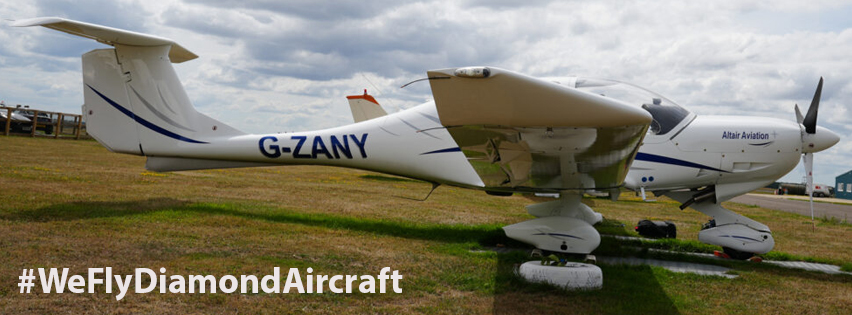
The aircraft is a DA40 TDI, which uses a Thielert “Centurion” 135 hp (101 kW) diesel engine and burns diesel or jet fuel. It has a constant-speed propeller and FADEC (single lever) engine control. G-ZANY is based at Stapleford Aerodrome, Essex, UK and was delivered new in 2003.
Read more about the aircraft on the dedicated page
Supporting the YouTube Channel –

Support the YouTube Channel –
Welcome to The FLYING VLOG…
I am a current PPL(A), SEP (LAND), IR(A) SE/SP PBN, IR(R) & Night holder. Flying around the world, exploring its hidden treasures. Taking pictures and vlogging the journey, I hope I can provide you with an oversight of my progression as I develop my skillset and airmanship in exclusive videos on my YouTube channel.
Now flying IFR in the Airways of Europe & beyond. Bringing you an exclusive niche on YouTube, flying in the same skies as commercial airliners.