Introduction –
Coming back into Amsterdam Schiphol feels a bit different this time, mainly because this is only my second visit as a pilot. Amsterdam has always been one of those airports I’ve wanted to get right, busy, complex, and properly alive from the moment you arrive. The first attempt didn’t quite go to plan thanks to the weather and cancellations, so this return feels like unfinished business. There’s something hugely satisfying about lining up the arrival into one of Europe’s biggest hubs, knowing how much coordination and planning go on behind the scenes to make it all work. Schiphol isn’t just a gateway to the city; it’s part of the experience, and for a quick 24 hours in Amsterdam, it felt like the perfect place to come back to and do it properly.
Whilst Amsterdam Airport and handling are more expensive, the shorter flight time helps balance things out. After just wrapping up a big trip to Germany, it made sense to keep this one a bit tighter and more efficient without losing out on the experience. Amsterdam gives us plenty to do once on the ground. great food, easy wandering, and top-tier spotting at Schiphol, all without needing a long sector to get there. When you add it all up, the time saved in the air makes the higher costs easier to justify, and Amsterdam still delivers exactly what we were looking for.
Planning –

Planning a short stay/hotels
With this being a short stay, the plan was always to keep things simple and central. Amsterdam works well for that, with good transport links, walkable areas, and no shortage of hotels that suit a quick turnaround without feeling rushed. Rather than trying to cram too much in, the focus was on location and convenience, making the most of the limited time on the ground. A shorter flight meant more usable hours in the city, which makes a big difference on a 24-hour trip and helps justify choosing somewhere like Amsterdam for a quick reset.
The problem with airport pricing this year
One of the bigger challenges this year has been airport pricing, and Amsterdam is no exception. Handling, parking, and general airport costs at Amsterdam are definitely on the higher side, and it’s something that has to be factored in early during planning. That said, the shorter flight time helps claw some of that back; less time in the air means savings on fuel and overall flight time costs. When you weigh that against what Amsterdam offers in a short window, it still stacks up as a solid option, even with the rising costs that seem to be hitting airports across Europe this year.
Airport Choices –
The choice of airport for IFR flights is determined by several criteria, such as reasonable handling fees, accessibility (both customs and police), and a recently implemented restriction: Some airports do not allow aircraft categorised as Category A. Airports like Barcelona El Prat prohibit this, and in some cases, even though they are not allowed to, they do so informally and charge you outrageous costs. For the type of aircraft we operate, Jet A1 availability is not a problem at most major international airports.
There are a few airports/aerodromes that you can use to enter and exit the Schengen Area if you are staying in Amsterdam.

EHAM Schiphol –
The primary international airport that serves Amsterdam. Situated 5.6 miles southwest of Amsterdam, it is the busiest airport in Europe concerning aircraft movements and the third busiest airport worldwide for international passenger traffic. It features a separate GA terminal that is perfect for IFR arrivals or departures for an international flight, in addition to several runways with different configurations for arrivals and departures.
From Schiphol, rail service to Amsterdam Centraal and the rest of the Netherlands is convenient. From Schiphol, Canadaweg, take the 191/181 bus to the GA terminal or take a taxi to get to the central terminal area.
EHRD Rotterdam –
Rotterdam The third busiest airport in the country, The Hague Airport serves the second-biggest city in the Netherlands. The airport features a Vliegclub that can handle international customs and immigration as well as general aviation aircraft weighing up to 2000 kg. According to the Netherlands’ AIP, for security purposes, all general aviation aircraft arriving at Rotterdam The Hague Airport must undergo approved handling.
It’s perfect for an international flight’s IFR arrival or departure. The only drawback is that it takes between one and two hours to get to Amsterdam Centraal.
EHHV Hilversum –
Although the airport is listed as an entry/exit point on the customs website, it only has three grass runways and is not equipped with instrument procedures for IFR flying.
EHLE Lelystad –
By public transport, Lelystad is 43 miles from Amsterdam and can be reached in about 2 hours. Listed on the customs website for entry/exit, it is the largest general aviation airport in the Netherlands. The airport can serve as a backup for Amsterdam if necessary because it has instrument procedures.
IFR OPS 24 HR PPR via operations(AT)lelystadairport.nl is what the AIP says.
Handling/Airport Quotations –
The choice of airport for this trip was always going to be Amsterdam Schiphol, driven first and foremost by logistics, but also by how much sense it makes as a focal point for convenience. From flight time and airspace structure to ground transport and access to the city, Schiphol ticks a lot of boxes for a short, efficient stay, making it the obvious base for this trip.
There are two Ground Handling agents for General Aviation at Schiphol Avia VIP and Jet Aviation Netherlands.
AIP
The Dutch AIP is available as an eAIP through the Luchtverkeersleiding Nederland (LVNL) AIS publications (lvnl.nl)
The airport is divided between two locations under the AIP. In areas where general aviation is allowed, Schiphol-Centre operating H24 and Schiphol-East operating hours of 0530-2230 (0430-2130) require PN from ground handling providers.
General aviation must apply to ACNL for the assignment of available ad hoc slots before landing and taking off at Schiphol Airport, and waiting for clearance. In theory, general aviation is prohibited from operating at night between 2200 and 0600 (2100-0500).
The general aviation apron, Kilo Apron (K), is situated alongside Runway 22/05.
Avia VIP
Since my previous experience with AviaVIP during my 2024 visit, they were the obvious first choice for handling at Schiphol. From my research online, they remain one of the best options for light GA operations at the airport. The process is straightforward and only requires a few basic details. I also provided a copy of the aircraft’s noise certificate, which is a standard requirement at most major international airports. AviaVIP uses the MyHandling system, so once your details are submitted, you can expect a few confirmation emails, and everything is neatly organised from there.
This is the quote received for a DA40 that will arrive and depart IFR after a 24-hour stay.
Quotation from Avia VIP
This is an estimate for a 1500z landing on 15th June 2025, and a 1700z departure on 16th June 2025, with 2xPOB (one passenger and one PIC). IFR would be used for both the flight’s arrival and departure.
Avia VIP FBO Fees
- Basic Handling €150
- Sunday Surcharge (Handling) €75.00
- Admin Fees (Airport fees) €41.76
Sub-Total: €266.76
Amsterdam Schiphol Fees
The airport fees have substantially changed, increasing from 2 nights at €147.69 to €278.40 for a 24-hour stay. With landing fees and start fees increasing substantially. But comparing this to airports of similar scale, the fees are minuscule in comparison.
Airport Fees €278.40
A breakdown is available here
IFR SLOT
According to the AIP, IFR flights into Schiphol require coordination. The handler can make arrangements using the IATA SSIM standard, and if you are travelling on Avia VIP, they will provide you with information through My Handling. For each relevant sector, include the EHAM (number) in ITEM 18 of the flight plan following (RMK/).
Accommodation –
Accommodation in Amsterdam in 2025 is noticeably more expensive than in previous years, and it was one of the first things I spotted when planning this trip. Hotels I’d previously considered reasonable had crept up in price, particularly those right in the historic centre. On an earlier visit, I stayed around three miles outside the city centre in Oost at the Leonardo Royal Hotel Amsterdam.

For my most recent trip, however, I decided to try something different. Rather than paying significantly higher central rates in 2025, I booked the Leonardo Hotel Amsterdam Rembrandtpark. Located next to Rembrandtpark and slightly closer to the heart of the city, it felt like a smart middle ground. It was modern, comfortable and far better priced than many of the canal-side options I had looked at. The biggest advantage was that it remained easily walkable into central Amsterdam, meaning I didn’t feel cut off from the action, yet I avoided the premium that comes with a postcard-perfect postcode.
The Executive King Room has a breathtaking, panoramic view of the city. This room includes a king-size bed, a wide sitting area, a desk, a minibar, free Wi-Fi, air conditioning, and a flat-screen television. The bathroom has both a bath and a shower.
One of the standout features is Floor 17, the hotel’s rooftop bar and restaurant. With panoramic views across Amsterdam, it’s the perfect spot for sunset drinks or a relaxed dinner above the city skyline. On a clear evening, watching the sun dip over the rooftops from up there feels like a hidden bonus you wouldn’t necessarily expect from a hotel slightly outside the historic centre.

Rooms are bright and spacious for Amsterdam standards, with big windows overlooking either the park or quiet residential streets. The beds were super comfy, the bathrooms were modern, and the complimentary Wi-Fi was reliable. There’s also an on-site restaurant and bar, so breakfast before heading out, or a casual dinner after returning, was really easy without having to wander back into the centre just for food.
If there’s one takeaway from visiting Amsterdam in 2025, it’s that location flexibility really pays off. Staying just outside the immediate centre, whether in Oost or near Rembrandtpark, still gives you easy access to everything the city has to offer, but without the eye-watering price tag that now comes with many central hotels.
Another major plus is how easy it is to get around. The hotel is well served by tram and bus connections, making travel into the city centre quick and straightforward. Even better, connections to Amsterdam Airport Schiphol are easy and efficient, which is ideal for an early departure or late arrival, something I always appreciate when on my adventures.

GENDEC EU –
Gendec.EU (originally Gendec.NL) was developed by CloudAviation to reduce the extra work that comes with administration for pilots in general aviation. You can draft and send a General Declaration (GenDec) to the Dutch Border Force (Koninklijke Marechaussee) using this website.
Information is saved for later use, making submission simple. This generates a PDF that you may email to the handling agent for their records and to facilitate access to and from your aircraft through the Dutch border. In addition, once your flight is modified or cancelled, there is no requirement to update or withdraw the filed GenDec. Because of a deal with the Dutch Border Police, just postponing or cancelling your flight plan will notify the border police.
Weather Forecast –
On Sunday 15 June 2025, the synoptic chart showed a classic unsettled Atlantic setup over the UK and nearby Europe, with a low near Iceland, trailing fronts and troughs southward, plus smaller lows over the British Isles/Channel/North Sea driving a moderate westerly to northwesterly flow (surface winds 8–14 kt at spots like Stansted and Southend, up to 14 kt at Schiphol). Isobars suggested breezy conditions, with scattered showers tied to troughs and daytime heating in a polar maritime airmass, perfect for isolated showers in the afternoon/evening. Overall, very flyable mid-June weather.

TAF EGSS 151102Z 1512/1618 25008KT 9999 FEW045 PROB30 TEMPO 1512/1514 7000 SHRA PROB30 1602/1607 8000=
TAF for London Stansted, Southend and Amsterdam on15th of June 2025
TAF EGMC 151359Z 1515/1524 27010KT 9999 SCT045 PROB30 TEMPO 1515/1517 7000 SHRA=
TAF EHAM 151108Z 1512/1618 28014KT 9999 FEW025 BECMG 1519/1522 23005KT BECMG 1606/1609 30011KT=
The Journey to Amsterdam –
Vanessa had already spent the morning flying a Cessna 152 as part of her PPL training, so by the time we were ready to depart for Amsterdam at 13:20Z, she was already buzzing from the experience. It was one of those days where the air seemed full of possibilities, and knowing she’d just had her own hands on the controls made the upcoming flight feel even more special.

One thing worth mentioning right at the start is that we’re not getting away exactly on time. We end up about 12 minutes late while waiting for our release from Stapleford Radio, something that happens fairly often, so we’re finally airborne at 13:42 instead of the planned 13:30. Off-blocks were at 13:20 with a calculated take-off of 13:30, so the delay isn’t huge, but it’s enough to catch our attention given we have a 15:00Z slot booked at Schiphol. It immediately adds a bit of pressure to keep things moving efficiently and makes the rest of the flight feel a little more time-critical than originally planned.
As we entered controlled airspace, the busy frequency made it clear this was going to be no simple climb. We planned this departure carefully to stay ahead of the weather, but the climbout turned out to be more challenging than I expected. There were murky patches, towering cumulus (TCU) scattered across the horizon, and the odd shower (SHRA) to dodge. It wasn’t dangerous, just one of those climbs that keeps you fully alert, checking instruments, adjusting headings, and keeping a close eye on traffic. Once we cleared the worst of it, we could finally breathe a little and enjoy the process of climbing out.
Our departure route took us towards Clacton, but with the LOGAN2A STAR for arrivals into Stansted sitting directly above on the M197 airway, there was constant interaction with inbound traffic. London ATC kept us on our toes, issuing multiple stop climb instructions to keep us clear of the arrivals and maintain safe separation. It was a fascinating insight into how much coordination goes into managing intersecting flows of traffic, and it made the climbout feel more like a full-on operational challenge than just a simple departure.

Climbing to FL150 made a huge difference. The clouds thinned out, the air smoothed, and the views started to open up beautifully. You could see for miles once we broke through the top layer of cloud, and it’s always satisfying when a tricky departure transitions into a calm cruise. There’s a particular sense of relief and reward when the sky clears above you after a busy climb, and the contrast between the busy airspace below and the clear skies ahead was striking. That’s the most fascinating thing about flying in and out of one of the world’s busiest airspaces.
London Control then cleared us on towards REDFA, marking the start of our arrival into Schiphol. The frequency was still busy, but it finally gave us the breathing space to settle into the flight properly. With the climb complete and the aircraft trimmed, it was a good opportunity to review fuel planning, check the latest weather ahead, and make sure everything was lining up as expected for the arrival. After the earlier workload, that moment to pause, plan, and get ahead of the next phase of the flight was very welcome.
Just before REDFA, we were handed over to Amsterdam Radar and had a listen to the latest ATIS to see what we were working with. Even though 18R was the runway in use, I was still expecting Runway 22, which is usually where general aviation ends up at Schiphol. That’s been the case on previous trips, and the weather on the day backed that up. Winds were favouring a south-westerly setup, visibility was good, and conditions were generally stable, so Runway 22 felt like the logical option. I’d already started thinking through the arrival and approach for 22, while keeping in mind that at a place like Schiphol, plans can change right up until you’re on final.
A cool website to see the runways in use at Schiphol is here. Note that Runway 22/04 is not shown as it’s not considered one of the main Runways.
Passing over REDFA gave the flight a bit of structure and, mentally at least, marked the start of the approach. Amsterdam ATC were clearly busy, with plenty of traffic being worked at the same time, and it’s always a reminder of just how big an operation Schiphol is. Once you settle into the flow, though, there’s a rhythm to it, and it quickly starts to feel manageable, a step up from smaller fields, but exactly the kind of flying that makes an arrival into Schiphol so satisfying.
In terms of routing from ATC, we were sent via REDFA, SUGOL and SPL and then finally direct SUGOL, then AGOGO for the RNP approach to Runway 22. Normally, we would have expected the ILS for a standard arrival, but I wanted to fly the RNP this time to keep current on the procedure ahead of my IR revalidation in July. Flying the RNP gave a noticeably different perspective compared to the ILS I flew back in 2024 down to CAT I minima.
As we descended, we were vectored before SPL onto the downwind for Runway 22, then guided towards AGOGO and cleared for the RNP approach, with a smooth descent included in the clearance. Compared to my previous arrival, the sequencing and spacing were slightly different, but nothing that made the approach tricky. Arrivals for Runway 22 were noticeably less busy this time, a Sunday afternoon rather than a hectic weekday evening, which made the whole process feel a lot more relaxed. Even with multiple aircraft still around and the frequency active, it was easier to settle into the approach, and once lined up for the RNP, everything felt structured and under control.

Crossing over the city centre brought a few bumps along the way, as pockets of turbulence shifted us around. But those bumps came with a silver lining: incredible views of Amsterdam’s canals, rooftops, and waterways. Descending below 2,000ft happened to coincide with passing over Centraal Station, its large roof catching the summer sunshine. The fact of the matter is that the rooftop provides a strong thermal potential compared to the rest of the low-lying city, making for a lively little patch of air, something I didn’t experience last time due to the severe weather conditions. Being low enough to appreciate the detail while still taking in the bigger picture makes this approach uniquely satisfying.
The final approach to Runway 22 was smooth, with just enough power to keep the landing controlled and precise. Touchdown felt rewarding, not textbook perfect, but exactly what you want after a flight that’s been busy, scenic, and challenging in parts. There’s a sense of satisfaction in lining everything up right, especially after navigating the complexities of Schiphol’s busy airspace and handling the earlier weather. Looking back, the whole flight really highlighted why Schiphol is such a fantastic destination for light GA pilots.
We vacated via G3, following the taxi instructions from ATC, and made our way towards the GA parking area. The AviaVIP team met us in a follow-me van and marshalled us onto the stand, which was really helpful given how busy and complex the taxiways can be. In just a few hundred meters, we went through three handovers from tower to ground, and then onto the GA ramp frequency, all while keeping an eye on any other traffic and taxiway signage. Schiphol is hectic on the ground, and seeing everything unfold like that, I could tell Vanessa was absolutely buzzing. It must have been an incredible experience for her, especially following all the radio calls and precise routing along the busy taxiways.
From avoiding tricky weather at departure, climbing through murky skies, enjoying the expansive views, and managing a busy frequency, to crossing the city and completing a smooth landing, it’s a flight that demands focus but delivers on experience. Schiphol isn’t just an airport; it’s a proper flying adventure, and it’s exactly the kind of arrival that sticks with you long after you’ve shut down the engines.

We shut the aircraft down and worked through the securing checklist, making sure everything was properly stowed and switched off. There’s nothing worse than returning for a return flight and the aircraft has a flat battery or damage to the flight controls. The AviaVIP team was incredibly helpful here, giving us plenty of time to finish everything at a relaxed pace, even letting us put the cover on the aircraft before leaving the stand. Despite the slight departure delay, we only arrived 12 minutes late, with a quick flight time of 1 hour and 30 minutes. It was a smooth end to a busy day, and having that support on the ground made the whole arrival feel that bit easier and more enjoyable.
ATC Flight plan and route flown –
N0130F150 BRAIN M197 REDFA REDFA1A
Filed ATC flight plan for EGSG-EHAM

24 Hours in Amsterdam –
After shutting down and securing the aircraft, we called an Uber to take us to the hotel. There was a slight wait, but it gave us the perfect excuse to linger in the pilot lounge for a coffee, watching the light shift across the GA apron. It’s always a nice moment of calm after a busy flight, just you, a cup of coffee, and the hum of an airport slowly carrying on below. An absolutely awesome feeling you get with these big airports.
The General Aviation Terminal at Amsterdam Airport Schiphol feels like a completely different airport compared to the main departure halls most of us are used to. There are no huge crowds, no long security lines snaking around barriers, just a calm, low-key space where everything happens quickly and quietly. Pilot lounges, passenger lounges, security and passport control are all handled in one small area, and within minutes, you’re through and waiting comfortably. It’s a side of Schiphol you don’t often see, mainly used for private and business flights, and the whole experience feels much more relaxed and personal.
On my previous visit to Amsterdam, everything was fairly quick, in, out and straight on with the journey to Amsterdam, with late evening time pressure to check in and find something to eat. This time around, the landing sector experience felt smooth and relaxed, and instead of rushing off straight away, I actually had time to pause for a bit. I was able to sit down, unwind and simply enjoy a few quiet minutes before hopping into a taxi to the hotel. It’s amazing how much more enjoyable the arrival feels when you’re not watching the clock.

Since we were arriving at the General Aviation Terminal, the hotel shuttle wasn’t an option, as it only runs from the main terminal, which would have meant taking a taxi there first. To keep things simple, we just ordered an Uber straight from the GA Terminal to the Leonardo Hotel Amsterdam Rembrandtpark. It cost €32.35, which was more than the €12 shuttle from the main terminal, but far less hassle than coordinating multiple transfers. It was quick, convenient, and meant we could start the trip relaxed, without rushing or juggling taxis and shuttles. The journey took approx 25 minutes and was a maximum of a 5-10 minute wait before the Uber arrived.
Checking into the Leonardo Hotel Amsterdam Rembrandtpark was smooth, even with a slight delay as a few guests had arrived just before us. Once we had a quick look around the room and freshened up, we headed straight to the Floor 17 Rooftop Bar. The view hits you immediately, the city stretching out in all directions, sunlight sparkling on the canals, and the gentle hum of Amsterdam below. It’s exactly the kind of spot where you can pause and take a breath after a long flight. Vanessa was just as taken with it as I was, smiling and soaking up the atmosphere. We stayed for a while with our drinks, watching the city below, and it felt like one of those rare moments on a trip where everything just clicks, calm, relaxed, and quietly magical.

By early evening, we decided to stretch our legs and head out in search of some food. We wandered south for a bit before hopping on a tram, following a list of recommendations kindly shared by a local friend. One of the spots was due east of where we were staying, conveniently close to Dam Square. It was the perfect chance to soak up the atmosphere of Amsterdam as daylight faded, the city taking on that magical, golden-hour glow that so many people dream of experiencing. Amsterdam is one of those historical cities in Europe that has a buzz like no other.
It’s worth mentioning that while Amsterdam is beautiful and welcoming, it’s important to stay cautious, especially in busy tourist areas. Like any major city, there are pockets with higher crime rates, and petty theft, particularly bike and bag snatching, can be an issue. Keeping an eye on your belongings, avoiding poorly lit streets at night, and staying aware of your surroundings goes a long way in making sure your trip stays enjoyable and stress-free.
We stopped for some traditional Dutch food at Poeflokaal a Van Wees, a small, character-filled spot on a quiet street just a short walk from Dam Square. From the outside, it looks unassuming, but inside it’s cosy and welcoming, with wooden tables and soft lighting giving it a relaxed, local feel. The food was simple, hearty, and exactly what we needed after an afternoon of flying across the North Sea. Classic Dutch dishes, served with a friendly smile, made for the perfect break before heading out to explore the city in the early evening.
Proeflokaal A. van Wees has a bit of history behind it. The Van Wees family opened it in 1973 on the Herengracht, and it grew out of Amsterdam’s long tradition of jenever distilling. The building itself is older, with parts of it once used as a stable and connected to the distillery process. Over the years, it became a well-known tasting spot where locals and visitors could enjoy traditional Dutch spirits. Today, it’s still known for its cosy atmosphere, classic Dutch dishes, and the chance to try house-distilled genever, making it feel like a real slice of Amsterdam history. And yes, towards the end of the meal, we got to try some.

After dinner, we wandered through the city centre and into De Wallen as night had fallen. The canals reflect the streetlights, with a calmness despite the hustle and bustle of a busy flow of tourists on this warm summer evening. Even at night, it’s easy to see why this part of Amsterdam is so popular. There’s a lot to take in, and you can’t help but slow down and watch the city around you. De Wallen is famous as Amsterdam’s main red-light district, known for its legal sex work and red-lit windows. It’s also one of the oldest parts of the city, with historic canal houses, narrow streets, and lively bars and cafés, making it a unique mix of history and nightlife.
Amsterdam has changed noticeably since COVID. During the lockdowns, the usually packed canals and squares were quiet, giving residents a rare sense of calm in the heart of the city. As tourism returned, Amsterdam didn’t simply go back to the way it was before. There has been a stronger push to manage visitor numbers, encourage more sustainable tourism, and rebalance the city in favour of locals.
The walk to Amsterdam Centraal Station is especially nice, particularly in the evening, walking along the canals, you get a real sense of Amsterdam’s rhythm. Amsterdam is so popular because it combines history, culture, lifestyle, and accessibility in a way few cities do. Even with the city’s changes since COVID, that walk still captures what makes Amsterdam special.
After walking around De Wallen, we made our way toward Amsterdam Centraal Station in search of dessert and ended up at Marshello Mondial. It looked tempting, but the prices were surprisingly high. Still, we ordered a crêpe, thinking we could enjoy it on the way back. That plan quickly fell apart when we realised that, if we wanted to get back to the hotel at a reasonable time, we’d have to catch the tram immediately, which meant attempting to eat the crêpe on board. The tram driver promptly shut that idea down, firmly telling us no food was allowed. So instead of a relaxed dessert, it turned into a slightly rushed and mildly stressful moment, balancing timing, transport rules, and an overpriced sweet treat in the middle of Amsterdam.

Amsterdam travel is fairly cheap compared to many other major European capitals, especially when it comes to getting around. The city’s public transport system, trams, buses, and metros, is efficient and reasonably priced, with day or multi-day passes offering good value for visitors. Because the city centre is compact, you can also walk or cycle almost everywhere, which saves even more money.
Trains from Amsterdam Centraal station to the airport or other Dutch cities are straightforward and not overly expensive, making regional travel convenient. While accommodation and dining in tourist-heavy areas can be pricey, everyday transport and general mobility around the city remain relatively affordable, helping balance out overall travel costs.
The next morning started with breakfast at the hotel, nothing fancy, but a solid, satisfying spread that did exactly what it needed to do: fuel us for a full day of exploring. There was the usual mix of fresh bread, pastries, fruit, coffee, and a few hot options, and it felt good to sit down and plan the day before heading back out into the city and then onto the airport.
From there, we set off on foot with our suitcases, heading toward Dam Square and then on to Amsterdam Centraal station for the train to Amsterdam Airport Schiphol. Pulling luggage over the cobbles wasn’t ideal, but it was manageable, and the route was straightforward. One small frustration along the way was trying to find a simple 500ml bottle of water. Most places either didn’t seem to sell small bottles or only had larger, more expensive options. For something that should have been quick and easy, it turned into more of a hunt than expected, especially when we were conscious of time. I suspect the new eco-friendly rules that this city is enduring is probably something that has caught up with what should be a simple thing to find.

At Schiphol, the plan was, instead of getting a taxi to the GA terminal, we decided to try the bus. It was cheaper and would drop us about a five-minute walk from the terminal, which felt like a sensible choice. The short walk looked easy enough and would save us a bit at the end of the trip.
We took the opportunity to stay in the shade, spending a bit of time around Dam Square and properly taking in the surrounding buildings rather than just passing through. The Royal Palace and the mix of old façades around the square felt different in the daylight, less hectic, more architectural, and it was nice to slow the pace before heading on.
From there, we walked back through De Wallen, this time in full daylight. It had a completely different feel compared to the evening, quieter, more about the narrow streets and canals than the nightlife atmosphere. We continued to Amsterdam Centraal station, where we stopped for a spot of lunch before catching the train to Amsterdam Airport Schiphol.
The plan at Schiphol was simple: first, a visit to the model aeroplane shop for a browse, then up to the airport’s roof terrace for some plane spotting. It felt like a fitting way to round off the trip, relaxed, unhurried, and a chance to enjoy the aviation side of the journey before heading home.
We checked out BrewDog Amsterdam Centraal in Central Station to top up on food before the long journey back to London. It’s a relatively new spot, having opened in October 2023, perfect for a relaxed lunch or snack before departure. This was a nice spot to relax after a long day in the sun. We enjoyed some local Dutch‑style pub food, hearty, comforting, and just right for refuelling, along with a cold drink or two.

After lunch, we caught the train back to Amsterdam Airport Schiphol. The ride was straightforward, and it was nice to see the airport appear on the horizon again, a reminder that our time in Amsterdam was coming to an end.
By then, the excitement for our flight back to the UK was starting to build; we knew it wouldn’t be long before we were heading home. Since we had arrived at Schiphol fairly early, we had some time to wander around the terminal and take in a few things we’d missed on the way in. First, we stopped at the infamous Model Aeroplane Shop (Planes@Plaza). It was a small space, packed with model planes of all sizes, airline merchandise, and aviation memorabilia. It was fun to browse, spotting familiar airlines and some unusual models we’d never seen before.
Next, we made our way to the roof terrace for some aeroplane spotting. The usual entrance was closed, which added a bit of a scramble, but we eventually found another way up. From there, the view over Runway 18L and Runway 24 was perfect. Aeroplanes were taking off one after another. It was a relaxing way to pass the time, watching the constant movement and enjoying the atmosphere of the airport before we had to prepare for our flight home.
It was nice to spend an hour in the sunshine on the rooftop at Schiphol, just watching planes come and go and enjoying the quiet pause before our own flight. Sitting there, it was easy to imagine being in the cockpit, soon to be the pilot in command, departing from this busy airfield ourselves.

Time passed quickly, and before long, we had to start thinking about getting to the GA terminal. We planned to take the bus, which would drop us a short walk from the terminal entrance. The flight itself was a very short hop, only a little over an hour in the air, but there was an extra layer of consideration because of the time change. Even though the flight was brief, we needed to keep track of local time versus UK time to make sure everything lined up for landing and arrival.
With the day stretching late, thanks to being near the longest day of the year, it felt unusual to be preparing for a flight that technically should have seemed so short, yet still required careful timing. It was a strange mix of relaxation on the rooftop and quiet anticipation for the journey ahead. The bus journey from the main airport terminal to the GA terminal, stopping at Canadaweg, the nearest point to walk the rest of the way, was fairly short and straightforward. It was a reminder of a missed opportunity on our last visit, both to save a bit of money and to make the inbound trip a little easier. Taking the bus instead of a taxi turned out to be simple, efficient, and far more cost-effective, proving that a little planning can make even the final leg of a trip smoother and lighter on the wallet.
While on the rooftop, we took a moment to view some information about the old, now-former terminal, the area now known as Schiphol East. It was interesting to see how much the space has changed over the years. What was once part of the main terminal complex, handling both passengers and smaller operations, has now been repurposed. Schiphol East is primarily home to GA (general aviation) facilities, smaller cafés, offices, and services for private flights, giving it a much quieter, more relaxed atmosphere compared to the bustling main terminal below.

During the bus journey to the GA terminal, we took a quick look at Google Maps and noticed Wings Food & Drinks tucked into this part of the airport. From the images, it looked like a welcoming spot, the kind of place perfect for a casual bite or a drink. Seeing it there was a small reminder of how different this corner of Schiphol feels, quieter, more relaxed, and a little less rushed than the main terminal. It made us think that a return trip to Schiphol in G‑ZANY could be on the cards in the future, giving us the chance to explore this area properly and enjoy a more leisurely visit without the pressure of a departing flight.
Once back at the AviaVIP terminal, we checked in for our return flight and settled the last bits of paperwork, paying for our handling and airport fees, which had increased from our previous visit, checked any flight plan arrangements, weather checks, and the usual formalities that come with departing from a busy international airport. The terminal itself was calm and efficient, similar to our previous visit to Amsterdam.
With the admin complete, the mindset began to shift. The 24-hour city break was clearly coming to an end, but attention now turned fully to the aircraft and the flight home. We ran through the details again, routing, fuel, timings, airspace, and the small but important differences flying back to the UK from Schiphol that would bring. It’s always a distinct moment: that transition from traveller back to pilot.
The weather couldn’t have been better, a proper summer’s day. Clear skies, excellent visibility, and warm without being uncomfortable. You could see for miles, with hardly a cloud around. It made everything feel straightforward. After spending time in the sun earlier, it was good to know the conditions for the flight home were just as settled. Days like that make flying feel simple, bright, calm, and easy.
Return VLOG –
Planning the return –
The flight between Amsterdam and London on the 16th of June is expected to take off with no weather issues. We will follow the standard route, which is familiar and well-travelled for airliners to and from the Netherlands, although there is the usual chance of a busy departure. Conditions should remain clear, making for an ideal start to the journey. With skies expected to stay clear and no disruptions forecast along the way, the flight should be smooth and uneventful. It promises to be one of those trips where everything runs as planned, allowing for a calm, stress-free experience from takeoff to landing between the two capitals.
With the departure procedure, as per the AIP being fairly complex, a lot of attention to detail is required. Like our previous visit, you have to obtain clearance 25 minutes before off blocks time. The Departure Sheet from AviaVIP has been updated in 2024. This was not trivial; it outlined the procedure in detail, and while this may appear off-putting, an airport that functions efficiently, such as Schiphol, must have such procedures in place due to the airport’s complex taxiways and SLOT systems. The difference from the previous visit is that Datalink clearance is now possible for Stand Kilo.
Phone +31 2 020 66 780
Details for Amsterdam FBO by Avia VIP
Fax +31 2 020 66 790
eham@aviavip.com
VHF 131.605 MHz
Opening Hours 07.00 – 23.00 LT (24/7 availability)
Weather Forecast –
Overall for Monday 16th (roughly 12–18Z period into Tuesday), conditions were much improved compared to the Outbound sector and very flyable across southeast England and the Low Countries: light to moderate winds (mostly 5–12 kt, southerly to westerly backing), excellent visibility, scattered to broken mid-level cloud (3000–4500 ft bases), and only isolated low-probability overnight mist or very light precip at Stansted. The shower risk from Sunday had largely faded as high pressure edged influence, allowing a warmer, more stable airmass, likely sunny intervals developing, especially later in the day. Nice step up from the changeable weekend, making it perfect for short hops or enjoying the emerging summer feel.

TAF for Amsterdam, London Stansted & Southend on 16th of June 2025
TAF EHAM 161103Z 1612/1718 30010KT 9999 FEW030 BECMG 1616/1619 26003KT BECMG 1708/1711 25012KT BECMG 1715/1718 29005KT=
TAF EGSS 161058Z 1612/1718 26005KT 9999 SCT040 PROB30 1704/1707 8000=
TAF EGMC 161404Z 1615/1624 20008KT 9999 FEW045 TEMPO 1615/1619 14010KT=
Return Flight to UK –
In the briefing room before departure, I took a bit more time to walk Vanessa through just how complex Amsterdam’s procedures can be. Schiphol isn’t somewhere you simply start up and taxi out when ready. There’s a sequence to everything; clearance delivery has to be called within a specific time window, ramp start approval has to be obtained before engine start, then it’s over to ground for taxi, and finally tower for departure. Each frequency is busy, each instruction precise. Timing is critical. Request clearance too early and you’re told to wait; too late and you risk missing your slot in an already tightly managed departure flow. Even before touching the aircraft, there’s a level of mental preparation required just to stay ahead of it all.

Out at the aircraft, we slowed things down deliberately. The walk-around was thorough and unhurried, fuel quantity and caps checked carefully, oil confirmed, control surfaces free and correct, tyres and general condition all given proper attention. Inside the cockpit, we worked methodically through the internal checks. Radios set, frequencies noted in order, transponder configured, departure routing reviewed again. At the same time, we sorted the cameras, making sure angles were right, and batteries were good. It would have been easy to rush with the clock ticking toward our clearance call time, but that discipline to stay calm and systematic is important at a place like this. Amsterdam Schiphol is afterall one of the busiest airports in the world, and airlines tend to send only experienced crews.
When the time came, the clearance request was made right on cue. There’s always a small sense of satisfaction when it comes back smoothly, read back correctly, and you know you’re in sequence. Ramp start approval followed, and with that, the engine start was underway, clean, on time, and without fuss. Switching to ground, we received taxi instructions for Runway 27. The taxi itself was short, but Schiphol never feels quiet. There’s constant movement: airliners crossing ahead, ground vehicles, and other traffic holding short. Even on a short taxi, you stay sharp.

At the holding point, we needed to complete our power checks. That meant a slight delay before lining up, and with Runway 27 launching aircraft at regular intervals, we had to wait for a suitable gap. Watching jet after jet depart does make you aware of how small you are in the sequence, but eventually it was our turn. Lined up, final checks complete, and then full power, accelerating down the runway with the wide expanse of Schiphol stretching out on either side.
After departure, we were given a southerly heading to keep clear of the parallel departure streams, Runway 18L traffic climbing out and the main Runway 27 flow. The airspace around Amsterdam is carefully structured, and you can feel that in the way you’re threaded between other movements. We initially levelled at 2,000 feet, then 3,000 feet, and held there while other traffic was coordinated. Rather than simply waiting, we kept an eye on the bigger picture and requested more when appropriate. Eventually, the clearance came, and we resumed the climb, easing back into a more comfortable level, thermals not being that big of an issue considering the time of year.
A right turn then took us back toward our planned routing, followed by a series of directs that simplified the track and shaved a few miles off the distance with an eventual direct to IDRID on our flight plan. The workload began to ease noticeably as we left the tight structure of Schiphol’s airspace behind. Reaching the top of the climb brought a definite change in tempo. Power was set for cruise, mixture adjusted, engine instruments checked, and fuel use logged. Cruise checks were completed calmly, and the cockpit settled into a steady rhythm.

The conditions were superb. Clear skies in every direction, barely a ripple of wind, and visibility that seemed to go on forever. The sea below was smooth and reflective, the coastline crisp in the late-day light. It was one of those rare flights where there’s no weather to work around, no turbulence to distract you, just smooth air and a clean horizon.
As we approached the UK, the sun was starting to dip lower, turning from bright white to a deeper gold. The descent was planned to keep us clear of leaving controlled airspace while positioning neatly for home. At one stage, we were given a fairly sharp left turn, followed by a right turn, to remain clear of traffic descending above us into Heathrow and into London City. Even at our level, well outside the main flow, you’re always conscious of how layered and busy the London airspace is. It’s a constant exercise in awareness and cooperation between ATC and the airliners.

For a stretch of the flight, it genuinely felt like we were chasing the sunset westbound. The sky ahead glowed orange and pink, the colours gradually deepening as we tracked toward it. The light inside the cockpit softened, shadows lengthened across the panel, and the day began to wind down. There’s something particularly satisfying about arriving back at the end of a long summer’s day, especially near the longest day of the year, when the light seems to linger forever.
By 9 p.m. we were back on the ground, shutting down and completing the final tasks. Headsets off, switches secured, paperwork finalised. The aircraft was tidied, covers fitted, and everything left ready for next time. It had been a full day, city break, complex international departure, smooth cruise, and a sunset return, the kind of trip that reminds you why you put the effort in and exactly why I do what I do.
ATC Flight plan and route flown –
N0127F120 DENAG7X IDRID L980 LAM/N0116F120
Filed ATC flight plan for EHAM-EGSG

Conclusion –
As I powered down G-ZANY at Stapleford after another whirlwind 24 hours in Amsterdam, canals, good food, and that unbeatable buzz of sharing the GA perspective, the numbers back home in 2025 are a reminder that these European hops aren’t getting any cheaper. Hotel rates across the continent are creeping up modestly, while airport fees and new levies, especially on private ops in places like the Netherlands, now add noticeable chunks to the landing and handling bills.
Yet here’s the thing: it’s still very doable. These short cross-Channel or near-Continent jaunts in a well-equipped SEP like the Diamond DA40 remain one of the most rewarding and flexible ways to explore Europe when you factor in the freedom, the views, and the adventure. With my IR, night rating, and growing hours under the belt in 2025, the value shines through.

Amsterdam Airport Costs –
The final bill was split into the following;
Avia VIP FBO Fees
- Basic Handling €150
- Sunday Surcharge (Handling) €75.00
- Admin Fees (Airport fees) €41.76
Sub-Total: €266.76
Amsterdam Schiphol Fees
- Airport Fees €278.40
Breakdown of Fees for G-ZANY with Noise Category S7 (A32N/B73M)
Sub-Total: €278.40
Jet A1 Uplift: None uplifted
Total Costs Amsterdam: EUR €632.42 incl VAT (£539.56)
Amsterdam Costs –
Food, Drink & Leisure Costs: £69.71 each (Food/Taxi’s split amongst us)
Accommodation Costs: £152 for 1 night.
Travel Costs: £35.56
Sub-Total: £257.27
Flying Costs –
Aircraft Charges: £697.07 (@ £204 per hour (3 hours 25 minutes flown))
Airport Fees: £539.56 (As above)
Oxygen Refill – None for this trip
Eurocontrol Payment – £23.58 (Arrived July 25′)
JetA1: No Uplift in AMS/EHAM
Total Cost –
Total Costs (Non-Aviation): £257.27
Total Costs (Aviation): £1260.21
Total Costs (All): £1517.48
Version 1.0 – Last Updated 27/02/2026
Aircraft –
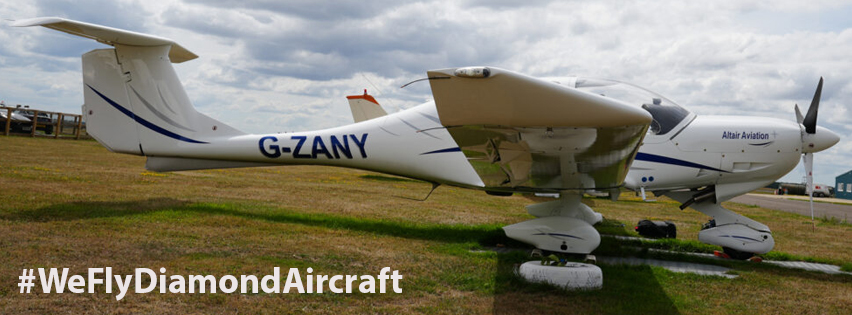
The aircraft is a DA40 TDI, which uses a Thielert “Centurion” 135 hp (101 kW) diesel engine and burns diesel or jet fuel. It has a constant-speed propeller and FADEC (single lever) engine control. G-ZANY is based at Stapleford Aerodrome, Essex, UK and was delivered new in 2003.
Read more about the aircraft on the dedicated page
Supporting the YouTube Channel –

Support the YouTube Channel –
Welcome to The FLYING VLOG…
I am a current PPL(A), SEP (LAND), IR(A) SE/SP PBN, IR(R) & Night holder. Flying around the world, exploring its hidden treasures. Taking pictures and vlogging the journey, I hope I can provide you with an oversight of my progression as I develop my skillset and airmanship in exclusive videos on my YouTube channel.
Now flying IFR in the Airways of Europe & beyond. Bringing you an exclusive niche on YouTube, flying in the same skies as commercial airliners.