Introduction
After one of my biggest trips in General Aviation, probably the most technically challenging I’ve ever flown, I elected to take a winter break. Now and then, it’s nice to take a break from flying, save up money, and participate in other things in life. For me, it’s a period where I can catch up on editing and blog writing to share with you all. As my planned winter break began, the aircraft experienced an incident that required replacement parts before it could fly again. This was extremely frustrating news, but I was in much need of a reboot, a break, and some time away from flying, so not keeping current till the new year would be perfectly fine.
A long break
It was slowly approaching January, and after Christmas, a New Year, and a busy one ahead with moving home plans and having started a new job in October, I was starting to miss that feeling of flying. Some can say, for once you’ve turned your head skyward, you long to return, and this was definitely the feeling for me as we crept towards the second month of 2025.
Whilst in this blog, I won’t go into full details, the process of getting an aircraft back in the sky again is phenomenal, and with that said, after 4 months of not flying, after what was one of the most full-on trips I’ve ever done, I was slowly beginning to feel the need and desire to get back flying. Obviously, at this point, I had no currency, I couldn’t carry passengers, and I didn’t want to start a process of flying elsewhere for just what would probably be a few more months to get flying again.
I looked at the options to get current again and started realistically planning trips again, first with a big trip to the usual annual Erlangen Bergweich with a flight to Nuremberg. A few things I looked at before flying again were:
- Reading the Aircraft Flight Manual from top to bottom
- Rehearsing the emergency and abnormal procedures in more detail
- Re-reading my checklists
The only reasonable way to put this into practice would be to get flying again, and it felt like the longest wait, and I was fairly hesitant to start studying until nearer the time. It had been a long time since I had flown. The longest being May 2018 to October 2018, by mid-March, we had surpassed this and went flying past this date into May, when the first glimmer of hope appeared that we would be returning to flying.

Whilst I was looking at a trip in late May, it was then decided to scrap that, as I would only be conducting my first flight on the day before, after work and on the 22nd of May 2025, I would complete my first flight since the 1st of October 2024. 233 days, or 7 months.
Back flying again –
The aircraft needed refuelling, and I was getting nervous. The weather didn’t look too great, and there was some risk of icing from a cold front that was passing overhead at the time I had arrived with some showers embedded. This would provide a bit of a challenge to proceedings, and I was discussing with the instructor whether or not to proceed with the IFR flight or not.
The pressure is an IFR flight or two in the next few days, and without doing one today under the auspices of someone more recently experienced to get me up to scratch, the pressure will be even more, as in two to three weeks, I will be flying a big trip to Germany. The weather came at the wrong time, and I had to make some quick decisions.
Just after refuelling had taken place for the flight, and after a brief, the weather broke, and I elected to go for the IFR sorty with minutes to spare – telling Stapleford Radio that I would be up for the flight and to call London ATC for my release. Not long after starting the aircraft for the sortie, London had given our release with the expectation to get moving and depart soon (We were running a bit behind).
TAF AMD EGSS 221224Z 2212/2318 02007KT 9999 BKN022 TEMPO 2212/2214 8000 -RA BKN009 BECMG 2215/2218 CAVOK BECMG 2312/2315 23010KT=
TAF for London Stansted & Southend on 22nd of May 2025
TAF EGMC 221057Z 2212/2221 03005KT 9999 SCT030 PROB40 TEMPO 2212/2215 8000 -RA=

FAX Chart for Thursday 22nd May 2025 – 12 UTC
Whilst this was a route I was familiar with for training, It had been a whilst since I had flown it and with a right hand turn out and a call to London Control, we were quickly climbed up to FL90, only briefly levelling off at 4000ft for a Stansted departure as we climbed back into the airways system for the first time in 2025. After a few minutes to discuss the ATIS that we listened to in the climb, we then elected, with a route towards CLN (Clatcon VOR) that ATC offered. After a brief transfer to Thames Radar, we were offered a right turn and descent towards Southend, and after multiple busy frequency handoffs, we were on further descent. It’s as busy as I type it.
We entered some IMC that we had flown in on the climb out, although this was more layered and lumpier, so a brief reduction in power mitigates the verocity of any lumps whilst you are head down and briefing how you hold and how you’ll conduct the procedure. With Runway 05 in use at Southend, this has a weird procedure with a left turn from the hold quickly followed by a right turn back to the NDB to commence the procedure.
Before all of that, you must fly a left-hand hold and work out the route to enter the hold, and you can work out the required entry process based on heading towards the hold. Most of my maths had been done on the ground, but with the change of wind conditions, recalculations can sometimes be required. Once I had done all my preparation, like initial test standard for the IR, autopilot off to fly the hold and approach manually in somewhat difficult conditions, bearing in mind I hadn’t flown since the 1st of October 2024.

I flew an ILS down to the plate minima, with a crosswind associated with the cold front and flew the go-around to the north (Non-standard) with no issues. We flew north to commence VFR general handling before flying back to Stapleford for some circuits. After some partial power failures, practice forced landings and steep turns, we would sign me off for flying on completion of some good old circuit bashing.
Airport Choices –
The choice of airport for IFR flights is determined by several criteria, such as reasonable handling fees, accessibility (both customs and police), and a recently implemented restriction: Some airports do not allow aircraft categorised as Category A. Airports like Barcelona El Prat prohibit this, and in some cases, even though they are not allowed to, they do so informally and charge you outrageous costs. For the type of aircraft we operate, Jet A1 availability is not a problem at most major international airports.
Ostend–Bruges International Airport EBOS
With the cancellation of the next few days due to the weather across the UK and Europe not being so ideal, I elected to cancel any longer trips and concentrate on short hops to get current. I’ve done various trips to Le Touquet and Rotterdam to get up to speed. They are fairly busy, short enough that the weather has minimal impact on operations, and so I can get back to the UK. Also, to save costs for big upcoming trips.
I last flew to Oostende Brugge back in November 2022 to keep current, having not flown for almost two months, so I quite fancied the very quick hop across to an airport with full procedures and a place for a nice spot of lunch.
General aviation handling on apron 3 is available upon request.
EBOS AD 2.4 Handling Services and Facilities
For all non home based aircraft with MTOW from 2 T up to 45.5 T without public ticketing
handling at apron 3 mandatory. Between 0700 (0600) and 1900 (1800), North Sea Aviation
Center facilities are accessible for all GA, private crew and passengers. Outside these
hours only for crew and passengers handled by them.
Crew and passengers of aircraft < 2 T MTOW wishing to transit (entry or exit) the airport
between 1900 (1800) and 0700 (0600), are subject to handling and need to send a handling
request to North Sea Aviation Center prior to their flight (at least 24 HR in advance).
Info at North Sea Aviation Center:
URL: www.nsac.aero
Email: info@nsac.aero
TEL: +32 (0) 59 40 18 00
Handling/Airport Quotations –
Ostend–Bruges International Airport
After emailing NSAC for an approximate cost, they emailed back with Approximate costs are €13,32 times x2 for landing and departure. Pax fee is €19,94 per departing passenger, and no handling is required at NSAC in Oostende. Airport fees (from 1/04/2025)
The only requirement was to send GENDEC to the usual website, and provide a noise certificate, and send passenger details to the local police.
A general declaration must be submitted to Customs by the pilot, flight commander or carrier when flying to and/or from a destination outside the EU. This is in accordance with the Customs Regulation (EU 952/2013). Failure to submit the general declaration to Customs will result in a fine. Submitting the general declaration to the Federal Police does not suffice and is not an excusable offence.
The general declaration can be submitted to Customs by e-mail at: da.luchthaven.oostende@minfin.fed.be or can be submitted at the customs office at the airport.
For both departing and arriving extra-Schengen flights, crew and passengers must present themselves to the Aviation Police for border control.
Fill in the declaration digitally via: General Declaration | Bordercontrol (police.be)
Due to environmental reasons, the use of AVGAS 100 LL is restricted. All flights are subject to prior approval (PPR).
EBOS AD 2.4 Handling Services and Facilities
Prior application is mandatory for all non-commercial aircraft and must be registered via: http://flights.ostendairport.aero/
A4041/25
EBOS (Ostend-Bruges) NOTAM
Q) EBBU/QFAAP/IV/NBO/A/000/999/5112N00252E005
A) EBOS B) FROM: 25/10/24 16:00 TO: 25/12/20 16:00 EST
E) ALL FLIGHTS WITH ACFT USING AVGAS100LL PPR ONLY. CONTACT
NAVIGATION +32 59 551 413
Weather Forecast –
The weather for daytime Friday was a lot better than the preceding 12 hours, and also a lot better than the upcoming 24 hours. With a low-pressure system approaching from the west and to our northeast, the UK was sandwiched in a region of high pressure with fairly light winds, warm weather, and very noticeable haze. Perfect conditions to get IFR current.
The next few days, I was right to cancel with low cloud bases and due to the air mass over Europe, a very high-topped warm front that would exceed the ceiling of the aircraft. Icing is definitely a big problem in the summer, with the temperature gradients causing more powerful fronts.

TAF EGSS 231100Z 2312/2418 25010KT 9999 FEW040 TEMPO 2400/2410 6000 RA BKN008 PROB40 TEMPO 2403/2409 4000 +RA RADZ BKN004 TEMPO 2410/2418 7000 SHRA BKN012=
TAF for London Stansted, Southend & Ostende on 23rd of May 2025
TAF EGMC 231057Z 2312/2321 22008KT 9999 FEW045=
TAF EBOS 231100Z 2312/2418 31009KT 9999 SCT030 BECMG 2400/2402 21012KT TEMPO 2408/2413 4000 RA RADZ SCT008 BKN013 PROB40 TEMPO 2410/2413 2500 DZRA BKN008=
Flight to EBOS
I had gathered all my passenger details, filed the flight plan and was fully ready for the first international flight of 2025. I was apprehensive but not too nervous about what to expect. I hadn’t really had much experience lately and was apprehensive about the weather, which looked rather ominous from the ground. I had prepared to pick my passengers up by car and drive them to the airfield, where the aeroplane had already flown this morning, so I had to refuel, fit my stuff and get going.
Whilst doing my pre-flight planning, I had a call from an international number, which I answered, confirmed who they were (Some Aviation office at the airport), and they asked if my aircraft was Avgas, of which it was not, so the aforementioned NOTAM/AIP note is of no notice to me, as the aircraft is JetA1.
I was behind the curve again slightly, due to the late running of my passengers, but after a short amount of time, we managed to catch up, take the aircraft across for refuelling and get ready for the flight to Belgium. These things in aviation do happen, and it’s unfortunate, but using the “Critical Path method”, I can determine the time needed for a series of necessary tasks that must be performed before departure of the aircraft (e.g. Customs, walkaround and refuelling), to be ready to depart safely and on time.

After an approx 15-minute delay, we were taxing out to the runway for departure. The Runway in use today, 21L, is the complete opposite of the way we departed yesterday. Knowing we were fuelled for the return journey and at max take-off weight with passengers onboard, we used the maximum amount of runway available. With the runway being ours, we applied full power and departed towards waypoint DET (Detling VOR), negotiating the noise abatement procedure at Stapleford to avoid sensitive areas
This was a fairly lumpy departure that would only serve to get bumpier as we navigated our way towards the airways. After a brief level off at 2400ft, we were given headings and a further climb with some brilliant shortcuts towards our destination and back into the airways we go. Reaching FL110 approx 20 minutes after departure. The frequency was fairly busy, and it was important for us to keep a lookout, but with such a short flight, we were already at the midpoint of the channel within 35 minutes of departing.
We briefed and planned for the RNP approach into Runway 26 at Oostend, and on hand-off to ATC, requested this arrival. After being kept at FL110 due to traffic below, after 45 minutes, we began our descent into Oostend. For the most part, everything was smooth till we levelled off for the procedure and overflew Brugge on the way into the airport.
We landed, vacated via taxiway B1 and taxied to the NSAC, which was pretty far away on the northwestern edge of the aerodrome. By the time we had parked up, shut the aircraft down, time was slowly getting away from us and having had a chat to the staff at the North Sea Aviation Centre, the nearest eateries were an hour’s walk away. We elected to instead look at Restaurant Runway 26=08, which was a 1 or 2 minute walk away. Aprehensive as it was pretty quiet, we walked in and had a slow reception before being seated.

The service is a little bit weird, but this is most likely because 99% of EBOS has lost its GA traffic, where this place is for, but the food was delicious, and that’s what matters. Whilst it’s very sad to see Eco-Politics destroy a local economy, especially those involving aviation, it’s a sad reality of the ever-changing world that we live in today.
ATC Flight plan and route flown –
N0130F110 LAM DCT DET L6 DVR L9 KONAN L607 KOK KOK6A
Filed ATC flight plan for EGSG-EBOS

Flight to the UK –
Once we had a spot of lunch, we decided to head back to the NSAC and do a spot of pre-flight planning and also get our passports checked, stamped and cleared for the journey back to the UK. Due diligence was done within a short timeframe. I paid for the bill that was prepared by NSAC, which is posted below. The aforementioned critical path is relevant more here with such a huge international airport, where checks have to be included for passports, it’s relevant to allow time for that and for refuelling (Not needed on this trip) to an approximate time of 1 hour and 30 minutes before departure.
On some occasions, the police are not interested; you must demand them because some locations across Europe will count how many in and out stamps you’ve had. Whilst doing all the other stuff landside, it allowed time before the passport checks would take place, usually with GA, and that is fairly efficient once they have arrived, but I have had some delays with the process.

We walked out to the aircraft to get everything prepared and start boarding, without the need to refit cameras or refuel, the process was fairly simple, giving ample time to brief the departure route and call ATC a few minutes early. The flight route back was fairly straightforward, a departure via KONAN with a right turn at 500ft towards the sea, avoiding the danger area EBR17A, but coincidentally through ER17B/ER17C and then up towards KONAN, where the EGTT FIR boundary is. Oostende ATC will obtain crossing clearance before the aircraft is airborne. It feels like a fairly sporty departure, and a lovely view of the coast in the right-hand turn out.
We requested clearance and engine startup; startup was initially declined due to the fact that London ATC (NATS) would have to permit us before departure. I.e. Request release – this is due that we are 26 miles from the London FIR and would be climbing into its airspace, whilst this isn’t the AIP – it’s probably some form of LoA (Letter of agreement) that ATC would have between the Belgium sector and the London sector. So it’s noteworthy to mention that the airspace here is fairly busy most times of the day with flights from all over the place flying between the two.

Once we received our technical startup, the release came back fairly quickly, and we could taxi over the hold for the runway, the same one we departed a few hours ago. This time, from holding point A and with a rolling departure, we climbed into the evening air for a quick hop back across the English Channel. With such a simple climb to FL100 and route across the water, I elected to put the aeroplane onto autopilot and monitor its climb, adjusting the vertical speed manually.
18 minutes after getting airborne, we were at FL100 and two minutes later, when we were handed off to London, a route direct to DOVER VOR (DVR). The ATC frequency was fairly busy, with arrivals into Gatwick, Heathrow, London City, Southend and Biggin Hill being routed here along with departures from those airports towards Detling and Dover.

As expected, we were given descent to keep us clear of any conflicting traffic and given step descents and radar headings. We were given descent to 6000ft and then handed over to Thames Radar, which was also fairly busy. It was also a fairly notable route to the south. Usually, we would be vectored towards Southend for descent within their airspace or a vector across London City Arrivals.
We read their minds and started getting a direct path towards Stapleford and then clearance to leave CAS, which is normally accommodated in the vicinity of the London City ILS to ensure we maintain separation for inbounds. Surprisingly, we hit turbulence in the usual places we would in the daytime, but I suspect winds from the incoming front had more to play with, and I noted changeable winds on the approach towards Stapleford.
After less than an hour airborne, Stapleford appeared in the haze, and we made a quick left base to land on Runway 21L and the start of the proper 2025 flying season.
ATC Flight plan and route flown –
N0130F100 KONAN4M KONAN DCT DET
Filed ATC flight plan for EBOS-EGSG

Outcome & Costs –
After a lengthy period away from flying, it’s fairly difficult to get back into the game; however, the pre-flight preparation that I had helped with ensured that I could fly to the best of my abilities as quickly and safely as possible. Whilst I wish I had more flying experience, it was nice to have had a break after what was a challenging year of flying in 2024. The weather was horrific on almost every flight.
It was a new year and a new season of flying, with hopefully different trips this year from last year.

Airport Costs –
The final bill was split into the following;
OSTENDE FEES
No handling costs at NSAC required.
AIRPORT FEES
- AIRPORT FEES €66.52
- SECURITY FEE €2.00
- ADMIN FEE €4.66
- VAT €15.37
Sub-Total: €88.54 (£74.84)
Total Costs OOSTENDE: €88.54 (£74.84)
Flying Costs –
Aircraft Charges: £544.68 (@ £204 per hour (2 hours 40 minutes flown))
Airport Fees: £74.84 (As above)
Total Cost –
Total Costs (All): £619.52
Version 1.1 – Last Updated 02/02/2026
Aircraft –
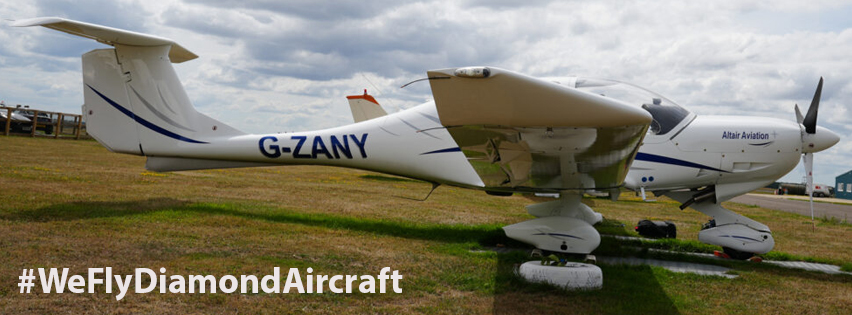
The aircraft is a DA40 TDI, which uses a Thielert “Centurion” 135 hp (101 kW) diesel engine and burns diesel or jet fuel. It has a constant-speed propeller and FADEC (single lever) engine control. G-ZANY is based at Stapleford Aerodrome, Essex, UK and was delivered new in 2003.
Read more about the aircraft on the dedicated page
Supporting the YouTube Channel –

Support the YouTube Channel –
Welcome to The FLYING VLOG…
I am a current PPL(A), SEP (LAND), IR(A) SE/SP PBN, IR(R) & Night holder. Flying the world, exploring its hidden treasures. Taking pictures and vlogging the journey; I hope I can provide you with an oversight of my progression as I develop my skillset and airmanship in exclusive videos on my YouTube channel.
Now flying IFR in the Airways of Europe & beyond. Bringing you an exclusive niche to YouTube, flying in the same skies with commercial airliners.