Introduction –
I last touched down in Düsseldorf back in 2021, right at the tail end of COVID. I’d only just earned my instrument rating, and this was my very first international IFR flight, and my first time landing at a proper big airport. That trip lit a fire. It became the catalyst for some of the biggest flying adventures I’ve had over the last five years.
Fast forward to this year. Money’s been a little tight, I’ve just moved into a new home, and the aircraft had been grounded since my Ibiza trip, right through until the start of summer. So the plan was simple: a quick 24-hour night stop back in Germany to revisit Düsseldorf, now a much busier, livelier airport than the quiet pandemic-era field I remembered. The challenge was officially on.
Planning –
Planning this trip was pretty straightforward. We wanted to experience the airport, but we also wanted to enjoy the city itself. With only 24 hours on the ground, the strategy was always to keep things simple and central. Just like my previous quick adventure, I didn’t want to cram too much in. The focus stayed on choosing a great location and maximum convenience, making every hour on the ground count. A shorter flight time meant more usable hours in the city, which makes a huge difference on a tight turnaround and really helps justify picking somewhere like Düsseldorf for a quick reset.
The problem with airport pricing this year
One of the bigger hurdles this season has been rising airport costs, and Düsseldorf, like others, is no exception. Handling fees, parking, and general airport charges have all gone up noticeably. It’s something you have to factor in right from the start of planning. That said, the shorter flight distance helped claw back some of those costs; less time in the air means meaningful savings in fuel and total flight hours.
Airport Choices –
The choice of airport for IFR flights is determined by several criteria, such as reasonable handling fees, accessibility (both customs and police), and a recently implemented restriction: Some airports do not allow aircraft categorised as Category A. Airports like Barcelona El Prat prohibit this, and in some cases, even though they are not allowed to, they do so informally and charge you outrageous costs. For the type of aircraft we operate, Jet A1 availability is not a problem at most major international airports.
Düsseldorf EDDL —
Düsseldorf International Airport (EDDL/DUS) is a major international hub and Germany’s fourth-busiest airport. Located just a few kilometres north of the city centre, with two runways. It is fully equipped for all-weather operations with excellent ILS and RNP approaches. The airport has a dedicated General Aviation Terminal (GAT) / Executive Terminal, which is the main entry point for private and business aircraft. Jet Aviation is the primary FBO operating the GAT On-site immigration and customs (ideal for UK arrivals post-Brexit).
Düsseldorf has full customs and immigration services right on arrival, with no need for advance coordination or calling officers in. On top of that, the transport links from DUS into the city centre are far more convenient and often cheaper overall.
Mönchengladbach Airport EDLN —
Mönchengladbach Airport (EDLN / MGL) is a small but well-equipped regional airport located just 9.4 miles (about 15 km) west of Düsseldorf. It serves as a handy alternative for general aviation pilots visiting the area, offering a much calmer environment compared to the busy international hub at Düsseldorf.
Despite its modest size, Mönchengladbach is fully IFR-capable and well maintained. It features both ILS and RNP approaches, making it accessible in a wide range of weather conditions. This combination of good instrument procedures and lighter traffic makes it an attractive option for pilots looking to avoid the complexity and higher costs of the main Düsseldorf airport, especially on shorter trips.
It has limited / on-request customs and immigration capabilities for international general aviation arrivals (including from the UK). Still, it is not a full-time staffed international port of entry like Düsseldorf. You will almost certainly need prior coordination.
Handling/Airport Quotations –
We chose Düsseldorf primarily for its full on-site customs and immigration facilities at the dedicated General Aviation Terminal. This made clearing in as an extra-Schengen arrival quick and hassle-free on landing, with no need for prior coordination or waiting for officers to be called in, a major advantage over Mönchengladbach, where customs is only available on request.
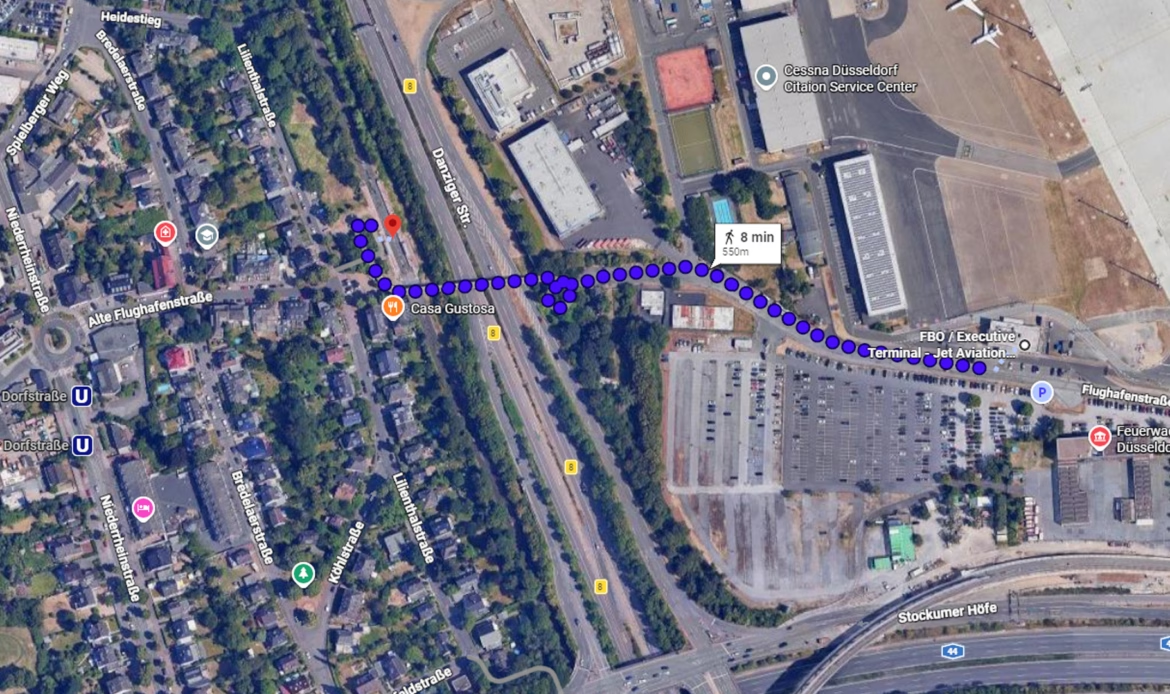
On top of that, the transport links from DUS into the city centre are far more convenient and often cheaper overall. With the D-Lohausen metro station just a five-minute walk from the GAT and fast direct services available, we maximised our limited time on the ground. For a quick 24-hour reset, that seamless arrival and easy access to the city made Düsseldorf the clear winner despite the extra airport fees.
GAT – JetAviation
Whilst handling is not currently required at Düsseldorf for general aviation, I decided to play it safe and contacted the GAT operator, Jet Aviation, well in advance for a detailed quote. It was a prudent move to get a clear picture of the expected costs, handling, parking, landing fees and everything else before committing to the trip. Knowing the numbers upfront helped remove any nasty surprises and allowed us to budget properly for the short 24-hour stop.
Parking
- Parking Fee (2 days / 0–96 hours): €40.00
Apron Services
- Safety Cones – General Aviation Apron: €65.00
Airport Charges
- Airport Concession Fees: €7.80
- Mandatory Infrastructure Charge (MIC): €23.00
- Airport Fees: €26.92
Aircraft Movement Fees (A4)
- Landing Fees: €11.96
- NOX Fees (Landing): €0.28
- Starting Fees: €11.96
- NOX Fees (Starting): €0.28
Total: €193.62 EUR (incl. VAT)
ASL Germany –
Fluko (Flughafenkoordination Deutschland) is the official slot coordinator for Düsseldorf (EDDL/DUS) and other major German airports. For General & Business Aviation flights, you must request a slot in advance using the standardised GCR (General Aviation Clearance Request) format. Whilst you can always contact them by phone (as I did on my previous trip), this time I went the email route and sent the slot request to ASL Germany.
The reply came back overnight with our confirmed slots, clean, efficient, and exactly what we needed. It was a smooth process that gave us peace of mind before we even left the UK. For the full GCR format guide, download it here: GCR_INT.pdf from Fluko’s website.
Slot Inquiries
Online Coordination
e-airportslots.aero
E-Mail (SCR, GCR only):
fraztxh@fluko.or
For General Aviation:
+49 69 257 585 120
(24 hours)
Accommodation –
We stayed at the H2 Hotel Düsseldorf City, a modern and stylish budget-friendly hotel located roughly two kilometres northeast of the city centre in Toulouser Allee. With 250 comfortable, air-conditioned rooms, it offers excellent value for a short stop, clean, contemporary design, free WiFi, and a solid breakfast included. The location proved perfect for our 24-hour trip: just a short walk to the Wehrhahn U-Bahn/S-Bahn station, which connects directly and quickly to both the airport and the heart of Düsseldorf.
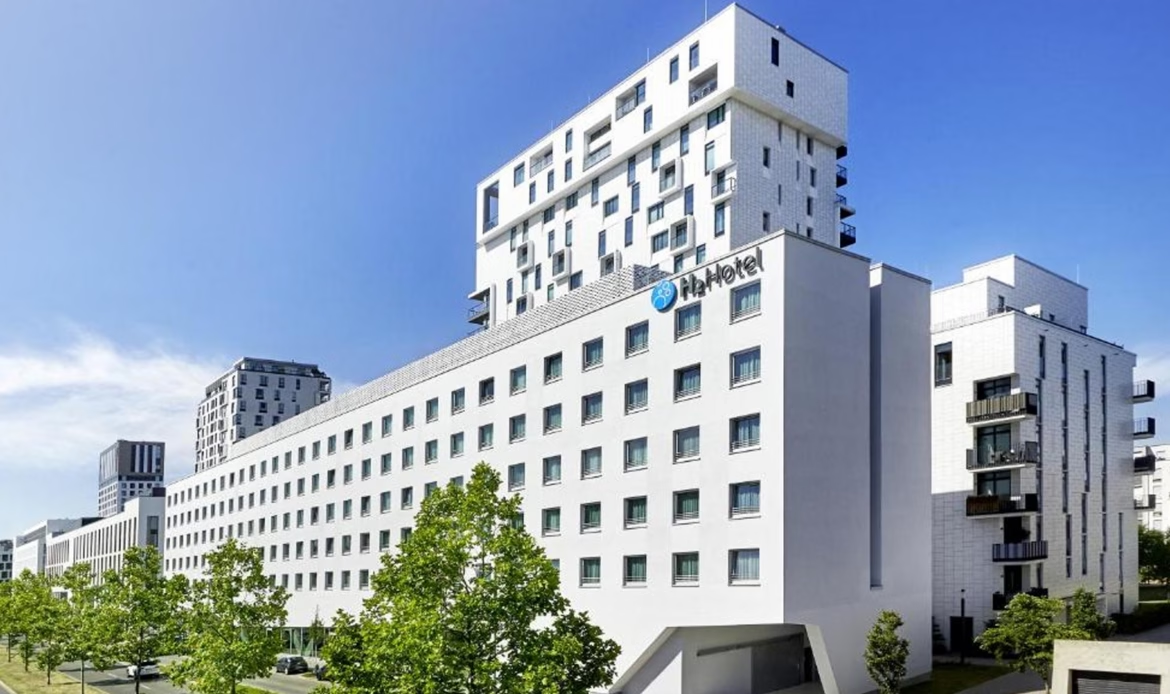
The hotel’s transport links made a huge difference on this tight schedule. From the nearby station, we could reach Düsseldorf Airport in about 10 minutes and the lively Altstadt (Old Town) in around five minutes. It gave us maximum time to explore, whether grabbing local food and Altbier, walking along the Rhine, or simply soaking up the city vibe, without wasting precious hours on logistics. For a quick reset visit, the H2 Hotel Düsseldorf City delivered exactly the central, convenient base we needed
The rooms at H2 Hotel Düsseldorf City are modern, stylish, and designed with a clean, urban-trendy feel. Standard double and twin rooms are compact, but well-equipped with air conditioning, a flat-screen TV, soundproofing, a comfortable bed, free WiFi, and a private bathroom featuring a shower, hairdryer, and complimentary toiletries.
Pricing is very reasonable for a central Düsseldorf hotel. Nightly rates typically start from around €74–€95 for a standard room (often including breakfast), depending on dates and demand. During our visit, it offered excellent value for a quick 24-hour stop, comfortable enough to rest well after the flight without breaking the bank.
Weather Forecast –
A classic transitional September pattern is in play across northwest Europe: a deep Atlantic low-pressure system dominating the UK and North Sea, while a solid high-pressure ridge sits over Germany and central Europe. This creates a strong pressure gradient and active frontal weather for departures from the London area, but excellent conditions at destination airports like EDDL (Düsseldorf).
UK departures will be breezy with south/southwesterly flow and potential frontal showers or brief IMC, requiring careful routing and monitoring for gusts (especially later in the day at EGSS). Once across the North Sea, conditions improve rapidly under the high, delivering smooth air and excellent visibility at EDDL with light winds and no significant weather. Standard IFR planning with good alternates is advised, but the continental leg looks very benign.
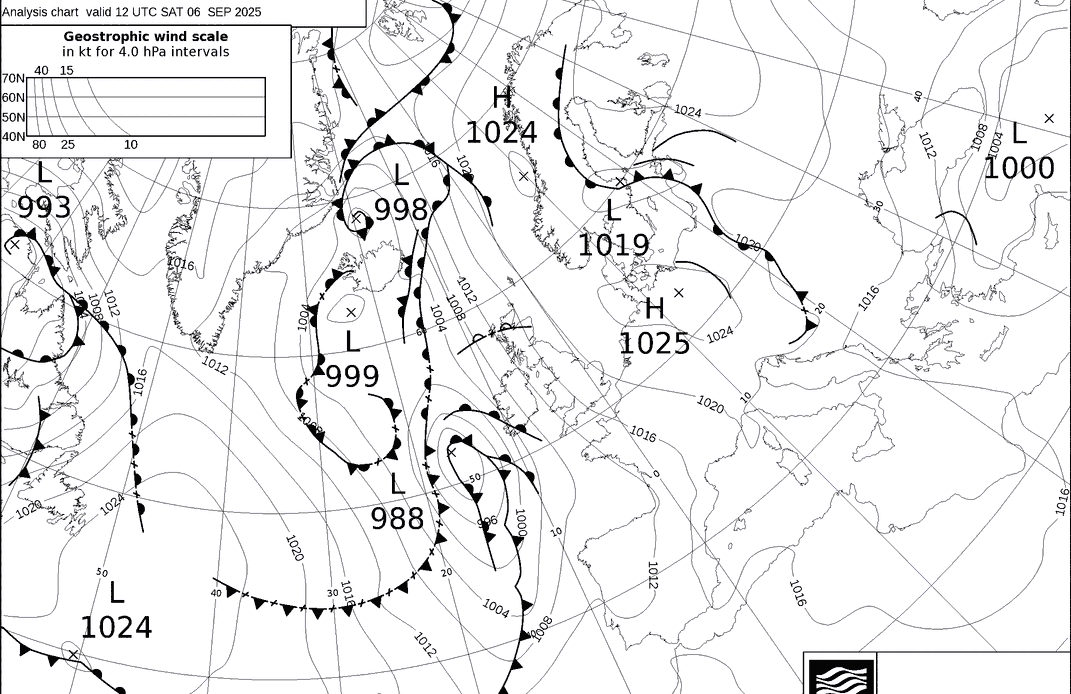
TAF for London Stansted, Southend and Düsseldorf on 6th of September 2025
TAF EGSS 060503Z 0606/0712 16003KT 9999 FEW045 TEMPO 0606/0608 7000 BECMG 0609/0612 14013KT PROB30 TEMPO 0620/0712 14016G26KT=
TAF EGMC 060757Z 0609/0618 13006KT CAVOK PROB30 TEMPO 0616/0618 10015G25KT=
TAF EDDL 060500Z 0606/0712 VRB03KT CAVOK BECMG 0607/0610 10006KT BECMG 0706/0709 14011KT=
The Journey to Düsseldorf –
The alarm went off painfully early that morning. We had deliberately planned a solid early start to give ourselves plenty of buffer; we wanted to arrive in Düsseldorf with as much daylight and city time as possible. But aviation adventures rarely go exactly to plan.
The first hiccup hit almost immediately: my bus was cancelled without warning. Cue a rapid switch to a taxi, followed by a train into central London to meet Andrew. With a full Tube strike shutting down large parts of the city, the next few days, traffic was already building, so we didn’t hang around. We jumped straight into another taxi and made the run out to Stapleford Airfield. Despite the chaotic start, we actually made it with decent time to spare, a small win for the planning.
Once at the airfield, it was straight into action. We refuelled the aircraft, carefully loaded our bags for the short overnight trip, ran through all the pre-flight checks, and filed the flight plan. There’s always that buzz of anticipation when you’re about to head off on an international trip, especially when it’s a return to a place that means something to you.
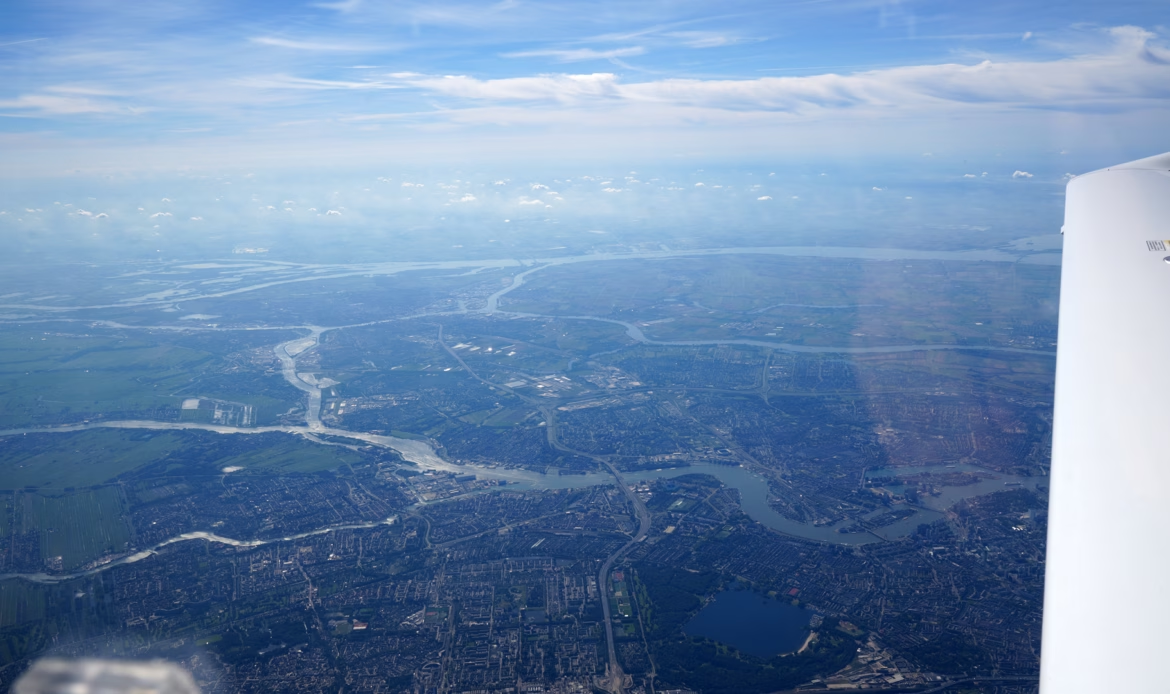
We already knew before departure that the autopilot had a technical defect. To fly the correct heading, I’d need to subtract around 12 degrees from the desired track. It was a known issue we had planned around, but it still meant I had to stay extra hands-on throughout the flight, definitely keeping me sharp and focused.
Departure was via our usual route towards BRAIN. We climbed smoothly out of the London area and eventually levelled off at FL150 in beautifully clear air. The route initially took us via AMS, but ATC offered a nice direct shortcut due south, which we happily accepted. As we started crossing the North Sea, we ran into some pretty rough clear air turbulence (CAT). It wasn’t too severe, but it was enough to jostle us around and keep things lively for a while.
After crossing the North Sea, we routed into the busy Amsterdam airspace. That’s where we had a cool encounter with an E190 flying just under us, heading south. It was a welcome sight, a nice reminder of just how good it felt to be back up in the sky again, sharing the busy European airways.
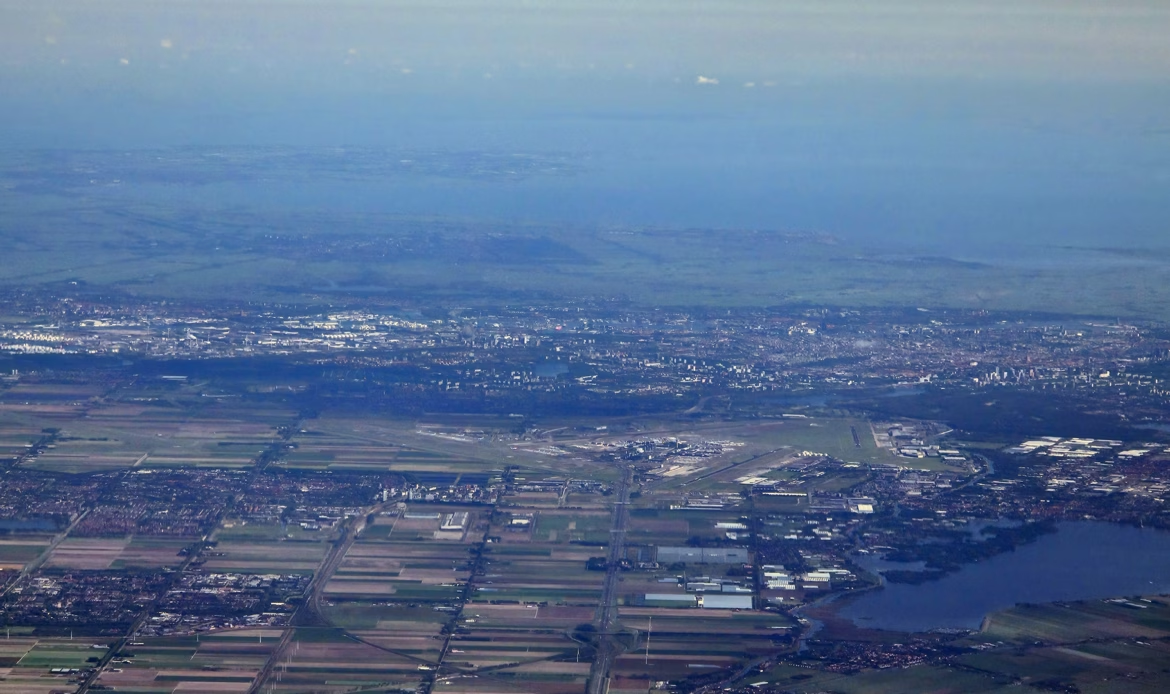
When you fly these shorter hops, especially after having done much longer flights in the past, it becomes almost surreal how quickly time passes (and no pun intended). The world seems to move faster on these 2-hour-plus sectors compared to the long slogs across Europe; before you know it, you’re already starting the descent.
Before being handed over to Langen Radar, which controls the airspace above this part of Germany, we started planning our arrival in more detail. We initially believed the runway in use would be 05R, so we began briefing the approach thoroughly, covering the procedure itself, go-around details, the Minimum Sector Altitude (MSA), and what we could expect from the vectors and terrain.
A quick listen to the ATIS soon corrected us; the runway in use was actually 23L. We promptly switched our planning to match, which kept us well prepared as we continued the descent.
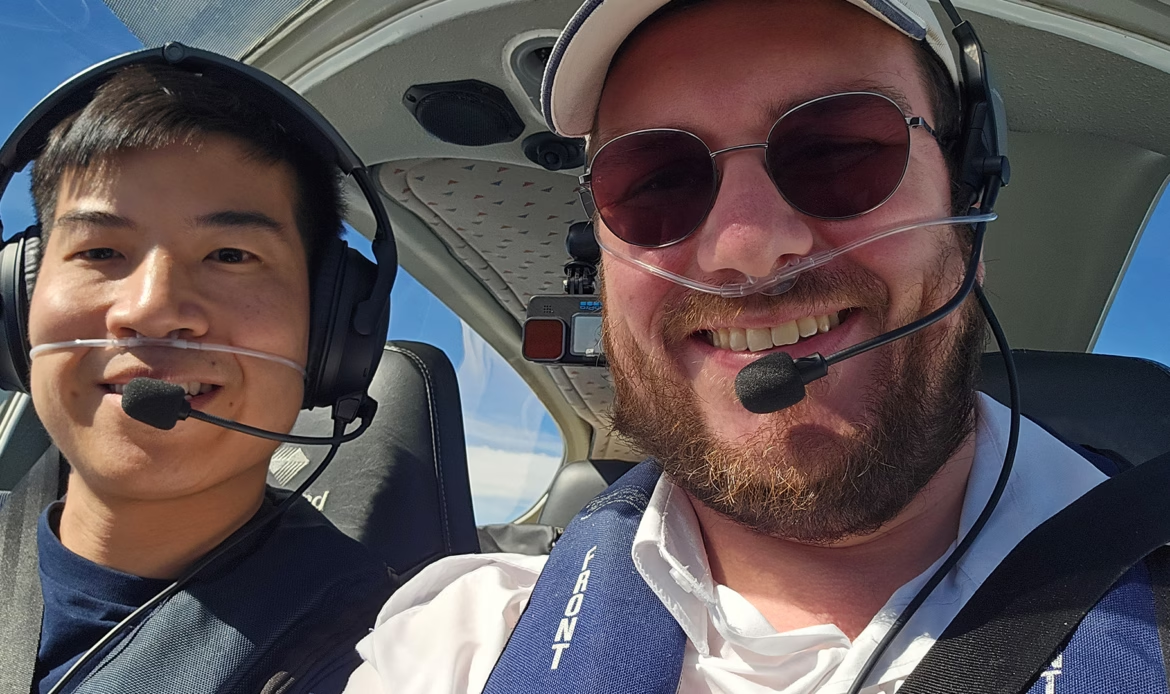
The descent into Düsseldorf began a little later than expected. ATC’s sequencing had us holding altitude longer, so we started down with a steeper profile. The approach itself was quite unusual, a non-standard vectoring sequence that took us through layers of scattered puffy cumulus clouds. It was bumpy in places and kept things visually interesting, but nothing we weren’t ready for. We kept the speed at 140 knots for much of the descent, which helped ATC with sequencing and kept delays to a minimum for us and other aircraft, a small but useful contribution in busy European airspace.
Thankfully, carrying a bit of extra speed on the approach (thanks to that 140-knot plan) helped us fly a more efficient path and get the landing in quicker than it might have been. After a few hours of flying, we touched down on Düsseldorf’s runway… back where it all started five years ago.
That full-circle feeling hit hard as we taxied in. From my very first big international IFR trip during the tail end of COVID to this quick 24-hour reset in a much busier airport, it felt like the perfect way to mark how far things have come.
A video inspired by the flight to Düsseldorf –
Learn the reality of flying into big airports as a private pilot. Discover how to handle radio communication and traffic. Many pilots avoid major hubs like Düsseldorf, fearing that general aviation aircraft are not welcome or that the radio work is too complex. This video breaks down that misconception by showing the experience of landing a small aircraft at a busy aerodrome. You will see firsthand that the process is manageable even when you expect to be stuck behind a commercial airliner.
This is a practical, myth-busting flight vlog. Sharing my real experience flying from Stapleford (UK) to Düsseldorf, showing that many private pilots unnecessarily avoid big hubs due to common fears:
- Myths addressed:
- GA/small aircraft aren’t welcome.
- Radio work (RT) is too complex or busy.
- You’ll get stuck behind airliners and deal with wake turbulence.
- Costs are ridiculous, or slots will be denied.
- You need a high-performance/twin-crew setup.
- Key takeaways: It’s very doable in Europe (with some exceptions like certain high-cost or restricted airports). The video includes descent, vectoring, ILS approach, and ground operations. Radio comms are manageable (often simpler due to high traffic), and the experience is rewarding. He flies with a co-pilot for workload sharing but shows it’s not strictly necessary.
ATC Flight plan and route flown –
N0130F150 BRAIN P44 CLN L620 PAM P62 PISAP PISAP1A
Filed ATC flight plan for EGSG-EDDL
Alternate Routes for Weather –
I now almost always plan alternate routes in the week or two before the flight, so I have a quick win for replanning the flight either by departing early or departing a little later to meet my arrival time into the destination airport. These are mostly factored by weather charts using the long-distance models and GRAMET before making a final decision on the high-resolution models and fax chart in the days before and during the flight. These alternate routes are carefully chosen to either sidestep convective weather or low cloud/low-vis issues developing on the departure leg within UK airspace, or to reroute entirely, perhaps via a more southerly or northerly path to steer clear of active frontal systems, associated turbulence/icing, and busier or more restrictive FIR boundaries, ensuring we still arrive at the destination on schedule with comfortable margins.
N0128F130 DET L6 DVR L9 KONAN L607 LNO M170 KENUM/N0128F120 M170 NVO T857 BIKMU BIKMU1A
ALTN Flight Plan VIA DET & LNO VOR – EGSG-EDDL
N0125F100 NETEX3H NETEX Z282 DIBIR L179 NIK DCT IMI DCT KONAN L9 DVR L6 DET
ALTN Flight Plan VIA NIK VOR & DET – EDDL-EGSG
24 hours in Düsseldorf –
After shutting down on the apron at Düsseldorf, we made our way over to GAT for check-in. The process was smooth and surprisingly quick, with friendly staff making the whole arrival feel welcoming, especially noticeable compared to how quiet the airport had been during my 2021 visit. From the GAT, it was just a pleasant short walk to the nearby station, rolling our small overnight bags along. We took a moment to breathe in the fresh German air and absorb the energy of a regular, busy weekday afternoon.
From the GAT, it was just a pleasant short walk to the nearby station. The station, D-Lohausen, is only about a five-minute walk from the General Aviation Terminal, and we were soon on the platform. We jumped on the metro heading into the city centre. It offers a direct and fast service, and as we settled into our seats, I couldn’t help thinking how much easier this would have been last time. Something tells me I really wish I had researched the public transport options back in 2021; it would have made that trip even smoother.
Once we’d dropped our bags at the hotel, we headed straight out on foot to explore the city. The mission was clear: good local food paired with a proper German beer. We strolled through the lively streets until we found a fantastic spot, settled in, and thoroughly enjoyed our first proper meal of the day. I had my heart set on currywurst, a Düsseldorf classic, but the spot I’d visited back in 2021 was visibly closed. Luckily, there was another good-looking place just around the corner, so we didn’t have to go far. We ordered the currywurst with chips and thoroughly enjoyed it, exactly the comforting, tasty fuel we needed after the early start and the flight.
With full stomachs, we took a relaxed stroll around that part of town. The streets felt lively and welcoming in the afternoon sun. Before long, we found a classic local pub/bar and settled in for a few small glasses of Altbier, the famous Düsseldorf-style beer served in those cute little 0.2 litre glasses (Stange, I believe they’re called). It turned into a really nice, laid-back late lunch, giving us the perfect chance to soak in the atmosphere and ease into our short city break.
After our late lunch, we continued with a beautiful walk along the Rhine. The river looked absolutely stunning in the late afternoon light, the sun sparkling on the water, with boats passing by and the city skyline in the background. It was the perfect way to stretch our legs after the long flight and really soak up that relaxed Düsseldorf atmosphere.
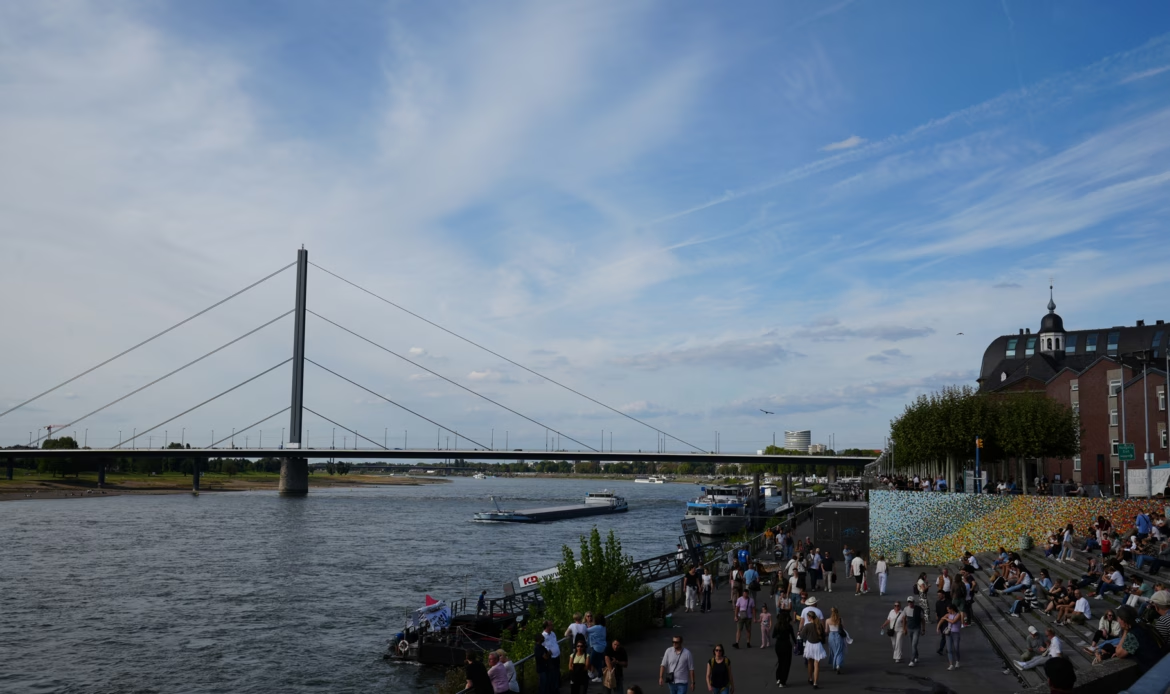

One thing that really stood out compared to my 2021 visit was how lively the riverside had become. What used to be fairly quiet is now lined with open bars, cafés, and plenty of outdoor seating areas right along the riverfront. People were chilling with drinks, enjoying the view, and making the most of the sunny weather. It gave the whole area a fantastic, vibrant energy that made our stroll even more enjoyable.
We eventually made our way back to the hotel for a bit of downtime. After the very early start and full day of travel, it felt great to kick back, rest, and recharge for a while. On the way back, we passed through Little Tokyo, Düsseldorf’s large and lively Japanese district. The sights and smells immediately gave us the idea to go for ramen or katsu later that evening, a fantastic decision. It turned out to be the perfect hearty meal for an early September night: warm, comforting, and full of flavour after a long day.
After dinner, we took a relaxed wander back through the city streets. The evening atmosphere in Düsseldorf was brilliant, the streets were still buzzing with people enjoying the mild weather, lights reflecting off the canal in the Altstadt, and a gentle hum of conversation spilling out from bars and restaurants. It was the ideal way to wind down the day, taking in the city at night without rushing.
Whilst it might seem a bit mad to fly all the way to Germany just for lunch, dinner, and one evening away from home, it’s actually one of the best feelings in aviation. Leaving behind the familiar hustle and bustle of the UK for the different energy and rhythm of another country, even for such a short time, is incredibly refreshing. There’s something special about landing at a big international airport, stepping into a new culture, hearing a different language around you, and experiencing that change of scenery just a couple of hours after leaving home.
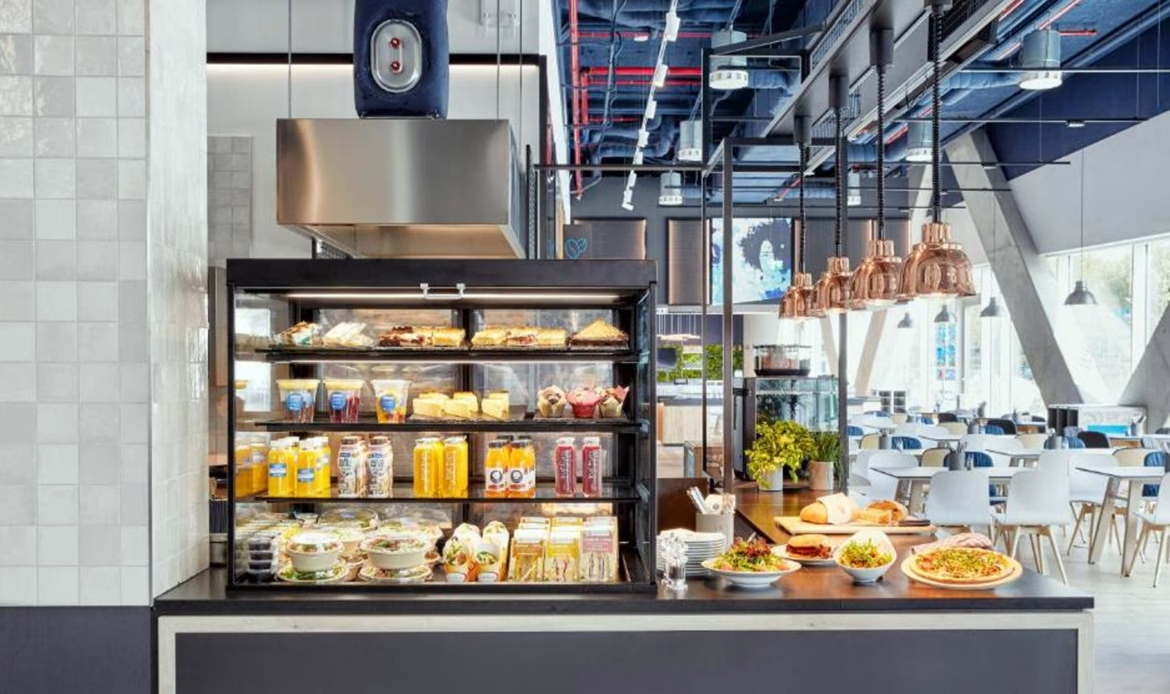
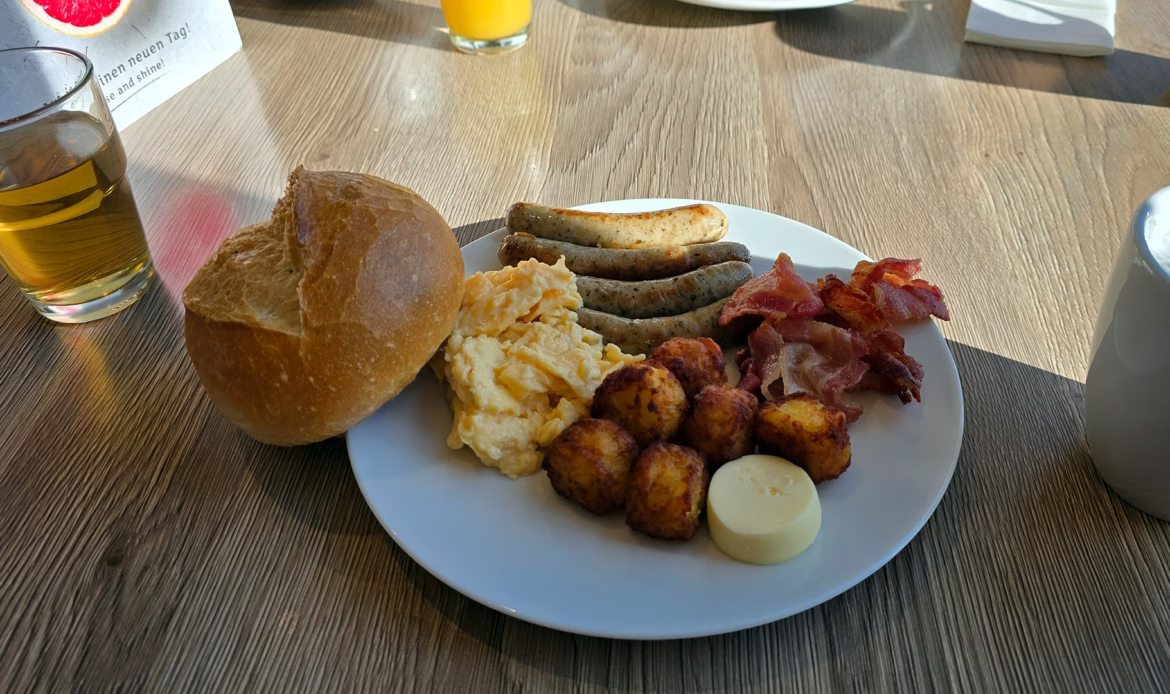
The next morning, we took it slow, starting with good coffee and a solid breakfast at the hotel. It was the kind of unhurried, civilised start that makes these short city breaks feel so refreshing and worthwhile.
After breakfast, we went for another enjoyable walk into the city and back. The morning light showed Düsseldorf in a new way: quieter streets, locals going about their day, and a chance to properly appreciate the architecture and vibe we’d only seen in the afternoon and evening before. It was the perfect final stretch of the legs before heading home.
When it was time to go, we grabbed a quick Uber back to GAT. It was smooth, convenient, and the perfect stress-free way to close out our short but very memorable 24-hour reset in Germany.
Planning the return –
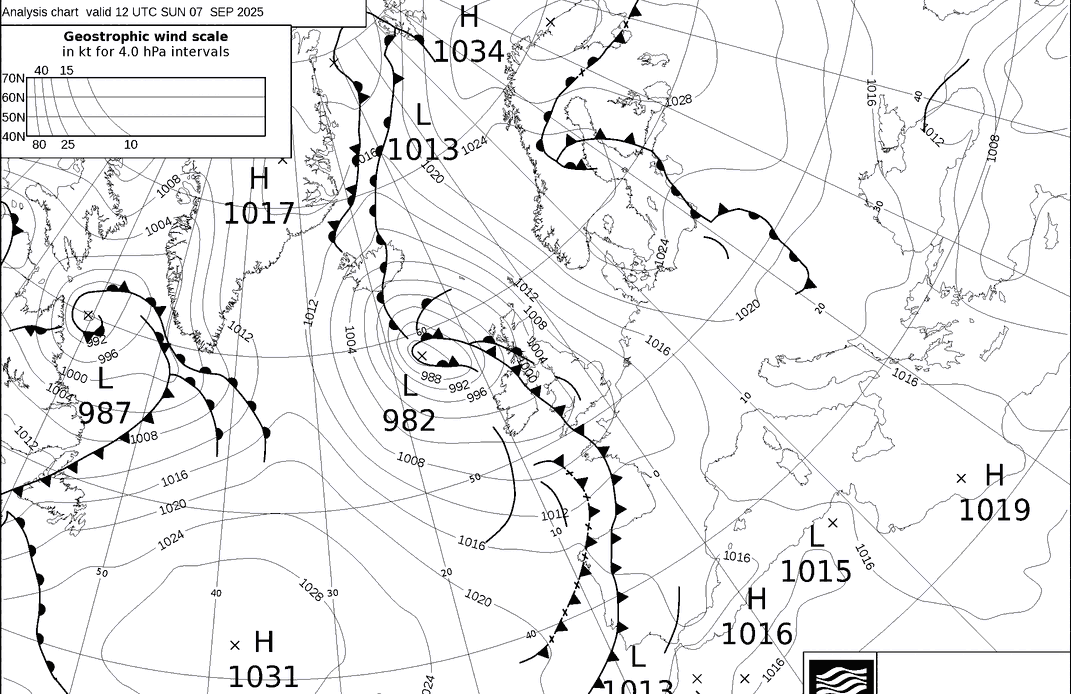
Planning for the return leg actually started before we even left the UK. With a strong cold front forecast to sweep southeast across the North Sea and the UK, combined with a train of Atlantic lows tracking east, there was a genuine risk of getting stuck on the continent with deteriorating weather. We didn’t want to be caught out with strengthening crosswinds, low visibility in rain, or embedded thunderstorms, so we scrutinised the multi-day fax charts and extended TAFs early on.
This pre-departure analysis showed a clear window on Sunday afternoon with manageable winds before the frontal system strengthened. We therefore built plenty of flexibility into the itinerary, targeting a mid-afternoon departure from EDDL while conditions remained workable. The priority was clear: get across the North Sea ahead of the worst weather to avoid being grounded by strong gusts, reduced visibility, or embedded CBs on the UK side.
IFR Planning Challenges in a Non-FIKI SEP
Flying IFR over multiple days in a non-FIKI single-engine piston adds another layer of complexity. Without certified ice protection, we had to be extremely conservative with routeing, altitudes, and departure timing to stay well clear of known or forecast icing levels, especially with the cold front bringing the potential for low-level moisture and temperature drops. This meant constantly re-evaluating the latest model runs and sigwx charts while balancing the need to return home before the window closed completely.
Weather Forecast –
The low-pressure systems continue to dominate the North Atlantic, with the pattern slowly evolving. A deep low is now centred near the UK, bringing unsettled conditions, while high pressure remains influential over the Atlantic and southern Europe. A breezy return with southerly/southwesterly gradient winds and gusts possible on both departure from EDDL and arrival into the London area, especially during the afternoon. The UK will see more frontal influence with a chance of showers, while the departure from Germany remains generally good in the short term. Light winds should ease later, with some development of overnight showers. Standard IFR planning, with attention to wind conditions and possible reduced visibility on arrival.
TAF for London Stansted, Southend and Düsseldorf on 7th of September 2025
TAF EGSS 071101Z 0712/0818 14012KT 9999 FEW045 TEMPO 0712/0718 16016G26KT BECMG 0714/0717 20012KT PROB30 0802/0807 6000 PROB30 TEMPO 0810/0816 7000 SHRA=
TAF EGMC 071056Z 0712/0721 13010KT 9999 FEW045 BECMG 0712/0715 19010KT PROB30 TEMPO 0715/0718 21015G25KT=
TAF EDDL 071100Z 0712/0818 13013KT CAVOK TEMPO 0712/0714 13015G25KT BECMG 0716/0719 14007KT TEMPO 0804/0810 SHRA BKN020CB BECMG 0807/0810 23005KT BECMG 0812/0815 32005KT=
Return Flight to UK –
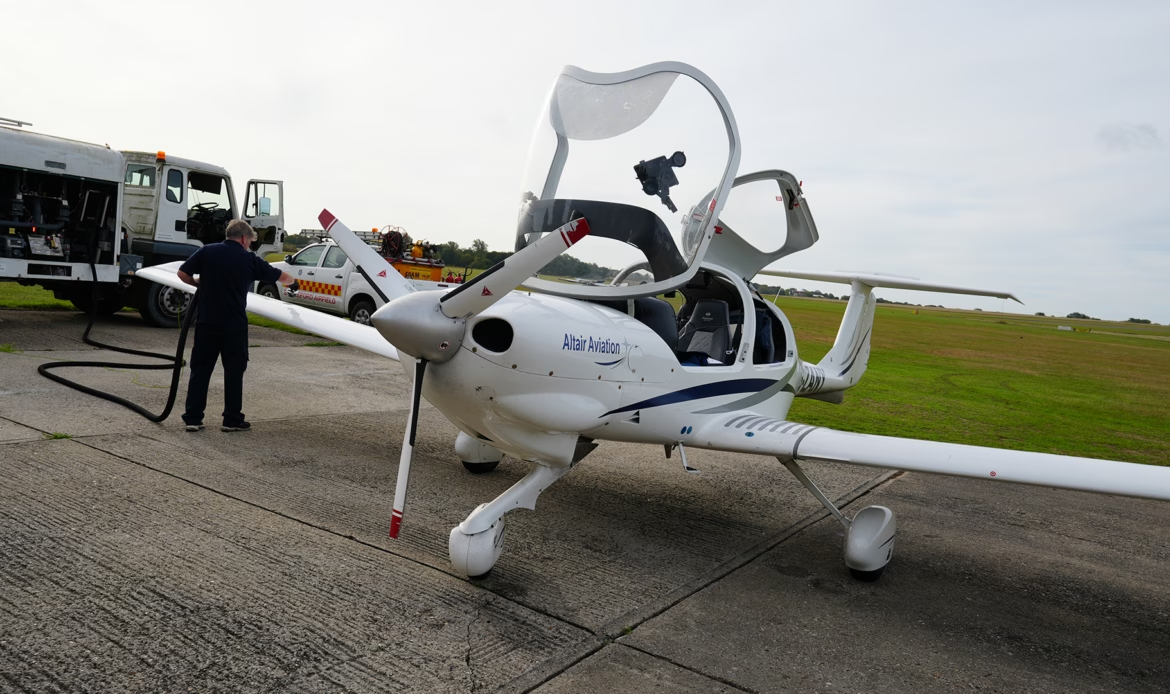
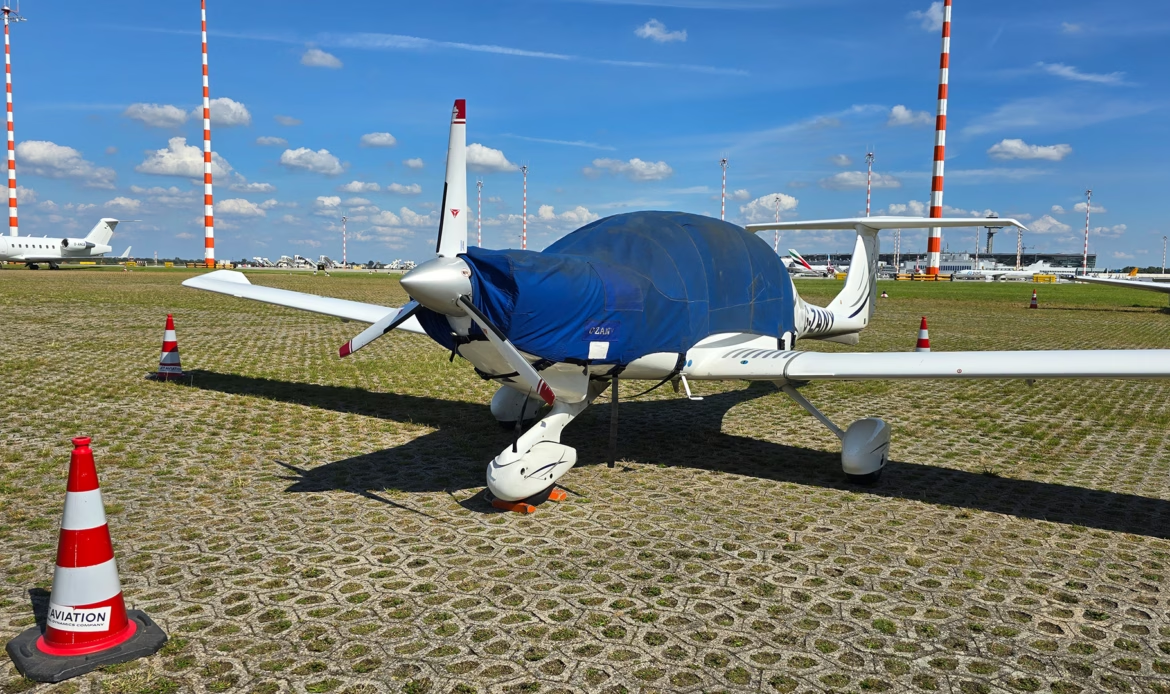
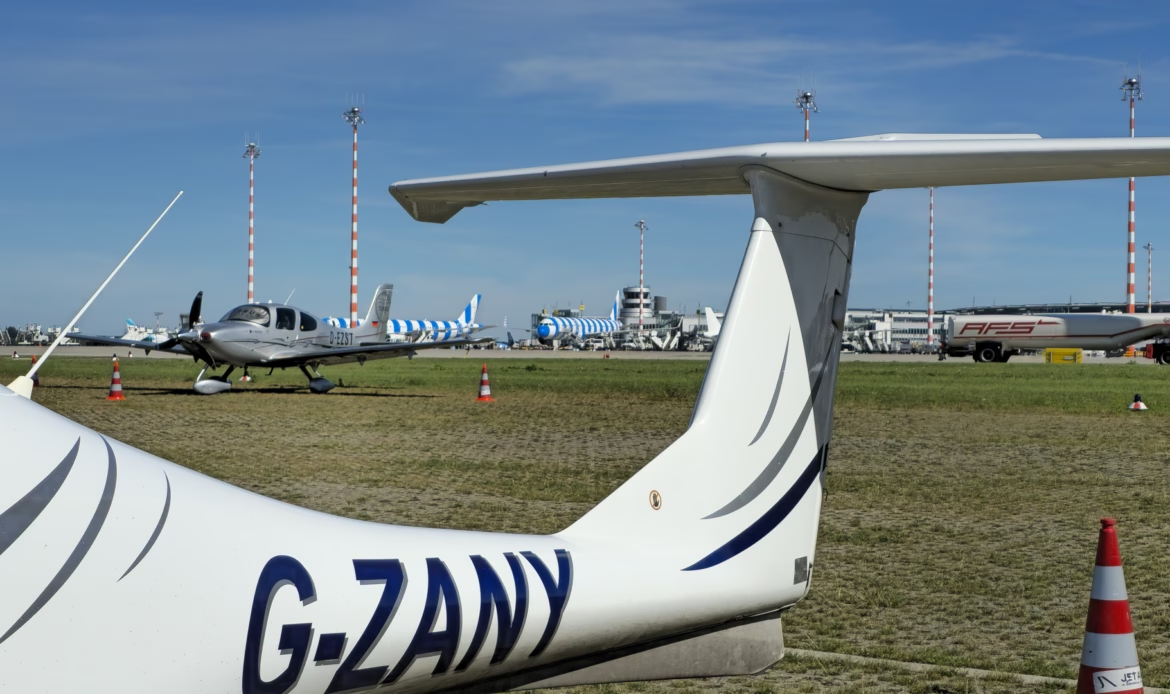
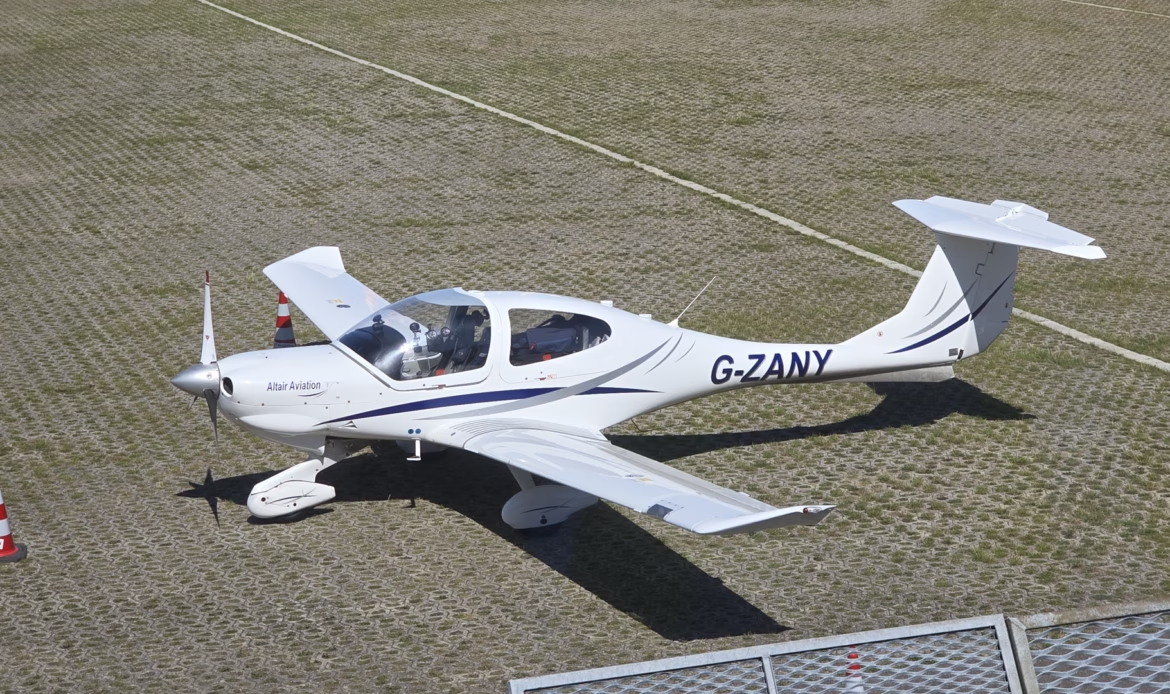
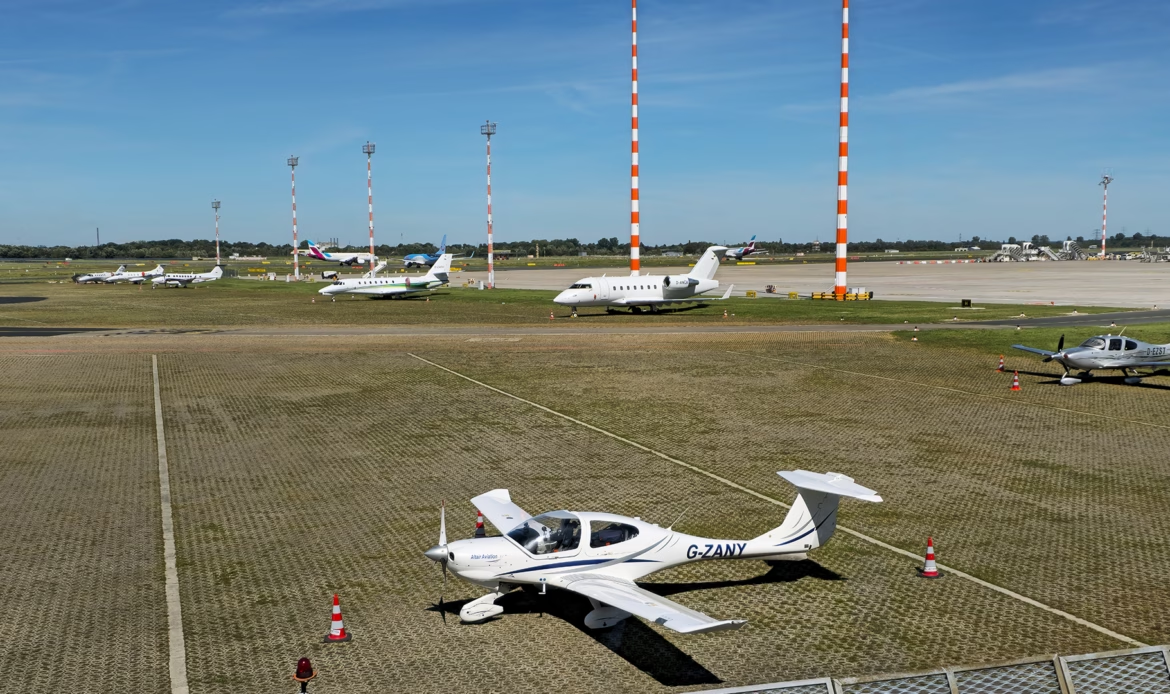
After a brilliant 24 hours on the ground, it was time to head back to the airport and point G-ZANY towards home. We arrived at the GAT, checked in smoothly with the friendly team, and then got stuck into the pre-flight routine. We performed a full walk-around, checked the oil and fuel, loaded our bags, and made sure everything was secure for the return leg.
Passport control ended up taking a bit longer than planned because the officer arrived a few minutes late. While we were waiting, I wandered into one of the funkiest airport toilets I’ve ever seen. It was ultra-modern, spotlessly clean, and very German in its efficient design, but the real highlight was the massive window with a direct view over the airport ramp and arriving aircraft. As I stood there, a surprise Emirates A380 touched down right in front of me. It was an awesome, unexpected sight that made the wait actually enjoyable.
We got a little behind schedule on engine startup, but it wasn’t a major issue. Once cleared, we taxied out and found ourselves following a British Airways A320, always a nice buzz flying in the mix with the big boys. The departure route they gave us was quite unusual and more winding than expected, but we were soon climbing steadily up to FL160.
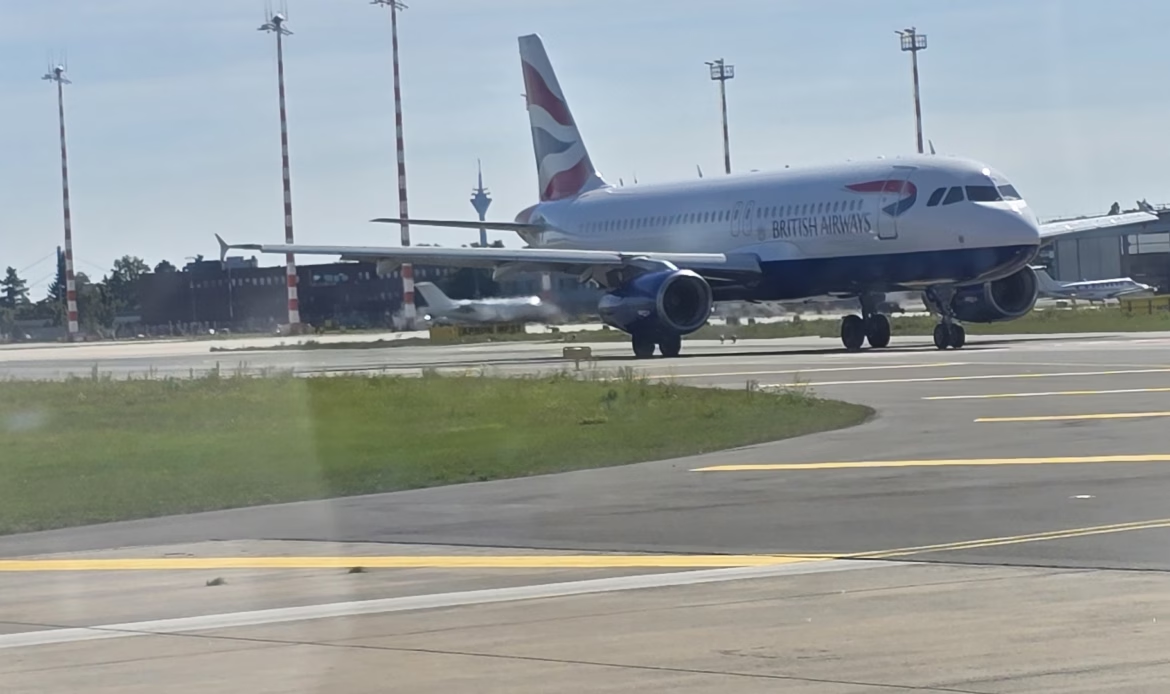
The wind was significantly stronger on the way home, giving us a noticeable headwind that added a few extra minutes to the overall flight time. As we tracked north-west across Belgium and into Dutch airspace, we started to feel the influence of an approaching weather front and low-pressure system. The once-calm cruise gradually became bumpier, especially in the mid-levels, with occasional sharper jolts that kept us firmly in our harnesses.
We were handed over to Amsterdam Radar, whose controllers were working the busy TMA with their usual efficiency, issuing vectors and altitude changes while managing a steady stream of commercial traffic around Schiphol. The ride stayed manageable but definitely kept things interesting as we monitored the weather radar ahead.
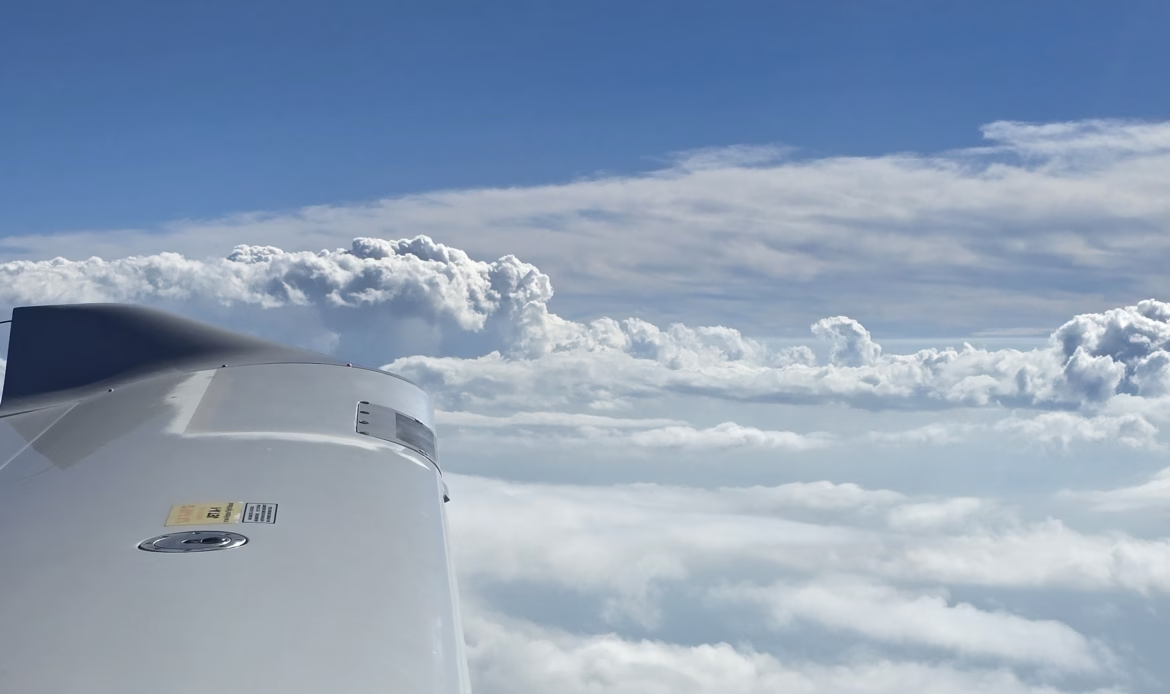
After a smooth handover from Amsterdam Radar toward the UK FIR, we began our descent. Turbulence picked up again in the lower levels, but nothing the DA40 couldn’t handle. We touched down safely back in the UK, taxied to our parking spot, and shut G-ZANY down. A quick and efficient visit from Border Force wrapped up the formalities, and just like that, our quick German adventure was complete.
From the early-morning chaos on the way out, through the full-circle landing back where it all began five years ago, it was another powerful reminder of how rewarding these short, spontaneous flying trips can be. The mix of busy airport operations, professional ATC like Amsterdam Radar, and variable enroute weather makes every sector memorable and sharpens your skills that little bit more.
ATC Flight plan and route flown –
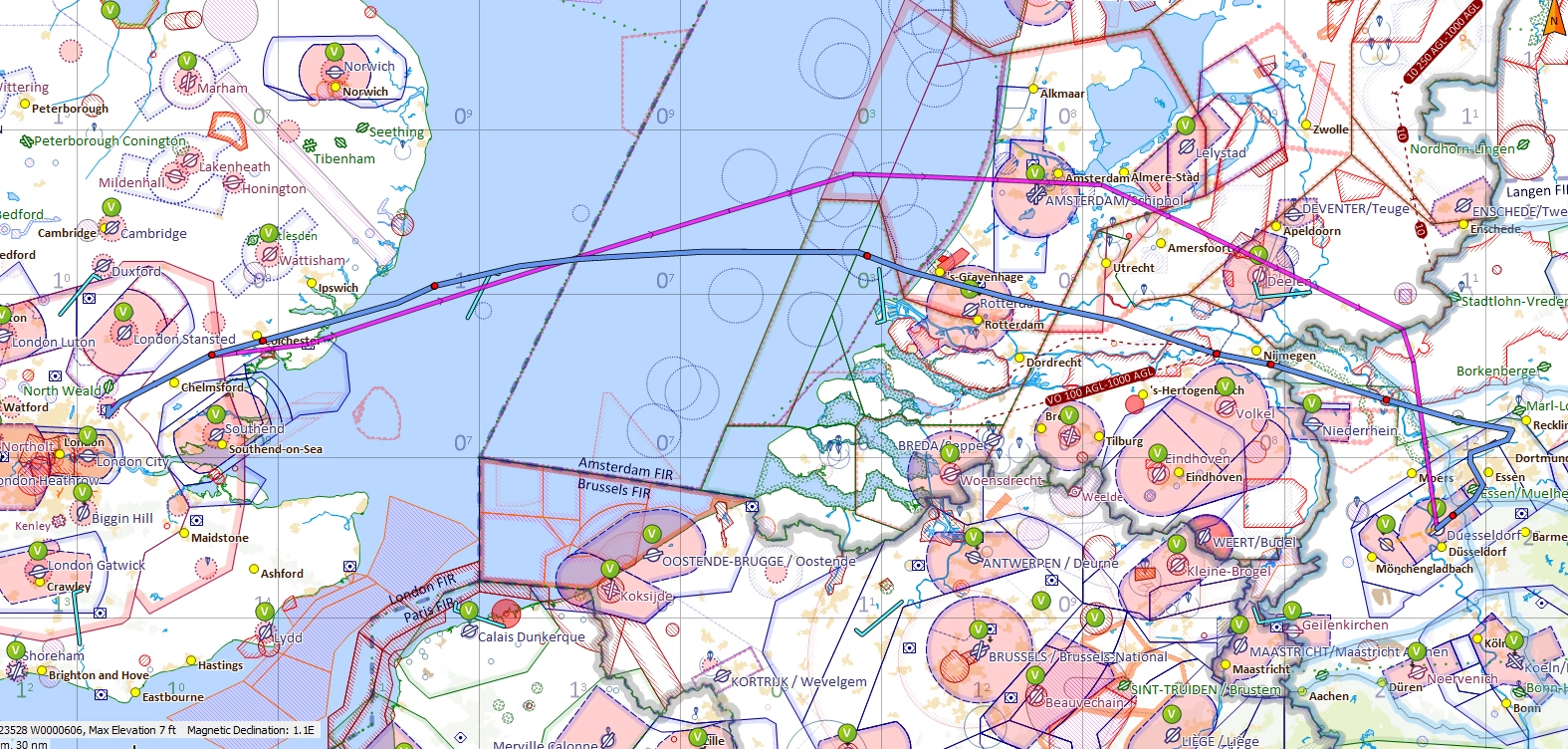
N0130F160 NETEX3H NETEX Z282 DIBIR L179 LAM
Filed ATC flight plan for EDDL-EGSG
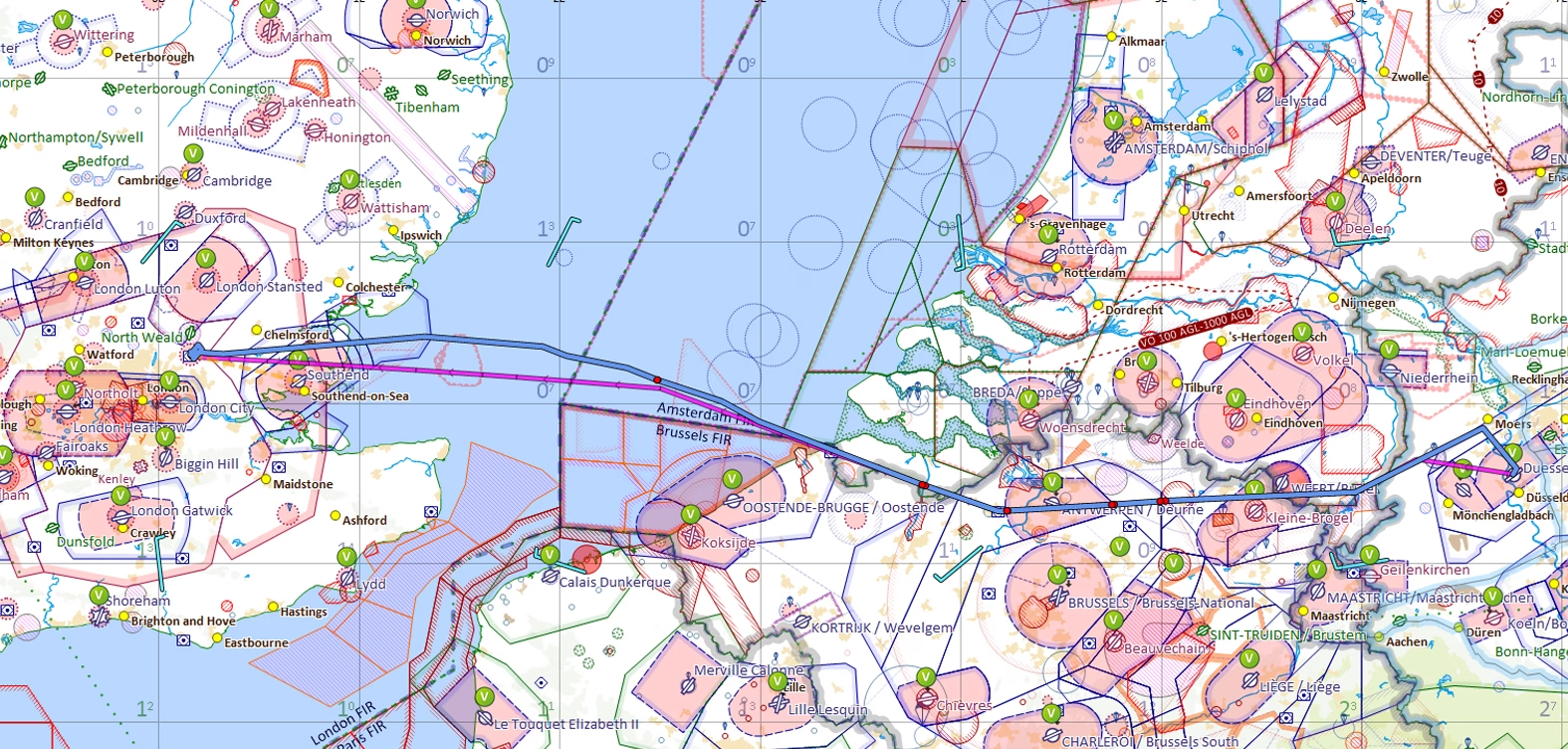
The planned route (magenta) and flown route (blue) to Stapleford, UK
Conclusion –
Looking back, this quick 24-hour reset to Düsseldorf was everything we hoped for and more. Five years after that first big international IFR flight during the tail end of COVID, returning to the same airport now busier and fuller of life felt like a perfect full-circle moment. Despite the rising costs, the autopilot quirk, the bumpy return leg, and the usual travel hiccups, we packed in great food, beautiful walks along the Rhine, the vibrant energy of the city, and that special feeling of landing at a major European hub in our own aircraft. It proved that even with limited time and money, a well-planned short adventure can still deliver memories that last.
These quick trips are a powerful reminder of why I love flying so much. In just one day, you can escape the familiar routine, immerse yourself in a different culture, and come home recharged with fresh eyes. Whether it’s a big trip or a cheeky overnight somewhere new, the sky is full of opportunities that are closer than they seem. If you’ve been thinking about your own short flying adventure, I hope this story encourages you to go for it. The world is waiting, sometimes only a couple of hours away.
The Big Airport Process –
This is more of a behind-the-scenes planning and cost-focused video for the Düsseldorf trip. It walks through the extra preparation required for IFR flights into big airports.
Main focus: Detailed cost breakdown and process.
- The total airport-related bill came to roughly €193–194 (including parking, safety cones, infrastructure charges, landing/departure fees, etc.). Not cheap for a light aircraft, but more reasonable than many expect.
- Tips to save money: Apply for your own airport slot (avoids handler fees).
- Other steps: Terminal charts, NOTAMs, weather, Gen Dec (passenger/crew info), IFR flight plan integration with the European system, and UK-specific forms like SGAR.
Düsseldorf Airport Costs –
The final bill was split into the following;
JetAviation Charges
- Parking 0- 96 hrs €40.00
- Safety Cones General Aviation Apron €65.00
- Airport Concession Fees €7.80
- Mandatory Infrastructure Charge €23.00
Sub-Total: €135.80
Dusseldorf Airport Fees
- Landing Fees €11.96
- NOX Fees Landing €1.50
- Starting Fees €11.96
- NOX Fees Starting €1.50
With noise certificate, no noise Fees applied.
Sub-Total: €26.92
Total Costs incl VAT: €193.62 (VAT €30.90)
Jet A1 Uplift: None on this trip
Düsseldorf Costs –
Food, Drink & Leisure Costs: £46.30
Travel: £12.02
Accommodation Costs: £134 for 1 night.
Sub-Total: £192.32
Flying Costs –
Aircraft Charges: £985.32 (@ £204 per hour (4 hours 50 minutes flown))
Airport Fees: £168.09 (As above)
Oxygen Refill – None for this trip
DFS – Nav Charges Düsseldorf – £32.90 (Arrived October 25′)
Total Cost –
Total Costs (Non-Aviation): £193.32
Total Costs (Aviation): £1186.31
Total Costs (All): £1379.63
Version 1.0 – Last Updated 16/07/2026
Aircraft –
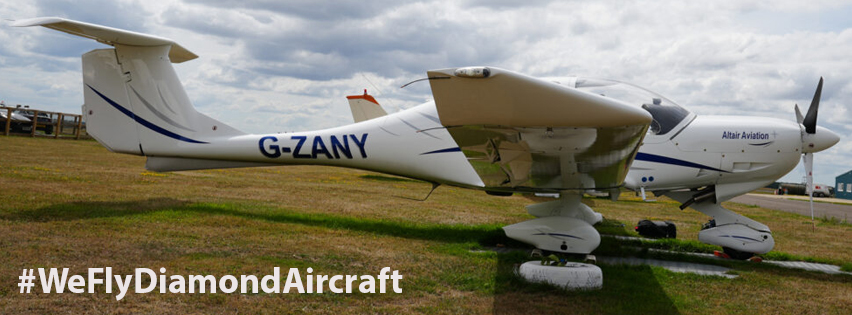
The aircraft is a DA40 TDI, which uses a Thielert “Centurion” 135 hp (101 kW) diesel engine and burns diesel or jet fuel. It has a constant-speed propeller and FADEC (single lever) engine control. G-ZANY is based at Stapleford Aerodrome, Essex, UK and was delivered new in 2003.
Read more about the aircraft on the dedicated page
Supporting the YouTube Channel –
Support the YouTube Channel –
Welcome to The FLYING VLOG…
I am a current PPL(A), SEP (LAND), IR(A) SE/SP PBN, IR(R) & Night holder. Flying around the world, exploring its hidden treasures. Taking pictures and vlogging the journey, I hope I can provide you with an oversight of my progression as I develop my skillset and airmanship in exclusive videos on my YouTube channel.
Now flying IFR in the Airways of Europe & beyond. Bringing you an exclusive niche on YouTube, flying in the same skies as commercial airliners.