Introduction –
I flew in Basel-Mulhouse many years ago for a well-known UK airline. This was well before I had even gained an Instrument Rating and knew that it was possible to fly light General Aviation into big airports, such as ones that share borders. EuroAirport Basel Mulhouse Freiburg, as it’s formally known, is one of the few airports in the world run by two different countries, in this case, France and Switzerland.
I’d always wanted to revisit, and the option of looking at the ability to fly into Switzerland via this entry point was top of my list, and I started the process of investigating if this option was feasible, spurred on by the plan to visit my girlfriend’s family and home nearby in Switzerland.
The Plan –
The plan was to fly to Switzerland via one of the many available entry points, either Basel-Mulhouse, Zurich or Bern, the latter two expensive if direct from Schengen or wishing to park for 2 nights. Whilst Geneva was a possibility, it was probably too far for such a short trip of two nights and would be something I’d look at in the future to get into the logbook.
But for now, we will fly on Friday afternoon and fly back Sunday afternoon after two nights in Switzerland. The complication was most likely the weather, which was persistently unsettled for the last few trips.

Airport Choices –
The choice of airport for IFR flights is determined by several criteria, such as reasonable handling fees, accessibility (both customs and police), and a recently implemented restriction: Some airports do not allow aircraft categorised as Category A. Airports like Barcelona El Prat prohibit this, and in some cases, even though they are not allowed to, they do so informally and charge you outrageous costs. For the type of aircraft we operate, Jet A1 availability is not a problem at most major international airports.
Basel-Mulhouse LFSB
EuroAirport Basel Mulhouse Freiburg is jointly administered by France and Switzerland, governed by a 1949 international convention, and is one of the few airports in the world operated jointly by two countries. The airport serves as a base for easyJet Switzerland and mainly features flights to European metropolitan and leisure destinations. GA from France into LFSB is non-existent; all GA operates via the Swiss Sector and the GAC apron. From the outset, it seems like an unfamiliar and complicated procedure.
Zurich Airport LSZH
Zurich Airport serves Zürich, Switzerland’s largest city, and with its railway links, much of the country. The airport, mostly due to noise, is known for being very particular with the patterns of take-off and landing runways, which is a bit of a nightmare, as I previously found out. The airport has also increased parking fees by 700%, so short stays without necessity become very expensive, but the airport has multiple runways and is fully IFR capable.
Bern Airport LSZB
Bern-Belp Regional Aerodrome, also known as Bern Airport, is a regional airport serving Bern, the capital of Switzerland. Whilst the airport is fully IFR, the terrain surrounding the aerodrome is likely to be particularly challenging with minimum performance and restrictions required at the aerodrome, along with slightly reduced opening hours. Unfortunately for direct flights from the UK, Bern charges a hefty non-Schengen fee on top of the rest.
The document states the following: For the handling of aircraft by the airport operator or an authorised company, a fee is charged according to the basic tariff or according to a special agreement with the users. Handling is mandatory for non-Schengen flights and aircraft with an MTOW of more than 3,500 kg.
Handling/Airport Quotations –
Basel Airport
The option of using the airport as a handler is one of the options that came up in discussion online. I didn’t look into this further as I preferred the convenience of the Basel GAC. Whilst this doesn’t apply to IFR flights, the procedure for light-GA should be similar and can be followed in full via the EuroAirport website.
Once PPR is approved, a ground handling agent is required; one of them is the EuroAirport itself, which offers basic handling only.
GAC Basel
Having not chosen the airport directly, we emailed GAC Basel, who responded with a quotation. This was priced at 30 CHF, and the parking per 24 hours was 80 CHF. The landing fee and the fuel invoice will be billed by the airport at a later date. It was a requirement to PPR, fill in the GENDEC and any customs documentation relating to the flight(s) before our departure from the UK.
CAHOR SLOT Requirement –
BASEL-MULHOUSE is designated as a coordinated airport level 2 (known as “schedules facilitation”) in accordance with the community regulation
95/93.The facilitation parameters are indicated on the COHOR website. All IFR movements on BASEL-MULHOUSE must be requested to a prior allocation from the COHOR complying to the official IATA CALENDAR. Requests must be updated according to any changes made to their initial request by aircraft operators. For business and general aviation flights, for IFR flight, the air carrier must submit a prior request to the handling companies (listed in AD 2.4), which will then produce an authorization number registered with the COHOR facilitator.
On emailing the details to CAHOR and a further phone call about the situation, I received a response.
A GABA flight doesn’t use the coordinated resource stated in the coordination parameters. Therefore, a GABA flight is not subject to slot coordination/schedule facilitation at BSL.
This was because SLOTS are organised based on terminal capacity at Basel, and not solely on ATC movement capacity, unlike other airports.
Weather Forecast –
Weather for Friday 2nd
Whilst the weather departing the UK was somewhat reasonable. The odd shower from the approaching cold front, various troughs across France and BENELUX, with forecast Thunderstorms associated with the Summer heat, meant that conditions were ripe for severe storms in the Basel area and our entire planned route. The models were predicting clusters of storms for our landing time, and with the forecast charts and weather charts all pointing to very difficult flying conditions ahead.

TAF EGSS 021103Z 0212/0318 25006KT 9999 SCT020 PROB30 TEMPO 0212/0215 7000 SHRA TEMPO 0303/0313 BKN010 PROB30 TEMPO 0306/0310 8000 -RA TEMPO 0310/0318 6000 RA SHRA PROB30 TEMPO 0314/0318 3000 +SHRA=
TAF for London Stansted, Southend & Basel-Mulhouse on 2nd of August 2024
TAF EGMC 021103Z 0212/0221 20005KT 9999 FEW025 PROB30 TEMPO 0212/0215 8000 -SHRA=
TAF AMD LFSB 021132Z 0212/0312 VRB04KT CAVOK TEMPO 0212/0224 FEW040CB PROB40 TEMPO 0217/0222 VRB15G25KT 1500 TSRA SCT040CB PROB40 TEMPO 0302/0305 BKN008 BECMG 0306/0309 27010KT TEMPO 0310/0312 FEW040CB=
Change of Plan –
I woke up on Friday morning, and the forecast for the weather wasn’t great. Due to the Thunderstorms that I was likely to encounter en route through Belgium, Luxembourg and most of France, including the Basel Area, the go-no-go decision was becoming quite the challenge. Using a combination of webcam footage, live satellite data and weather radar to make an informed decision.
In addition, the forecast of the weather in Dijon moving through Basel during our arrival time, I felt that it was most likely going to be a very challenging flight, potentially unsafe, with many variables. Such as daylight hours drawing to a close, multiple Thunderstorms and minimal options for diverting a General Aviation aircraft, Paris being an expensive option if all went wrong. The only place looking viable and safe for a divert was Lyon, and with many options forecast to become unviable, the flight was looking unlikely to be a go.

We travelled to the airfield with the weather in mind, the models pointing to the actual weather forecast to clump together north of Basel as the night drew to a close. It was an uncomfortable position to be put in, but ultimately, the decision was to fly very early in the morning to meet a departure time that would get us into Basel before convection starts kicking off again.
Weather Forecast –
Whilst the forecast wasn’t ideal, it was much better than the previous day, with frontal weather making inroads from the west, multiple layers forecast for the climbout and low-level weather for the entire route forecast. Weather on arrival into Basel, much better than yesterday, but still a risk of convection as the day progresses.

TAF for London Stansted, Southend & Basel-Mulhouse on 3rd of August 2024
TAF EGSS 030457Z 0306/0412 21007KT 9999 SCT040 TEMPO 0306/0311 6000 -RADZ BKN011 BECMG 0307/0310 27010KT PROB30 TEMPO 0307/0310 BKN007 PROB30 TEMPO 0311/0314 7000 SHRA BKN010 BECMG 0400/0403 33005KT BECMG 0409/0412 24010KT=
TAF EGMC 030529Z 0306/0315 22009KT 9999 FEW045 PROB40 TEMPO 0306/0312 6000 RA SHRA BKN014=
TAF LFSB 030500Z 0306/0406 VRB04KT 9999 FEW050 BKN070 TEMPO 0309/0317 27012KT FEW040CB=
Flight to Basel –
Because of the severe weather the evening before, we had a 15-hour delay to our departure, and a very quick reschedule to arrive at the airfield in the early hours to depart at 0600hrs to land in Switzerland by 10 am. Theoretically, the earliest one could get there. With the 04:30 AM UberX booked to take us to Stapleford for the 0450z off block, we had just enough time to get the aircraft ready for the departure to Switzerland.
The only important thing to do was to call London ATC for our release details, as Stapleford wouldn’t be open for another 2 hours, and the number I had for the usual release with details provided us with the answer. We wrote these down and jumped into the aircraft to taxi to Runway 03L, the runway we would depart, making the least amount of noise to the local residents.
The weather was fairly stable, but a fair bit of IMC to climb through, as noted during the taxi out to the runway for departure from the approach front to our west. At 0525z, 25 minutes later than planned, we departed runway 03L for Switzerland, almost 15 hours later than originally planned.
The rarity of a direct contact with London Control (LTCC) for our climb into controlled airspace, as Thames Radar wasn’t yet online or available to give us a service. Due to traffic in the LAM (Lambourne VOR area), our climb into CAS was delayed momentarily until we were further south. Most likely from a Heathrow inbound that was given a direct routing for the ILS at Heathrow, which is rare considering how early we departed to be impacted by traffic at Heathrow on shortcuts.

We were transferred to a further London sector that climbed us up to FL110 after asking for our final cruise, FL150 after RINTI. As we requested, the winds’ benefit from climbing as planned, but this would require permission from Paris Control and not Lille. The weird intricacies of this part of the route structure, where the initial flight level is restricted to FL110 and would fall under the controlled or Lille Approach outside of controlled airspace.
Within minutes, Paris accepted that request from London and climbed us to join the B3 Airway, where we would be worked by Paris control. We were given a route direct RINTI by London control, but within the time we were handed off, we were given a huge direct to BILGO – a shortcut over 100NM, which can only be explained by the ridiculous time that we departed
Once we had flown through all those layers from the incoming front, we were gifted with clear skies and smooth flying conditions and a decent tailwind that, within 1 hour and 40 minutes, we were already abeam Paris and being given multiple route directs to shorten the flight. The sun was up in full bloom, and for miles we experienced low-level weather that hadn’t been burned off by the sun yet.
The view was a reminder that what is possible if you put your mind to it, no, not 4 am alarm clocks, but getting an Instrument Rating and flying above all the problems below, airspace, restrictions, and the freedom of a 100nm route direct to get to your destination quicker. On a serious note, an appreciation of what the world has to offer, and that travelling via General Aviation is something of a spectacle.
As the flight progressed, we realised that the haze had set in below, mostly due to the heat and all the dust trapped by the high pressure. With some signs of convection with cumulus and a cumulus in the shape of a dinosaur. In the far distance were the first signs of the TAF, indicating TCU and potential CBs in the afternoon.

When we first checked the METAR, the weather was slowly clearing, but that would be replaced by TCu, which we could see bubbling up ahead of us on our predicted flight path, so it was a good call to try and land before the weather kicked in, like it did after peak diurnal yesterday. Whilst I was expecting a layer of broken clouds on approach, I would likely be met with clear skies.
After 2 hours and 28 minutes, we began our descent and were vectored for Runway 15 into Bale-Mulhouse, and before we knew it, we were bumping around in the early morning thermals. It was going to be another interesting day for the weather here on the 3-way border. We kept the high speed and vacated the runway at Taxiway F, where we awaited an outbound Airbus before the short taxi to the GAT.
TAF change during flight
TAF AMD LFSB 030633Z 0306/0406 VRB04KT 9999 FEW050 PROB40 TEMPO 0306/0308 BKN012 TEMPO 0308/0316 27012KT FEW050CB=
It was a nice feeling to fly into Basel, having done so a few times many times before as an operating crew for BA, but this time landing in France, and vacating the borderpost straight into Switzerland in a remarkable fashion. We were marshalled into our parking spot by the handler of the GAC and next to Swiss-registered PA28s, belonging to Flugschule Basel.

Less than 3 hours after we had departed the UK, we were in Switzerland, and the early departure from the UK (EasyJet) was only just on its way back whilst we were securing the aircraft for the night. G-ZANY had done the 410nm as expected and was fully ready for the night in bed at Basel-Mulhouse.
The next bit of fun we had was navigating our way to the airport terminal via the airport slip road between the GAC and the terminal building, but luckily, the gentleman who handled us was driving past and gave us a lift to the terminal, where we could meet Vanessa’s family.
ATC Flight plan and route flown –
N0126F110 LAM L10 RINTI/N0126F150 B3 RLP/N0130F150 Y112 LUL G42 ARPUS ARPUS8K
Filed ATC flight plan for EGSG-LFSB

Stay in Switzerland –
After navigating the airport’s outer road system with much fun, we met Vanessa’s grandparents, whom I was meeting for the first time. I was nervous but also jubilant about this experience. After a few moments, we headed to the car park, where we would head to the Zofingen District, which is in the Aargau canton. It is one of the 26 cantons that form the Swiss Confederation. The drive was roughly 1 hour due to the early morning traffic from the airport during the busy August holiday season.

I would be meeting Vanessa’s dad and sister a bit later on, and we would be staying with them for a short time, unfortunately, just 24 hours, due to the weather delay. But we would make the most of this short time getting to know each other and having some great food and cake, which was baked by Vanessa’s sister for the Swiss National Day. One thing I noticed about my first time in Switzerland was that when I flew to Zurich, everything was very efficient. Despite the smaller population in the region we were driving through, it was still noticeable, with the road infrastructure and transportation being fairly modern.
On arrival, we walked to the nearby shop, and although eerily similar to the UK, you could tell there were some differences, lots more chocolate, which was pleasant. But the more notable thing was that there were fewer high-rise buildings in this region. Living in a big city like London, you never appreciate what nature has to offer, and being in the most Northern Part of Switzerland, you can hear it, see it and most importantly smell it.

It had been a very long day, but after some dinner, we walked around the town as the sun began to set, a highlight of how short the trip was, 24 hours in Switzerland to meet Vanessa’s family for the first time, but also to take into perspective how you can travel so efficiently around by light aircraft. This was a day of many new experiences for me, the distance travelled and the style of trip being different to all the others, but what a way to do it.
After a good night’s sleep, we had breakfast, I filed the flight plan that I had pre-prepared in the days before and then went for a short but decent walk around the town, a walled city (which reminded me of my trip to Dinard St-Malo). A fairly short affair, but with fresh pairs of eyes, it was nice to see the town in the morning light, and as we had some time, we got a crepe with some ice cream and some goodies for the flight back.

Vanessa’s father offered to drive us back to the airport, as it was almost time for our flight back. I noted that we had some SLOT issues, which weren’t ideal. The flight plan was initially taking us via London, which was exciting as it would mean a potential overflight just before descent into Oxford, but with a lengthy slot of almost 90 minutes, I had to rethink my plan to get to the UK, and also into Oxford before the night ban and also consider any other options.
ATC Flight plan (SLOT DELAYED) –
N0131F160 TORPA7R TORPA V40 LUL Y112 RLP B3 RINTI L10 DVR L6 DET N601 BPK
Filed ATC flight plan for LFSB-EGTK
I rang up CFMU helpdesk, who put me through to some sort of Airline SLOT delay desk. They managed to get me a reroute that saved almost 40 minutes, but this then got worse, so I elected to look at a completely different route and take full fuel.
CFMU Help Desk numbers
There are two help desks. One in Brussels at +3227451950 and one in Bretigny +3227451950.
You ask, Why not just go VFR? With the airspace complex and the Paris Olympics currently taking place, avoiding airspace restrictions was going to be tough. These restrictions were due to a shortage of controllers in the two sectors that control the airspace near Biggin Hill and also near Stapleford, so this was fairly difficult to avoid.
When I looked at Autorouter, I found an alternative route. Then elected to file a flight plan that would take us west of Paris and avoid the complexities of re-filling VFR and flying low level to Oxford. So I filed west of Paris and departed on time without the stress of missing the last train back to London and having to head into Oxford itself for a coach back to London.
On arriving at the GAC, nobody was around. However, our good friend from the previous day was in attendance shortly after we made a call, especially for us and assisted our departure, such as refuelling, a visit to the French Gendarmerie, so we could taxi to the runway.
Return Flight VLOG –
Weather Forecast (Return flight) –
The weather forecast for the flight back was the potential to have to avoid some TCU and showers of rain due to an associated cold front that stretched from Scandinavia to central France. There was a risk of some TCU out of Basel, but it was mostly clear. Winds were fairly light and few clouds on arrival into the UK before the weather would deteriorate overnight in the UK with the usual Summer monsoons. This was bog-standard IFR weather, 99% decent weather.

TAF LFSB 041100Z 0412/0512 30007KT 9999 SCT055 PROB40 TEMPO 0414/0421 FEW040TCU BECMG 0423/0502 VRB03KT PROB40 TEMPO 0502/0506 4000 MIFG BECMG 0509/0511 36005KT=
TAF for Basel-Mulhouse, Oxford Kidlington and Biggin Hill on 4th of August 2024
TAF EGTK 041353Z 0415/0422 23009KT 9999 SCT040=
TAF EGKB 041354Z 0415/0422 24007KT 9999 FEW040=
Flight to the UK –
The original plan was to fly back to Stapleford, where the aircraft is based, but the aircraft was due for its regular check, and I offered to fly beyond Stapleford to Oxford, then get one of the last trains back to London. Whilst we could have departed a bit earlier, I wanted to give us as much time as possible, and we didn’t plan on departing till 1730 local (1530z).
The weather forecast was good, except for some TCU in the forecast, but nothing notable. With departure late in the afternoon, we didn’t have to head to the airport until 3 pm. On arrival, we couldn’t help but notice the lack of anyone able to handle the flight or a way to access the aircraft. But the same friendly gentleman, the other day, who gave us that lift was back and allowed Vanessa’s father to have a quick look at our aircraft airside before we concentrated on pre-flight checks, refuelling, and refitting of our GoPros.

This was a fairly lengthy flight due to the aforementioned change of routing from east of Paris (The most direct great circle route) to West of Paris to get to Oxford due to ATC shortages in the London Area, whilst a cool opportunity had arisen to fly across London at Sunset, which would have to take place another day.
After the fuel had arrived, we decided to prepare ourselves for the long flight ahead and say bye-bye to everyone before jumping on the aircraft. With all the IFR preparations required with the aircraft, we had to ensure we had sufficient time to meet our departure time before our flight plan was suspended by Eurocontrol.
We called ATC for our clearance, which was an amended departure and not the SID. Once we started up, the process of placing the rather long route into the system took place for the extensive routing around the Paris TMA on the way to Oxford Kidlington. After almost 5 minutes of preparation, we called for taxi instructions and were given a rather short route to the holding point Echo from the GAC.
We lined up for Runway 33, the reciprocal of the runway we used over 24 hours ago and were cleared for take-off back to the UK. A flight that would take us approximately 4.5 hours due to both headwinds and the route back to the UK. We get airborne, and within a few minutes, we are handed off to ATC, who gives us a handy shortcut to Rolampont (RLP) VOR and a continuous climb to our cruise flight level.

A bit of IMC to go through, before we are in the clear on top, in between layers with high altitude weather well above us at our cruise of FL120 within 24 minutes. The aim now was to look for some shortcuts around the PARIS TMA to bring back the ETA, and slowly but surely, we would bring that ETA down, but for now, we would take every option we had for a shortcut.
Initially, Paris did give us a vector but changed his mind, so we had to ask again. Finally reaching the west of the restricted airspace, we were given turns to the right to finally start heading towards the French coast and the UK. After 3 hours in the air, we slowly started our 70 nautical mile crossing to the UK. We were then, as expected, handed over to London Control – It was a slow but sure reminder, as the sun started setting, that we would be reaching our destination within the next hour and would have to prepare the aircraft for the descent into Oxford.
I had never flown into Oxford from Europe, so this was a fairly new experience, and I didn’t know what to expect, except to anticipate a shortcut rather than fly the full routing that would be very close to Heathrow’s Departures and Arrivals near Compton VOR (CPT). This part of the airspace is fairly busy with flights at high altitude routing to/from the UK to Spain, mostly high altitude stuff – easily visible due to their associated contrails.

This was one of the most beautiful descents I’ve ever done, with the sun going down and night drawing close, every little descent down to Oxford, the darker it would get. London is handing us over to Oxford, where, after some confusion, we are proceeding towards the NDB for a procedural service and not the expected vectors as I hoped. This meant a quick revision of what we had just briefed.
With almost minutes until a night landing, we touched down after almost 4 and a half hours in the air. It was nice to finally reach Blighty. A quick taxi to the maintenance facility, and at 2015z, one of my latest arrivals I’ve ever flown. This was some good practice for our plan to fly to Ibiza in just over a month, where we will potentially arrive very late in Montpellier.
We parked the aircraft outside the hangar, with barely any light, and we tidied the aircraft up and secured it for the night. We ordered our taxi via a takeaway so we could eat on the train to London. Just in time for the last train from Oxford Parkway to London. The most interesting thing was the security not letting us leave the airport without an ID. Strange but unexpected, considering we wanted to leave, not enter the airport.
ATC Flight plan and route flown –
N0127F120 LUMEL7S LUMEL Z600 HR Y112 RLP R11 MOTAL A3 DOMOD H20 KOVAK A34 BENAR H20 LGL A34 SITET L151 MID L612 WOD M605 SILVA Q41 NORRY L9 CPT
Filed ATC flight plan for LFSB-EGTK

Outcome & Costs –
Whilst the weather played havoc on yet another plan, I have finally visited another busy airport and added Basel to the list. Whilst the costs are expensive for parking, it’s still doable and has a stress-free outcome, especially if carrying passengers and luggage. The only downsides are that with such a short trip over a long distance, one can simply become stuck.
In the summer, there are lots of SLOT issues that are completely unavoidable, so this is something to bear in mind on future trips, especially in this busy airspace, which frequently has slot issues. Notwithstanding the aforementioned weather issues, that can be too dangerous for light GA and cancel plans at very short notice. However, a good outcome was possible and a trip to Basel for 24 24-hour nightstop in Switzerland prevailed.

Airport Costs –
The final bill was split into the following;
GAC BASEL FEES
- Handling GAC Basel CHF 30.00
- Overnight Stay CHF 80.00
- VAT (8.10%) CHF 8.91
Sub-Total: CHF 118.91 (£107.80)
AIRPORT FEES
- Landing CHF 44.85
- VAT (8.10) CHF 3.65
Sub-Total: CHF 48.50 (£43.96)
Total Costs Basel: CHF 167.41 (£151.76)
Jet A1 Uplift: 172.80 CHF (£156.63 (80 Litres) @£1.95 litre
Sub-Total: £308.39
Flying Costs –
Aircraft Charges: £1449.36 (@ £183 per hour (7 hours 55 minutes flown))
Airport Fees: £151.76 (As above)
Oxygen Refill – £25.00
JetA1: £156.63
(Wet Rate drawback) Credited £75.60 (-) (GZANY) (80 litres at EGSG rate) @ £0.94
Total Cost –
Total Costs (All): £1707.15
Version 1.0 – Last Updated 22/08/25
Aircraft –
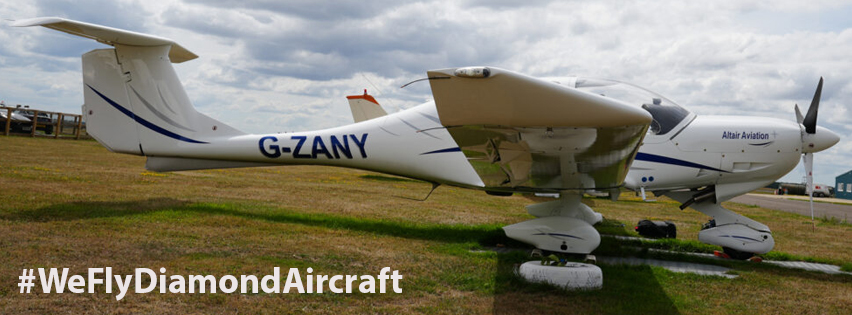
The aircraft is a DA40 TDI, which uses a Thielert “Centurion” 135 hp (101 kW) diesel engine and burns diesel or jet fuel. It has a constant-speed propeller and FADEC (single lever) engine control. G-ZANY is based at Stapleford Aerodrome, Essex, UK and was delivered as new in 2003.
Read more about the aircraft on the dedicated page
Supporting the YouTube Channel –

Support the YouTube Channel –
Welcome to The FLYING VLOG…
I am a current PPL(A), SEP (LAND), IR(A) SE/SP PBN, IR(R) & Night holder. Flying the world, exploring its hidden treasures. Taking pictures and vlogging the journey; I hope I can provide you with an oversight of my progression as I develop my skillset and airmanship in exclusive videos on my YouTube channel.
Now flying IFR in the Airways of Europe & beyond. Bringing you an exclusive niche to YouTube, flying in the same skies with commercial airliners.