Introduction –
We originally looked at flying to an F1 race in late 2024, starting with the Austrian Grand Prix, but the cheaper tickets sold out quickly, and the plan quickly collapsed as life got in the way. Furthermore, with the aircraft AOG and no return date in sight, planning for such a big trip at the end of June became impossible, so we looked further afield for a late-July slot and locked in the Belgian Grand Prix at Spa-Francorchamps (25–27 July 2025).
Once we had secured our tickets, the real challenge kicked in: finding a suitable airport to land at with our aircraft. Liege fell short, despite being the closest at about 40 minutes from the track, with limited HOTAC (hotel/accommodation) options nearby during the high-demand F1 weekend, and rental cars pretty much sold out or severely restricted in availability.
Maastricht looked tempting for proximity (around 80km). Still, it came with handling costs that ballooned to levels similar to Amsterdam’s major fees, plus surcharges during special events like the Grand Prix, likely making it prohibitively expensive overall.
Planning –
The Circuit de Spa-Francorchamps is in a rural area of eastern Belgium, in the Ardennes region. It’s not near a major hub airport, so a “fly and drive” approach is very common, as we found out when planning this trip. We looked at a few main options, mostly Liege, Maastricht, Cologne, and Luxembourg, before deciding on Cologne because of the number of hotels and cars still available.
Other options to consider, but remain prohibitively expensive (Brussels) and Slot Restricted (Düsseldorf).
We plan to fly into Cologne on Friday morning in G-ZANY, then drive directly from the airport to the circuit in a pre-arranged rental car. Because these timings are tight, we would have to depart as early as possible, clear customs and immigration quickly via the general aviation terminal, grab our bags, find our hire car in the main terminal and then hit the road without a first stop at a hotel, because any delay on Friday morning could mean missing out on precious track time.
Initially, we had planned to leave the 2025 Belgian GP early, based on our research into driving times from the circuit to Cologne airport, so that we could enjoy a comfortable three-hour IFR flight in G-ZANY and touch down at Stapleford well before sunset.
Airport Choices –
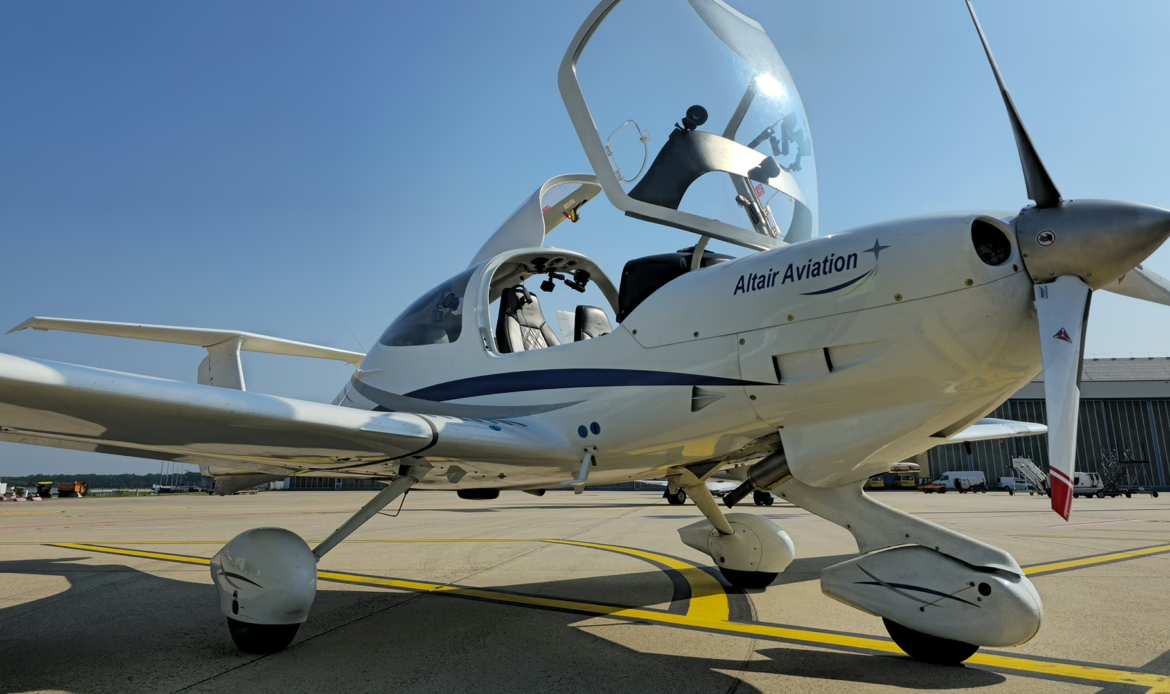
The choice of airport for IFR flights is determined by several criteria, such as reasonable handling fees, accessibility (both customs and police), and a recently implemented restriction: Some airports do not allow aircraft categorised as Category A. Airports like Barcelona El Prat prohibit this, and in some cases, even though they are not allowed to, they do so informally and charge you outrageous costs. For the type of aircraft we operate, Jet A1 availability is not a problem at most major international airports.
We had originally planned to consider Liege, Maastricht & Cologne as fully IFR-equipped alternatives to Cologne Bonn, all of which offered shorter drives to Spa than our final 135 km choice. Here is the full list of airports from my pre-2025 planning diary, fully evaluated for a DA40 (IFR-capable, ~1,150 kg MTOW) flying to the Belgian GP at Spa-Francorchamps:
Maastricht Aachen Airport EHBK —
Netherlands/Germany border area: Closest overall at ~70-80 km (about a 1-hour drive from Spa). It is the second-largest hub for cargo flights in the Netherlands. As of 2024, the airport had a passenger throughput of 230,932 and handled 29,448 tons of cargo. Maastricht Aachen Airport is fully IFR-equipped with ILS CAT II/III, RNP approaches, and radar services. Handling and airport fees quotation with ASL Group came to €328.09; passenger fees are €27.27 + VAT.
Liège Airport EBLG —
Liège, Belgium Very close at ~50-60 km (about 40-50 minutes drive from Spa). Primarily a cargo hub but handles some passenger flights (including charters or business). Liege Airport is now the 5th biggest cargo airport in Europe and the 22nd biggest in the world. Formula 1 teams and drivers heavily use Liege Airport for the Belgian Grand Prix. It is one of the two primary airports (alongside Brussels EBBR) for the event, with most F1 private jets, team aircraft and drivers arriving/departing there every year. Liege Airport is fully IFR-equipped with ILS CAT II/III, RNP approaches on all runways, and radar services. We did not proceed with any quotations due to the HOTAC and Car Rental situation, but based on recent pilot reports, costs were €150-180.
Luxembourg Airport (LUX) —
Luxembourg City, Luxembourg ~100-110 km south (about 1-1.5 hours drive via motorways to Spa). Luxembourg-Findel Airport is the sole airport located in the Grand Duchy of Luxembourg. It ranks as the 25th busiest airport globally and the 5th busiest in Europe for freight traffic. The runway at Luxembourg-Findel Airport measures 4,000 metres in length, and the facility is situated 6km away from the centre of Luxembourg City. The airport is conveniently accessible by public transport, which we found on a visit back in 2024.
Cologne Bonn Airport EDDK –
Cologne Bonn Airport is 135 km (84 miles) driving distance from the Spa-Francorchamps F1 circuit. Normally, 1 hour 25–1 hour 40 minutes. On F1 race Sunday after the chequered flag, it typically stretches to 2 hours–2 hours 30 minutes due to heavy outbound traffic from the circuit. It serves the country’s fourth-largest city, Cologne, as well as Bonn, the former capital of West Germany. It is the seventh-largest passenger airport in Germany and the third-largest in terms of cargo operations. The airport is the 5th busiest in Germany for flight movements and is fully IFR-equipped with ILS CAT II/III, RNP approaches, and radar services.
Light aircraft like the DA40 must use the official handler (Business Aviation Centre Cologne); self-handling is no longer permitted, with typical handling fees starting around €150–€250 for a short stop.
Handling/Airport Quotations –
We ultimately chose Cologne Bonn because it offered the widest car-hire availability on race weekend, full IFR capability with reliable slots, far better hotel accommodation options right next to the airport, and the easiest driving in and out of the city compared with the closer but logistically tighter alternatives.
AIP/Mandatory Handling
Cologne Bonn (EDDK) has enforced mandatory handling for all general aviation because the dedicated GAT is located outside the airport perimeter with no direct apron access, requiring an official handler for mandatory bus transfer, full security screening (including pat-downs), and coordinated movement to/from the aircraft.
Self-handling or minimal GAT acceptance was allowed at the old GA facility. You could often arrive with just a €60 General Aviation/security/shuttle fee + €30 hookup (if fuelling) plus standard landing fees (~€27–€58 total for a DA40 short stop), with no dedicated handler required and direct(ish) apron access.
After the change (new GAT outside the perimeter, enforced via the current AIP), Official handling through Business Aviation Centre Cologne (BACC) became mandatory for all GA, including light piston aircraft like the DA40. The basic GAT handling fee is now €140 per rotation (class 1 acceptance with brake blocks/pylons), plus landing/take-off fees, noise charge, terminal charge, and any bus transfer/security, pushing a quick turn to €180–€280+ VAT.
The switch happened because the new GAT terminal has no direct airside access, requiring handler-coordinated secure bus transfer and screening.
The exact wording in Section 2.7 of the Airport User Regulations confirms that all general aviation flights, including light aircraft, must use the approved handler (Business Aviation Centre Cologne) and that self-handling is prohibited due to security and operational reasons.
BACC- Business Aviation Centre Cologne (Kurz Aviation)
The approved (and only) handler for mandatory GA at Cologne Bonn is Business Aviation Centre Cologne (BACC).It is listed as the sole provider on the airport’s official General Aviation page and in the Airport User Regulations (Section 2.7):
- Website: https://www.bac-cologne.com
- Handling Office: ops@bac-cologne.com
- Phone: +49 2203 959990 (24 h)
- Address: Heinrich-Steinmann-Str. 2a, 51147 Köln (GAT terminal)
No other handlers are permitted for light GA aircraft like the DA40.
Quotation from BACC
This is an estimate for a 0730z landing on Friday, 25th of July, and a 1700z departure on 16th June 2025, with 2xPOB (one passenger and one PIC). IFR would be used for both the flight’s arrival and departure.
BACC Fees
Handling Charge: €120.00
Sub-Total: €120.00
Airport Fees
- Landing & starting fees – 1.2t MTOW: €5.50
- Noise Fees: € 20.00
- PRM fees: €1.90
- Security fees: €1.80
- Government Security Fees €14.00
- Parking Fees: €115.22
- Position fees €26.60
- Terminal Fee €60.00
- Infrastructure Fee €21.20
Sub-Total: €227.32
Total: €468.01 INCL VAT (19%)
IFR Slots
Cologne is a Level 3 coordinated airport (per Fluko and the German AIP), so every arrival and departure slot must be pre-allocated by the national coordinator. As the mandatory handler, BACC submits the request for you via the General Aviation Clearance Request (GCR) system. For each relevant sector, include the EDDK (number) in ITEM 18 of the flight plan following (RMK/).
Accommodation –
Ryan took care of the hotel booking for the trip and nailed it perfectly. We had specifically asked for somewhere with free on-site parking for the hire car and a relatively central Cologne location that would make the early-morning blast to Spa-Francorchamps as painless as possible; this also gave us excellent local dining options and significantly sped up the journey we had to endure twice daily.
For this trip, we would stay in the Mercure Hotel Köln Belfortstrasse. It’s located just 12 minutes from Cologne Bonn Airport by taxi or S-Bahn, with free on-site parking right outside the front door, putting us in a quiet, central neighbourhood and only a short stroll from the Rhine.
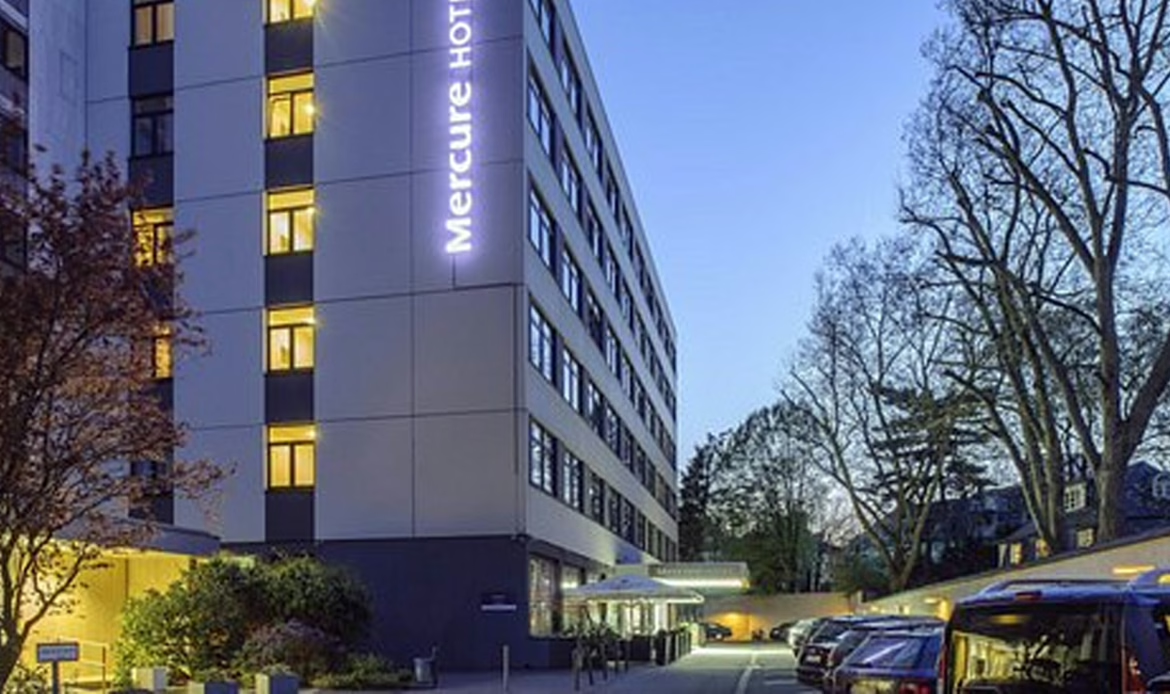
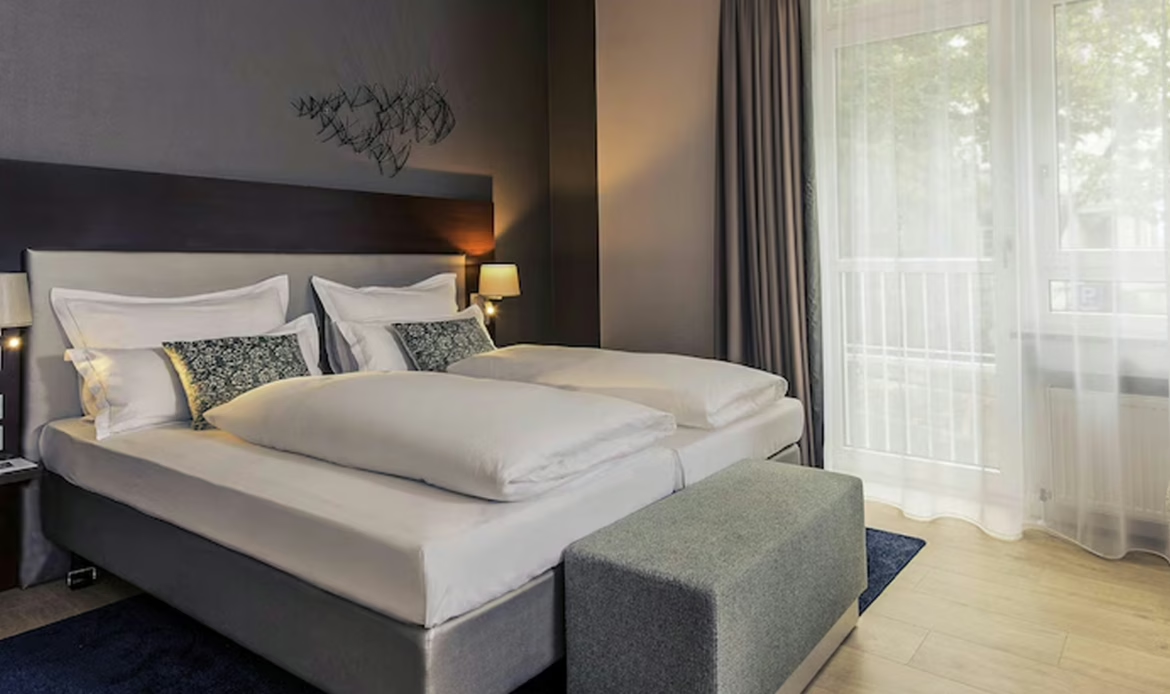
The rooms at the Mercure Hotel Köln Belfortstrasse are modern, bright and surprisingly spacious for a city hotel. All 128 rooms are air-conditioned, with comfortable king or twin beds, a large work desk, free high-speed Wi-Fi, a flat-screen TV, a minibar and tea/coffee-making facilities. The bathrooms are clean and well-equipped with walk-in showers (some with separate baths), hairdryer and good-quality toiletries. Soundproof windows keep the street noise out, and the blackout curtains make it easy to sleep after a late-night arrival from Spa.
We stayed in a comfortable Standard Room with twin beds, everything felt fresh, calm and genuinely relaxing, exactly what we needed between the twice-daily drives to Spa and the early-morning departures. Whilst breakfast is an option, we opted not to use this due to costs.
Weather Forecast –
On 25 July 2025, the TAFs indicated generally good VFR/IFR conditions for our DA40 departure to Cologne Bonn (EDDK) from Stapleford, with light variable winds, 9–10 km visibility and no significant cloud below 4,500 ft for most of the day, except for a short period of morning mist/BR and possible BKN010 at EDDK between 0600–0800, and only isolated light showers possible later in the evening. Textbook for this time of year.
TAF for London Stansted, Southend and Cologne on 25th of July 2025
TAF EGSS 250453Z 2506/2612 31003KT 9999 SCT045 PROB30 2506/2508 4000 BR BECMG 2513/2516 25010KT PROB30 TEMPO 2603/2606 7000 PROB30 TEMPO 2609/2612 7000 -SHRA=
TAF EGMC 250458Z 2506/2515 VRB03KT 9999 SCT045=
TAF EDDK 250500Z 2506/2612 VRB03KT 9000 NSC PROB30 TEMPO 2506/2507 4000 BR PROB30 TEMPO 2506/2508 BKN010 BECMG 2509/2511 32007KT PROB30 TEMPO 2517/2524 SHRA BKN040CB BECMG 2519/2523 VRB03KT TEMPO 2602/2608 BKN008 PROB30 TEMPO 2603/2607 4000 BR BECMG 2608/2611 32007KT=
The Journey to Cologne –
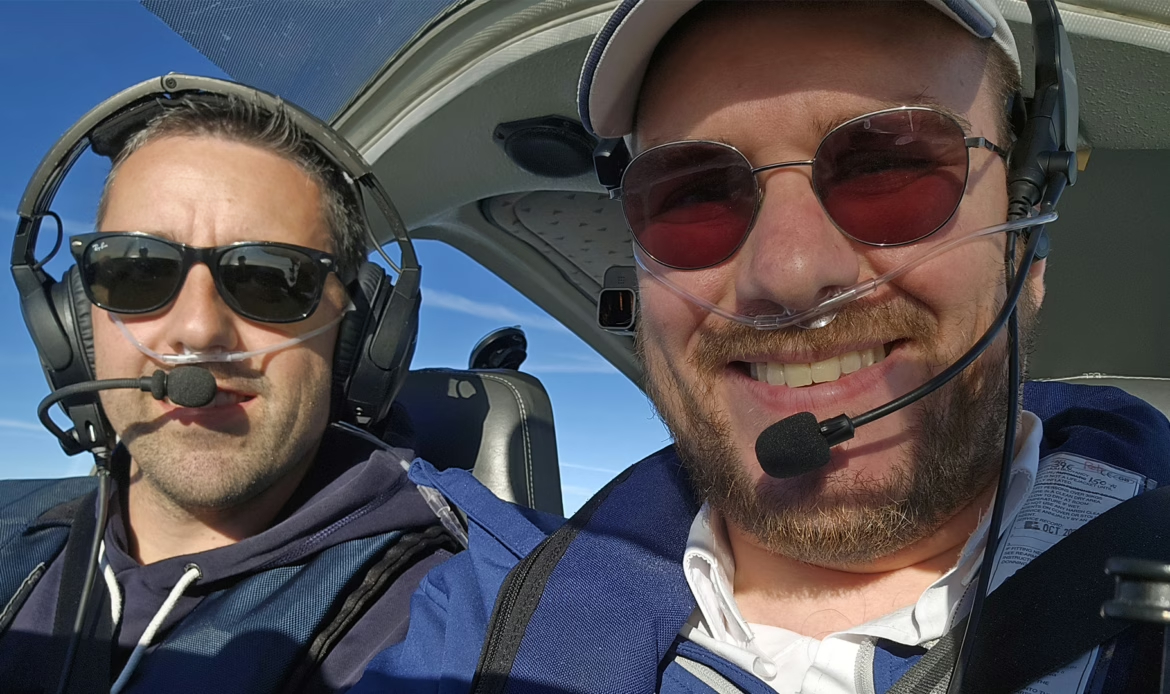
The journey to Spa was never going to be easy, but life decided to make it properly painful. We could only both get away on the Friday morning, which meant a stupidly early start if we had any chance of making Cologne in time for the drive down to Sprint Qualifying. Alarm went off at 03:20. Brutal. We were wheels-up at 04:50 zulu from Stapleford, aiming to touch down in Cologne by 09:30 local. Miss Sprint Quali? Not an option. On the way to the airfield, we swung into that McDonald’s just north of the Dartford Crossing. This is the first services you’ll reach north of the crossing, and luckily, it was open.
We were actually ahead of schedule for once, but only when we were halfway through did I realise I’d left two Red Bulls sitting in the fridge at home. Absolute idiot. That mistake haunted me the entire flight. We rolled onto the apron at Stapleford at 05:20. Twenty-five minutes to pre-flight, load the bags, fuel up and be ready.
Two of us went flat out, and somehow we made it with five minutes to spare. I was sweating. Grabbed the phone, rang London Control direct at Swanwick for release. They came straight back with a routing I’d never been given before for a flight departing towards Belgium, departing via BRAIN. I’d filed the normal Detling route (the one that usually goes through Thames Radar or London Control in the early hours), so I was hopeful I hadn’t filed the alternate and longer route via Amsterdam accidentally.
BRAIN? Never had that before. Proper curveball. We started taxiing thirteen minutes late. Not the end of the world, but the long drag out to 03L didn’t help; noise abatement meant we had to go the long way round the houses to the south. That McDonald’s stop was suddenly feeling like a mistake. Airborne, London cleared us into controlled airspace pretty quickly. About twelve miles before BRAIN, they gave us a right turn to skirt around the bottom of Southend’s controlled airspace, then back towards DETLING. Climb instructions came one after another until we settled at FL130, a route direct to KONAN. The FIR border came relatively quickly thereafter.
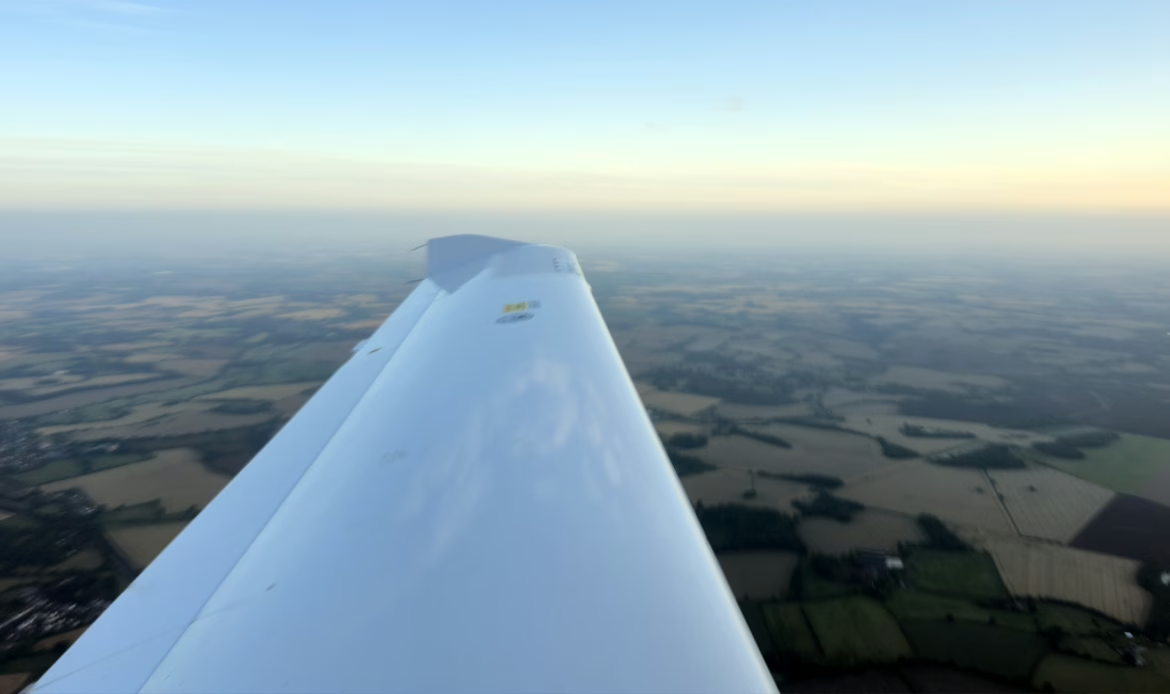
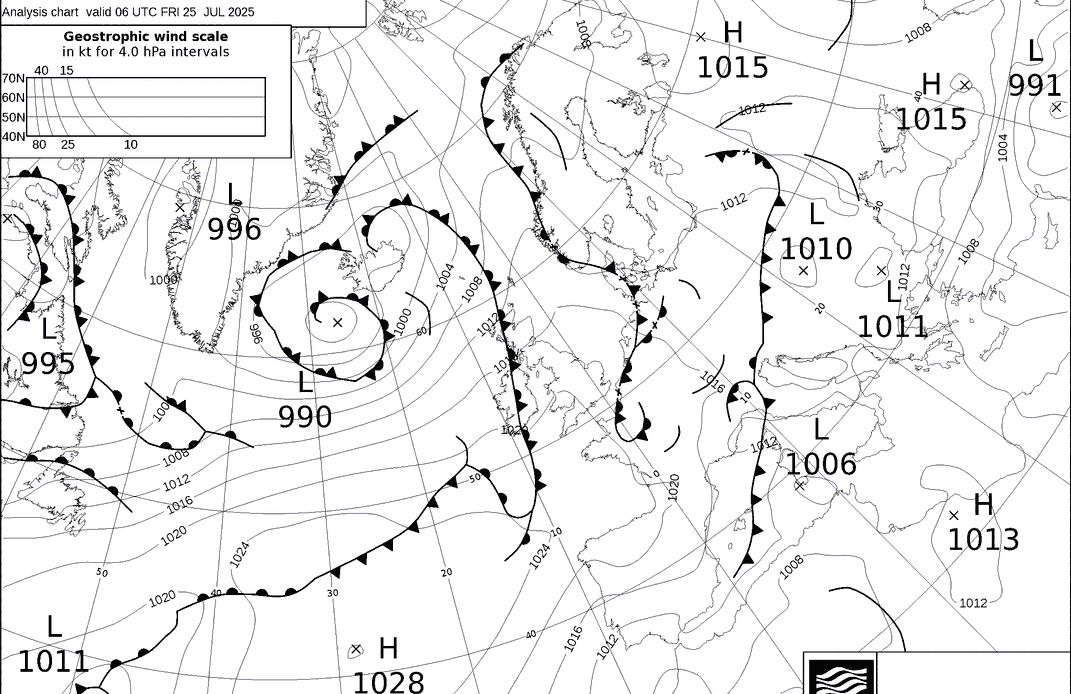
The weather was exactly what the charts had promised. stuck between two occlusions, proper messy. We punched through a layer of IMC for maybe a few minutes, but the climb rate was good, and suddenly we popped out on top into bright sunshine. Within 35 minutes, the UK disappeared behind us. The Red Bulls were still in the fridge. The coffee was long gone. But the new routing had actually worked out fine, and our ETA was slowly coming back to our original SLOT time.
You could clearly see plenty of convective activity bubbling up out the window, scattered build-ups, nothing severe, and certainly nothing we couldn’t punch through if we had to. But for the sake of comfort (and to keep the peace), we would likely choose to weave around them rather than barrel straight through the bumps.
Surprisingly, the airspace wasn’t as busy as I’d expected for that time of morning during peak summer season. Traffic was light, almost leisurely. We were soon handed over to Brussels Control, and they didn’t seem particularly busy either. That’s often the case here; if you’re approaching from the south or southeast, expect to be routed well over the top of the Brussels TMA or routed due south of the field to stay clear of the busy arrival and departure streams. In all my flights through this area, I can’t recall a single time we weren’t vectored over the top when coming from this direction.
My attention quickly shifted to the bigger concern looming ahead. A wide swath of airfields, including Brussels South Charleroi (EBCI) and especially Liège (EBLG), were blanketed in thick mist and fog. Liège looked particularly socked in, with visibilities likely dipping well below IFR minima in places. Fortunately, we still had Brussels National (EBBR) as a viable option, though diverting there would be expensive and very much an emergency contingency rather than a casual plan B.
As we pressed on, the weather showed no signs of improvement; if anything, the murk seemed to thicken in our direction. Ironically, these fog-bound airports were precisely our planned alternates for reaching Spa-Francorchamps and the F1 circuit. A diversion at this point would have been incredibly frustrating, either circling to land much farther afield than intended or waiting out the fog for hours. The conditions felt more like late autumn than mid-summer: cool, damp air masses with an approaching front kicking up winds and low stratus. Still, with the sun climbing higher, there was a decent chance the fog would burn off eventually, meaning we might have simply landed a bit later than planned rather than face a full-blown diversion.
Throughout, we kept a close eye on engine performance. In a single-engine piston aircraft flying IFR, that’s always a critical item; any hint of trouble would force a quick decision on whether to divert immediately. Thankfully, everything ran smoothly: no roughness, no unusual indications, and the engine was purring and the turbo keeping us up high as reliably as ever.
It’s always a delicate balancing act when flying IFR in a single-engine aeroplane. There’s far less redundancy than you’d have in a twin or turboprop, no second engine to lean on if the worst happens over inhospitable terrain or in IMC. Every decision weighs pre-flight planning (fuel reserves, alternates, weather trends) against real-time conditions and the aircraft’s limitations. You stay vigilant, trust your instruments, and keep options open.
As we skirted past Liège, the fog refused to budge, forcing a Fly Pro Boeing 747-200 freighter, still rocking its vintage analogue “steam gauge” cockpit and requiring a three-person crew (captain, first officer, and flight engineer), to enter the hold and wait for conditions to improve rather than risk a low-vis approach in that murk.
METAR EBCI 250620Z VRB01KT 4400 BR FEW035 17/16 Q1018 BECMG 6000 NSW=
METAR/TAF for Brussels Charelroi, Liege & Maastritch on 25th of July 2025
TAF EBCI 250500Z 2506/2612 34003KT 0100 FG BKN001 BECMG 2506/2509 9999 NSW SCT025 PROB30 TEMPO 2512/2518 4000 SHRA PROB40 2603/2608 0300 FG BKN001=
METAR EBLG 250650Z 12003KT 0250 R22L/0550D R22R/0750D R04R/0450N FG SCT001 BKN002 16/16 Q1018 NOSIG=
TAF EBLG 250500Z 2506/2612 33003KT 0100 FG BKN001 BECMG 2506/2509 9999 NSW SCT025 PROB40 TEMPO 2514/2520 3500 SHRA SCT020CB PROB40 2603/2608 0300 FG BKN001=
METAR EHBK 250625Z AUTO 19004KT 120V220 4000 BR SCT001/// BKN002/// OVC003/// 16/16 Q1017 BECMG 6000 NSW BKN006=
TAF EHBK 250524Z 2506/2612 24004KT 1300 BR BKN001 BECMG 2506/2509 9999 NSW SCT012 BECMG 2509/2512 33008KT PROB30 TEMPO 2509/2520 6000 SHRA -RADZ BKN012 FEW020CB=
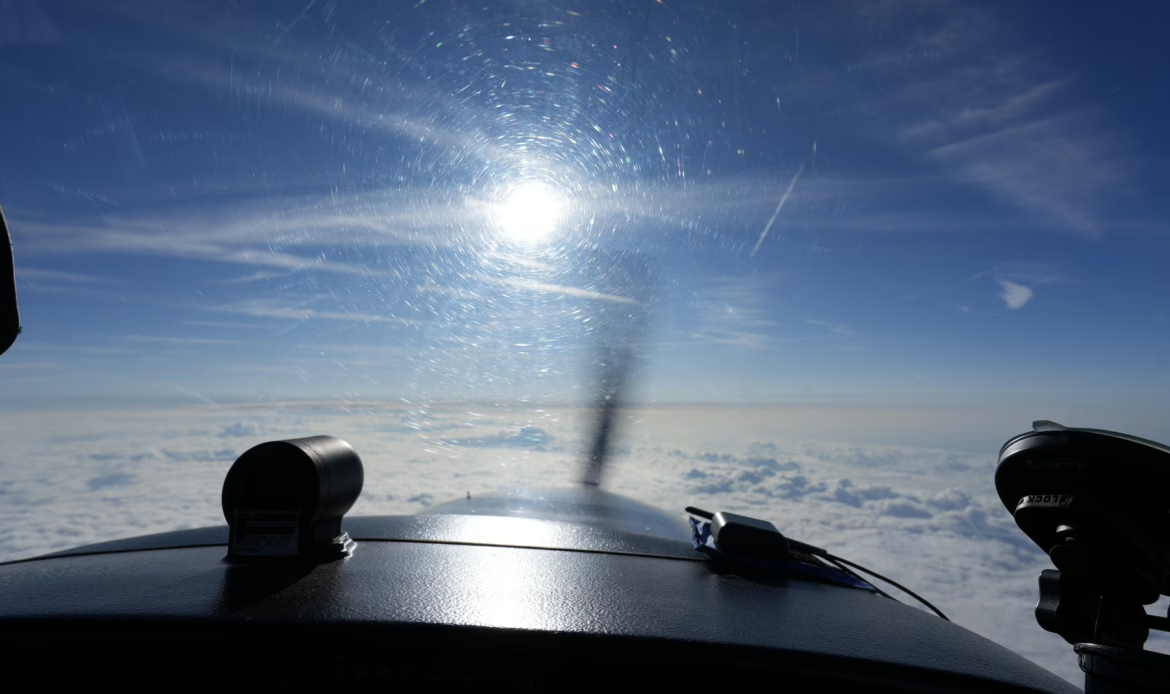
One downside of these early summer morning flights is the relentless high sun glaring straight ahead for most of the leg, especially on our easterly heading toward Cologne (EDDK), where we could only hope for a timely left turn to escape the blinding light. It brought back memories of past red-eye runs to Germany, always ending in an early 0930 landing with tired eyes squinting into the dawn. Handover to Langen Radar was brief before Cologne Approach took us, vectoring us through a series of left turns that felt like the start of our approach, yet at 35 miles out, we were still loafing at FL130, high enough that I started mentally rehearsing a steep descent in the clear air.
We were well north of the planned STAR but roughly aligned for the RNP to Runway 13L, with another left turn sequencing us in. Haze lingered as the morning sun burned off the overnight mist and fog, and what we first mistook for random convection turned out to be the massive steam plume from Weisweiler power station west of the field (the lignite-fired giant I’d later drive past en route to Spa). Descent finally began around 28 miles out, with one ahead for 13L; we got continuous clearances for the RNP approach, but passing FL90, we were still 1500–2000 feet too high, forcing us to expedite at 1500 fpm in smooth VMC outside any thermals. We chased the profile aggressively, rolling into the establishing turn, then easing vertical speed to nail the 3-degree glideslope by the FAF, settling into a stable descent right on time.
Tower offered a sidestep to the visual for 13R once the runway popped out of the lingering haze (landing into direct sun made spotting it tricky at first), so I elected to stay on the instrument path until visual confirmation rather than break off prematurely, a slight frustration, but a welcome change from pure IMC. We sidestepped, touched down on 13R just six minutes late, then backtracked for what was billed as a short taxi to GA parking, though some taxiways weren’t charted clearly, with areas G01/G02 tucked next to GAT3 in an odd setup.
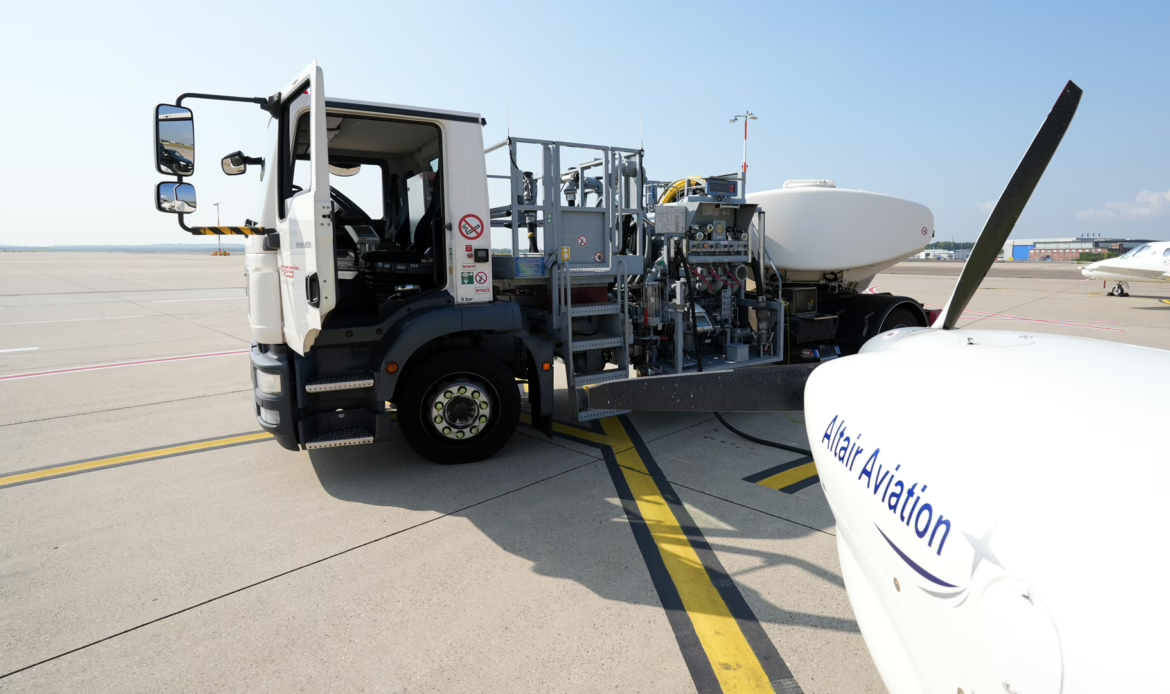
A follow-me car guided us in, and once parked, we called the handler for refuelling; a queue awaited (which we’d later appreciate), and our pre-booked AIR BP return fuel hit snags with a faulty card reader, forcing a reposition to Victor Ramp for the heavy fuel truck, a hilarious reversal from the usual service. As we waited, border police arrived for passport checks (sunglasses off for the red-eyed photo op). We eventually sorted the fuel, topped the tanks, taxied back to pushback and secured the aircraft for the layover. Luckily, we caught a ride with the BACC handler to the main terminal for car hire, discussing how we’d shuttle back to the distant GAT, definitely not a walkable trek. A Red Bull was needed at this point.
ATC Flight plan and route flown –
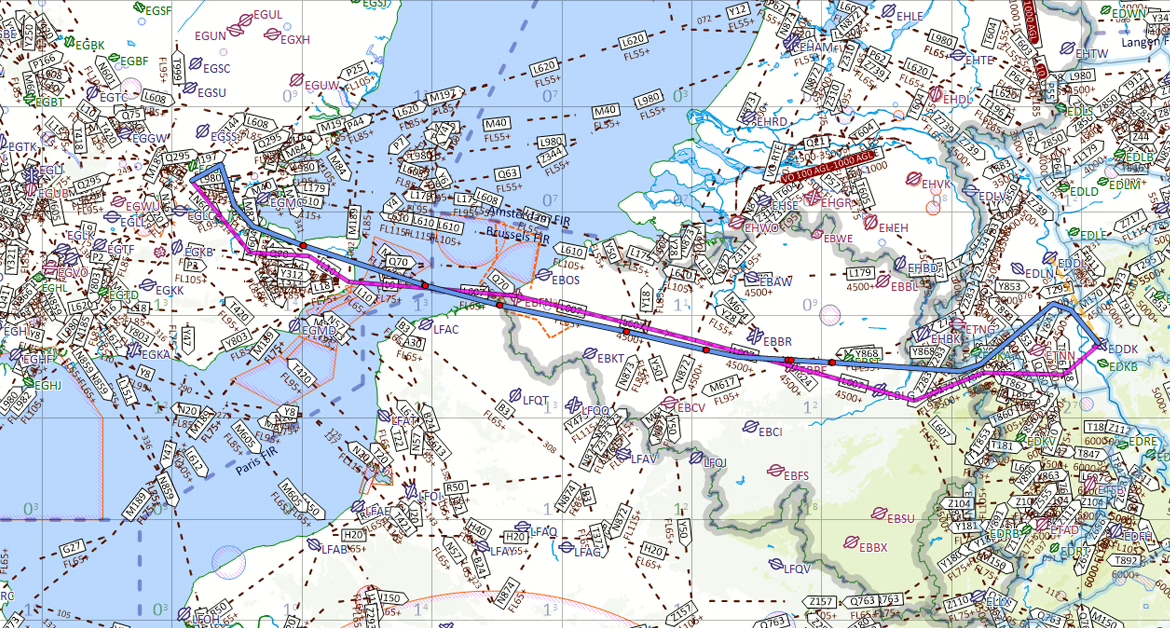
N0130F130 LAM L10 DVR L9 KONAN L607 LNO M170 KENUM T862 DEPOK
Filed ATC flight plan for EGSG-EDDK
DEPOK2V
Alternate Routes for Weather –
I now almost always plan alternate routes in the week or two before the flight, so I have a quick win for replanning the flight either by departing early or departing a little later to meet my arrival time into the destination airport. These are mostly factored by weather charts using the long-distance models and GRAMET before making a final decision on the high-resolution models and fax chart in the days before and during the flight. These alternate routes are carefully chosen to either sidestep convective weather or low cloud/low-vis issues developing on the departure leg within UK airspace, or to reroute entirely, perhaps via a more southerly or northerly path to steer clear of active frontal systems, associated turbulence/icing, and busier or more restrictive FIR boundaries, ensuring we still arrive at the destination on schedule with comfortable margins.
N0126F110 BRAIN P44 DAGGA/N0126F120 P44 CLN/N0127F110 L608 SASKI L179 NIK DCT SOGRI DCT PODAT M170 KENUM T862 DEPOK DEPOK2V
ALTN Flight Plan VIA BRAIN (LTMA East) & North Sea – EGSG-EDDK
N0128F130 BRAIN M197 REDFA L620 SONEB Z841 GMH/N0128F120 Z841 GETNI T858 KOPAG KOPAG3V
ALTN Flight Plan via EHAA (Amsterdam FIR) – EGSG-EDDK
The Formula One Experience –
Once we’d cleared refuelling, navigated the inevitable police and customs formalities, we made the short hop over to the terminal to collect our hire car. We grabbed armfuls of snacks and much-needed cold drinks before setting off for Spa. First things first: we gave the car a thorough once-over, circling it slowly, noting every little scuff and scratch. Phones out, we photographed everything from every angle. Lesson learned from previous trips when it comes to rental cars: evidence is your best friend.
Finally, we hit the road. The drive from Cologne Airport to the Yellow Parking area at Spa-Francorchamps is a proper journey, not just a quick transfer. As we rolled through the Belgian countryside, we suddenly spotted the unmistakable tall chimney we’d flown directly over during our approach into Cologne, the one on the base leg of the turn before lining up for the RNP. It felt like a nice little full-circle moment.
About an hour in, hunger hit hard. We pulled into a McDonald’s at Crécy (or Crescend Eau as the sat-nav charmingly mangled it) and demolished a quick meal in the car park, windows down, already buzzing with anticipation. Except when the one huge wasp came along.
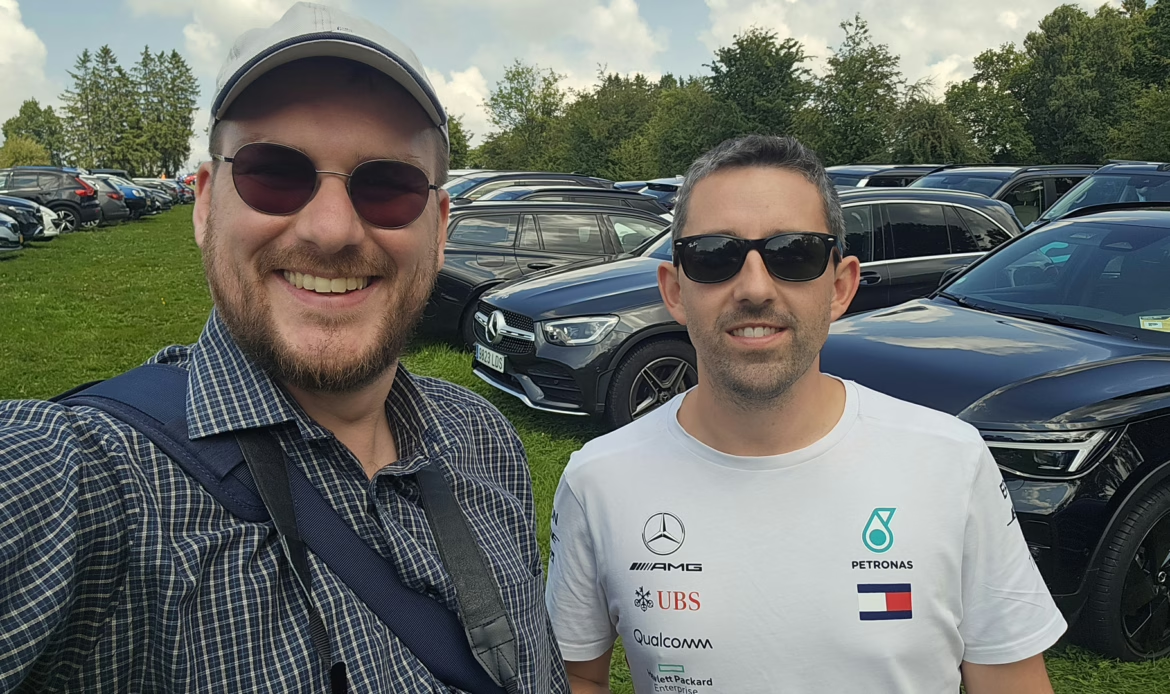
Yellow Parking sits on the northern side of the circuit, perched above the valley where the track snakes through the Ardennes forest. The drive from the main roads down to the circuit itself feels like its own adventure, winding lanes, forests closing in, and then suddenly the scale of the place hits you. The organisation on site, however, is nothing short of impressive. Marshals and signage keep everything moving surprisingly well for such a massive event.
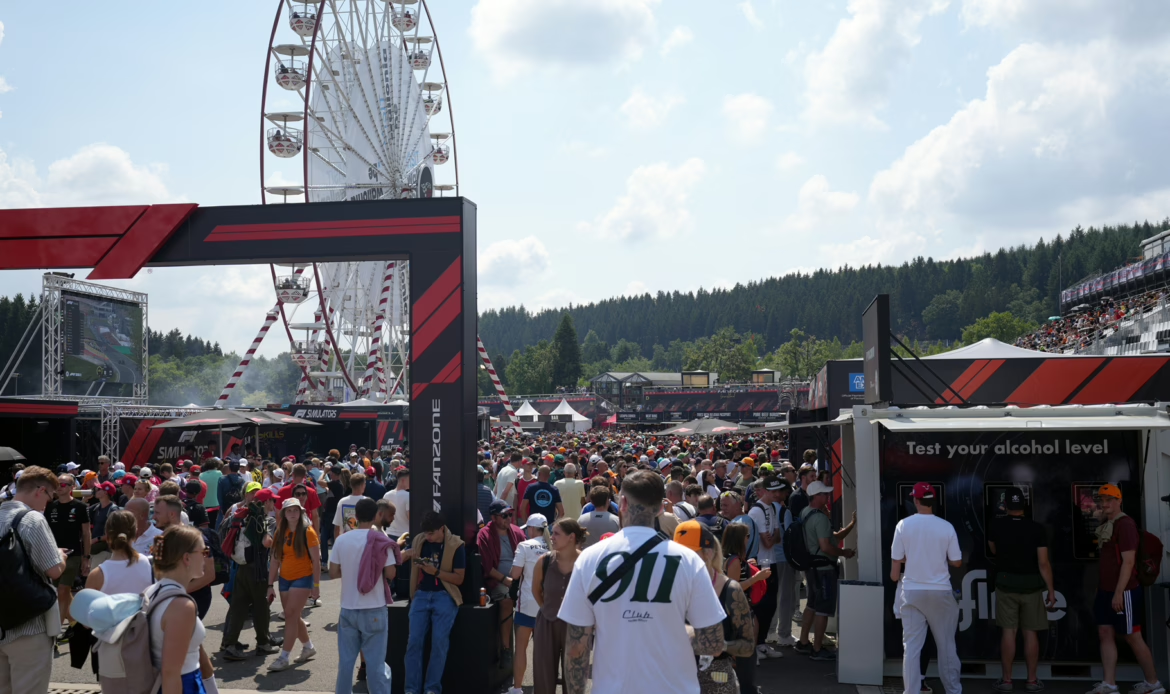
From the car park, we faced the steep descent on foot down to the nearest entry gate, which conveniently dropped us straight into the F1 Fanzone. The place was alive with energy: rows of food vendors offering everything from Belgian frites and waffles to burgers and international snacks. The smell of fried onions and grilled sausages hung thick in the air.
The whole entry process, security checks, ticket scans, and bag searches, ran like clockwork. Compared to the chaos I’ve experienced at other major sporting events, Spa’s operation felt refreshingly efficient and well-drilled. We timed our arrival perfectly for the very start of Sprint Qualifying, and that was the moment it truly hit me: this was my first time seeing modern Formula 1 cars in the flesh at a Grand Prix weekend.
I’d caught a glimpse of V10 cars in London back in 2004, raw, screaming monsters full of visceral power. These hybrid machines sounded completely different, almost like high-powered hoovers at first, with a sharper, more aggressive edge underneath. The noise was strange, almost disappointing for half a second, until the cars accelerated out of the pit lane and the full symphony hit. The ground vibrated. My chest tightened. Any doubts vanished instantly.
We made our way to our seats in the Silver 1 grandstand. The location was solid, a few hundred metres up from the start/finish line, with a clear view as the cars powered up towards the legendary Eau Rouge. It wasn’t covered, and I found myself quietly envious of the plush-looking Gold stands nearby, but with the weather forecast already threatening rain, I was grateful to be in the open while the sun was still shining. No regrets.
I’d never been to an F1 race weekend before, nor explored a proper F1 Fanzone, and I have to say I was genuinely impressed. Yes, it’s heavily commercial, big brands everywhere, merchandise stands packed with expensive caps, hoodies and replica kit, but it delivers the atmosphere and keeps thousands of fans entertained between sessions. Prices were eye-watering, as expected, but the buzz made up for it.
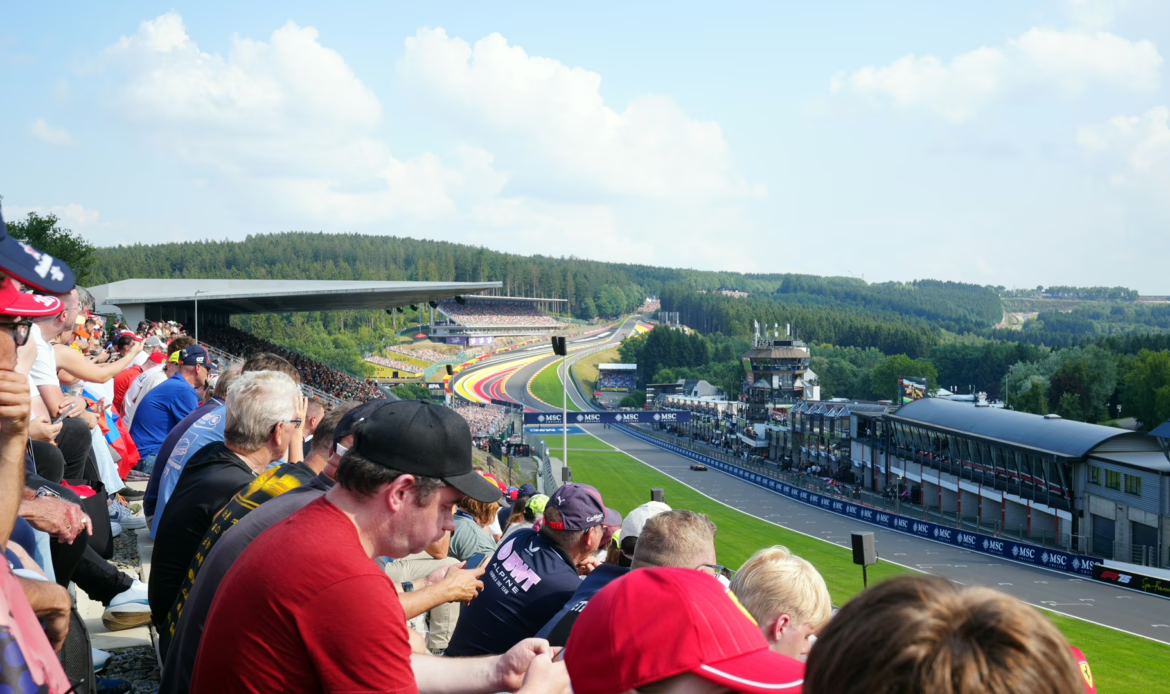
Sprint Qualifying day was one of the shorter ones, especially as we’d missed the support series and first practice. When the session wrapped up, the real test began: getting out. We initially walked the wrong direction towards Francorchamps village before realising our mistake and doubling back towards Yellow Parking. The sheer volume of people made it clear that leaving the circuit each day was going to be a major operation. The worry lingered. If it took this long on a relatively quiet day, what would race day be like?
In reality, leaving is agonising. Even with our hotel only 90 minutes away in normal traffic, you need to add at least another hour from the moment you climb back into the car. The journey back to Cologne is roughly 140 km, but door-to-door, you’re realistically looking at two-and-a-half to three hours on race weekend. Patience is mandatory.
Eventually, we reached our hotel, found parking without too much drama, and checked in. Exhaustion washed over us; it had been an incredibly long, emotional day. But stomachs were rumbling again, so we headed out on foot. Just a ten-minute walk away, we found Max Stark, a proper, informal brewpub with a warm, vintage, lived-in feel: dark wood, old beer signs, and that comforting neighbourhood atmosphere.
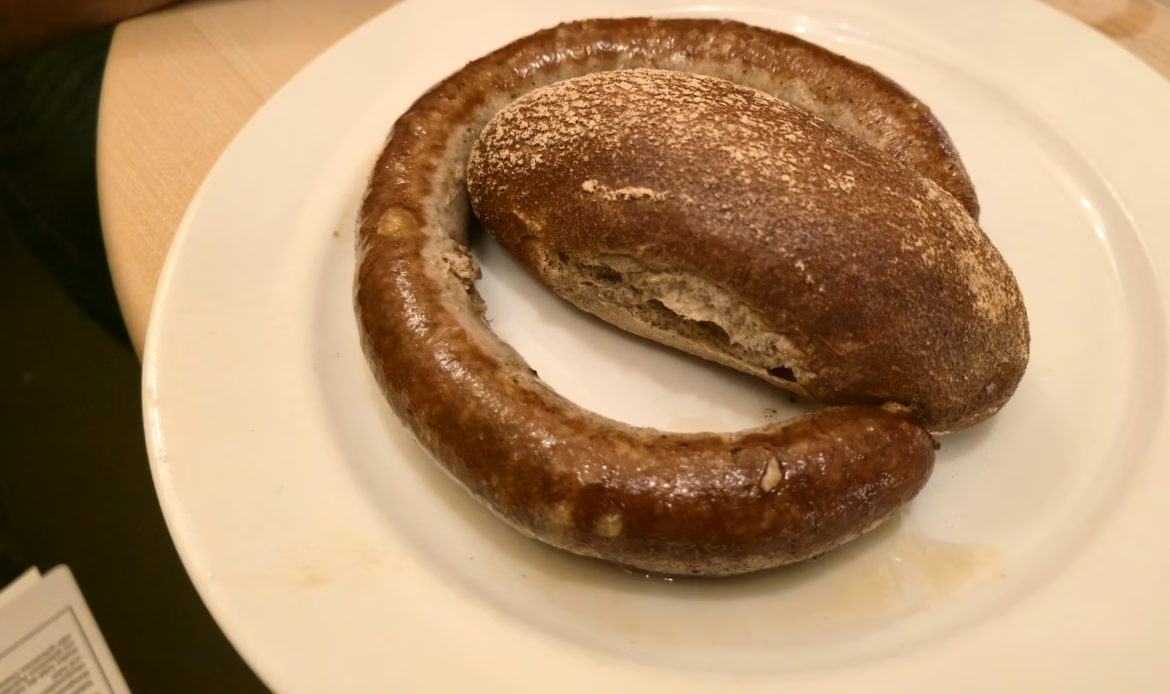
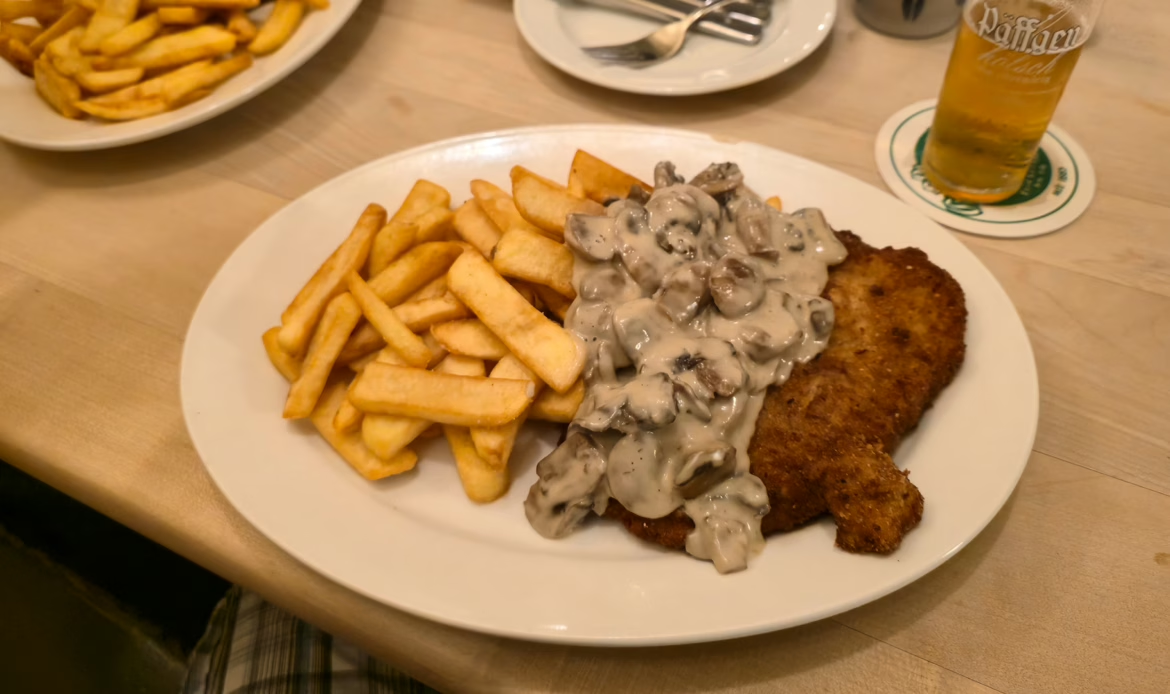
The menu was available in both English and German, prices were reasonable, and the staff were friendly despite a few items having already run out. We went for the special of the day, an excellent bratwurst with fresh bread, and both ordered Jägerschnitzel with chips. It was hearty, perfectly cooked comfort food after a tiring day. We washed it all down with a few glasses of crisp, traditional Kölsch. Simple, satisfying, and exactly what we needed before collapsing into bed, already excited (and slightly nervous) for what the next few days at Spa would bring.
After such a long and adrenaline-filled first day, we dragged ourselves back to the hotel utterly pooped. The place was comfortable enough, though the rooms were a bit dark with limited natural light filtering through. Still, the bed felt like heaven after the travels, and we were out cold within minutes.
The next morning, we woke early, eager to stretch our legs and hunt down a decent coffee. We wandered the quiet local streets until we found a lovely little café that served proper barista-style drinks in actual takeaway mugs we could keep. It was a small touch that made us smile; we made a mental note to return the following day.
Back at the car, disaster had struck overnight. We’d parked under the only available tree, and the birds had shown their appreciation in spectacular fashion. The roof, bonnet, and windscreen were absolutely covered in thick white splatter. Bird droppings are surprisingly corrosive to paintwork, so we had no choice but to hunt down a car wash before heading to the circuit. It was annoying and delayed us slightly, but better safe than sorry with a hire car.
You might wonder why we didn’t just stay closer to the track. The honest answer is there’s almost nowhere reasonable nearby. Spa sits in the middle of the Ardennes forest, beautiful, but remote. Most fans either fly in for the day, drive from all over Europe, or camp. For us, staying near Cologne Airport was the only realistic option given our tight schedule and limited three-day window around the F1 calendar.
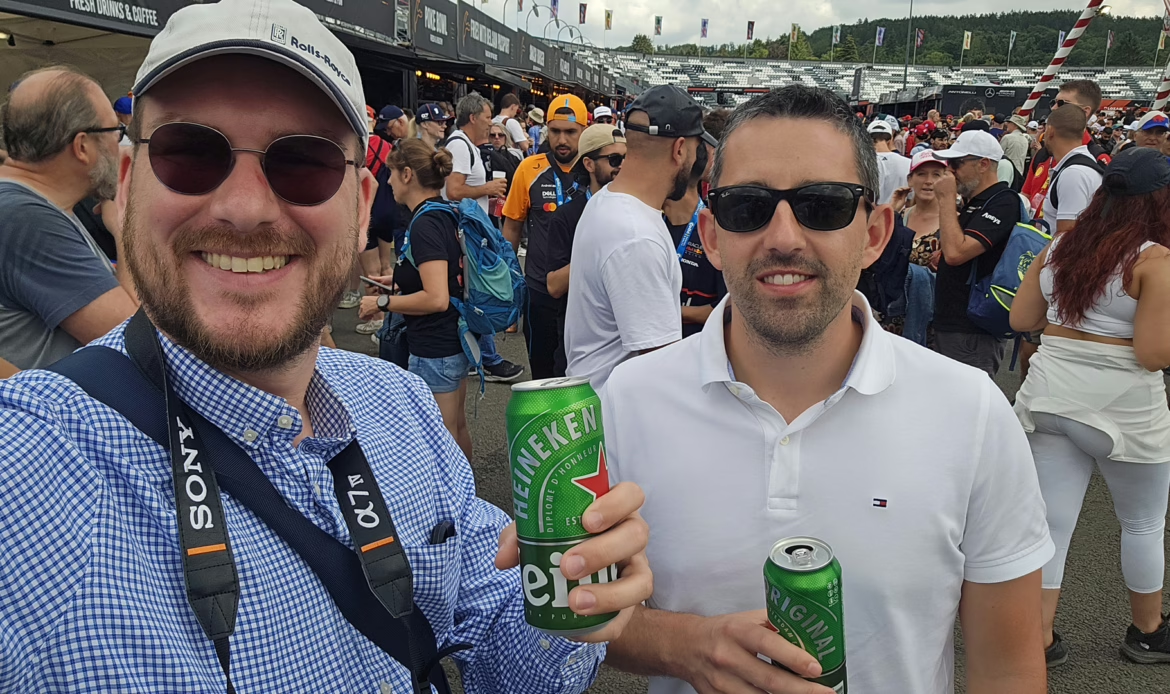
We arrived at the circuit and this time drew a slightly further parking spot in the Yellow zone. Rather than see it as a negative, we treated it as valuable research: this would give us a realistic benchmark for how long it would actually take to get in and out each day. We carefully photographed the route down through the forest paths so we wouldn’t repeat yesterday’s navigational mistakes.
By now, we were starving, not just for motorsport but for proper food. We demolished a fantastic Berliner-style kebab from one of the Fanzone vans. Hot, juicy, and full of flavour, it hit the spot perfectly.
We missed the Sprint Race itself but made it in plenty of time for the main Qualifying. Even better, we caught the Paddock Club Track Tour, the F2 Sprint, and a brilliant Historic F1 cars demonstration before the big session. The sound of those old V8 and V10 machines echoing through the valley was pure nostalgia, a lovely contrast to the modern hybrids.
To test our escape plan, we positioned ourselves towards the back of the Silver stand and, the moment Qualifying ended, made a timed dash. We exited via the same route we’d entered, climbed the steep hill back to Yellow Parking, and jumped into the car. Not bad at all. A wet race was forecast for Sunday, of course, because it’s Spa, and Spa weather is legendary for a reason.
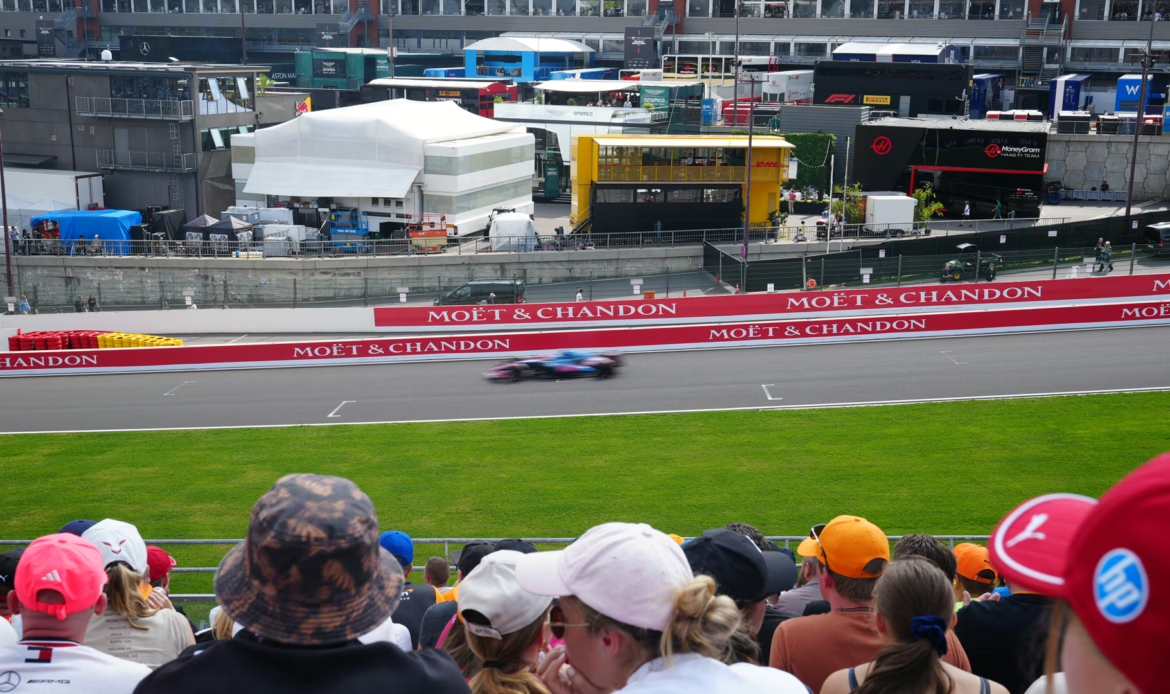
We got out of the circuit surprisingly quickly that day, but the gathering rain forced us to hunt for ponchos. We stopped the timer near the earlier McDonald’s spot and popped into Decathlon. Half the grand prix crowd seemed to have the same idea, but we managed to grab the last couple before they disappeared.
The drive back to the hotel gave us our first proper taste of the German Autobahn. In our surprisingly rapid VW Golf Sport, the fast lane was exactly that, as quick as you dare without inviting disaster. It was thrilling after days of crawling through Belgian traffic.
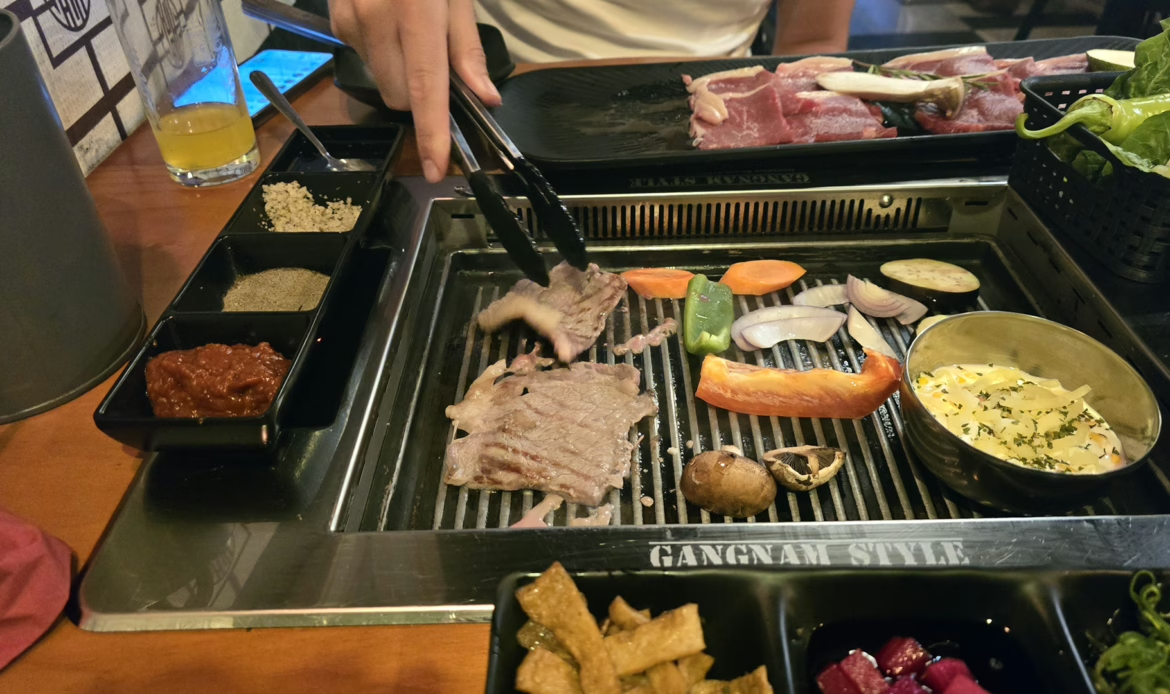
That evening, we opted for a longer, more scenic walk into town along the Rhine. After being cooped up in cars and grandstands all day, the fresh air and river views were perfect. We found a Korean BBQ restaurant (not quite Seoul standards, but decent) and enjoyed a relaxed meal. On the way back, we passed some inviting bars and settled on Haxenhaus, where we enjoyed proper large steins of beer instead of tiny 200ml glasses. It was the perfect wind-down.
Sunday – Race Day (and Mother Nature’s Plot Twist)
The final day promised to be a long one, and the forecast was ominous: heavy rain and delays were likely. Over breakfast, we started thinking seriously about our journey home and contingency plans. On the walk back to the hotel, we passed the striking EASA building, the European Union Aviation Safety Agency headquarters. It was a funny little reminder that we’d flown all this way specifically for this race weekend, and now the weather might snatch victory from our hands.
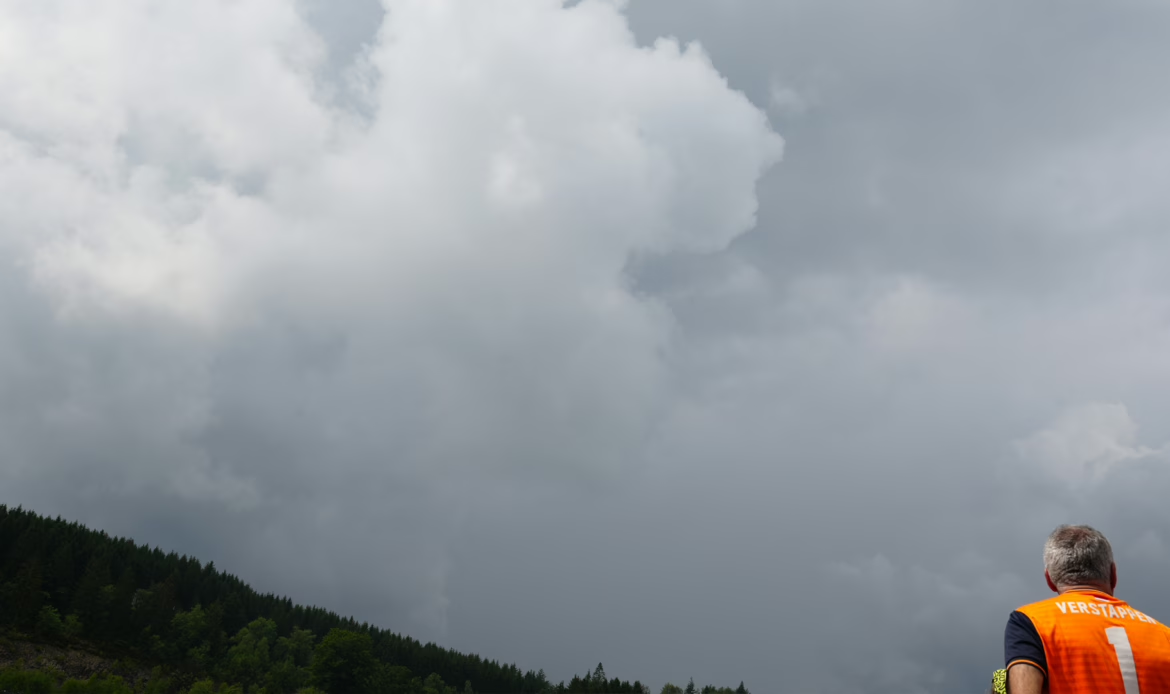
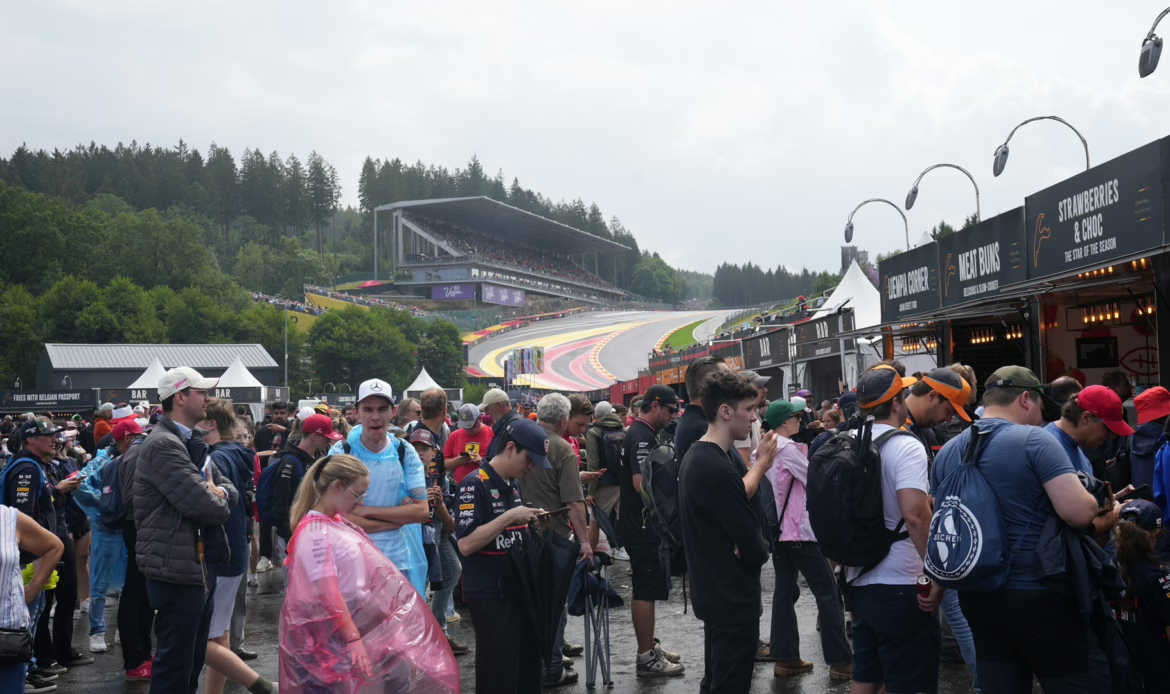
We stopped at our usual café for one last coffee before the drive to Spa. As we sat there, the rain was already hammering down. By the time we reached the circuit, torrential showers forced us to shelter in the car for a while. Eventually, we made it into the Fanzone and grabbed a juicy burger for fuel. Armed with our new ponchos, we headed to our seats just as the heavens really opened.

The race was delayed multiple times due to the standing water and worsening conditions. We sat there under our ponchos as another heavy shower rolled in, the one that effectively ended our grand prix hopes. With the clock ticking and a potential 44-lap or 5 pm finish looking increasingly unlikely, we made the tough decision to leave early. We wanted to avoid the worst of the post-race traffic and make our flight home with some margin.
As we climbed the hill back to Yellow Parking, we sadly missed the Belgian Air Force flypast (which looked spectacular from the videos we saw later). By the time we were on the road, the rain was even heavier. The journey back to Cologne Airport was wet, slow, and reflective.
Yes, it was disappointing to miss the actual race after all the planning and travel. But that’s Spa, unpredictable, challenging, and always an adventure. It’s a lesson learned for next time: build in more flexibility, perhaps stay longer, and never underestimate the Ardennes weather.
Planning the return –
I had done some initial route thinking the day before, but nothing was locked in. The real decisions unfolded during the drive back to Cologne Airport on Sunday.
As we pushed through the heavy rain on the autobahn, I kept one eye on the road and the other on the live weather radar and SIGMETs. The picture was unmistakable: the direct route via Brussels was completely off the table. Strong thunderstorms were parked right over the Spa area and tracking west, exactly the path that routing would have taken us. No thanks.
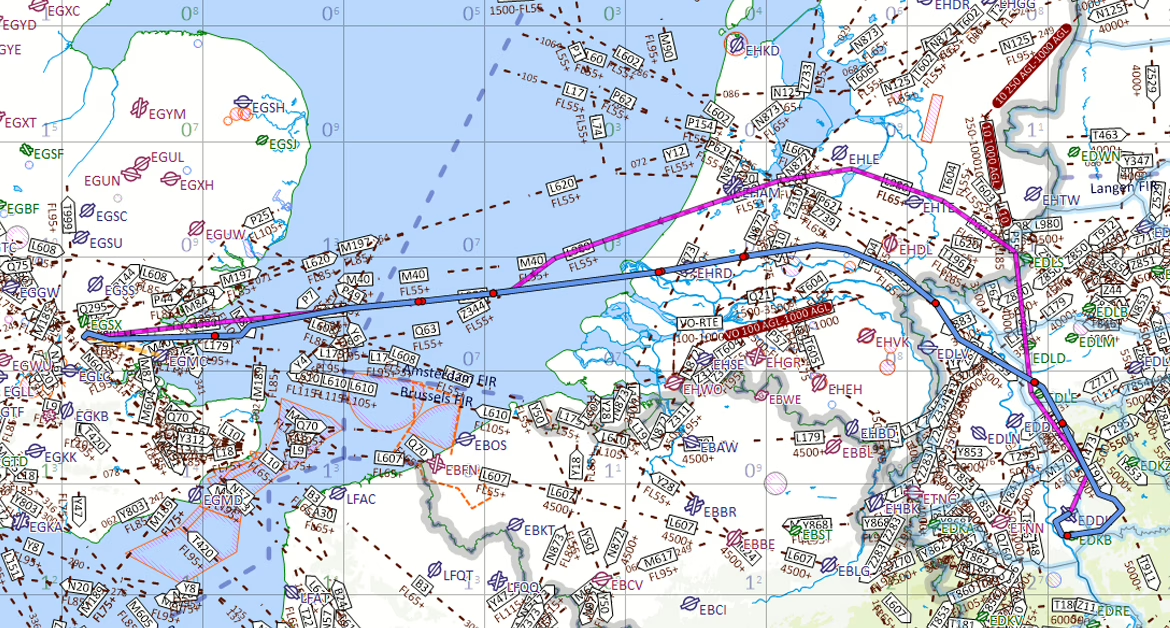
While still on the move, I settled on the northerly route via Amsterdam. It kept us well clear of the storms, offered better weather avoidance options, and stayed nicely north of the busiest parts of the London TMA. With summer ending and the days drawing in quickly, it also gave us the best chance of reaching home before sunset.
Thanks to the Network Manager Portal (NMP, formerly CFMU), I could see in real time that sticking with our original 1700z departure would land us a poor slot with further restrictions likely. The worsening weather across northwest Europe only made things riskier, with a genuine chance of being pushed even later or diverted back into the UK. I wasn’t prepared to take that gamble.
So I contacted Brussels Area Control Centre (BACC) and renegotiated our departure time. They were very helpful and moved us forward to 1600z. That one-hour shift made all the difference and gave us the buffer we needed.
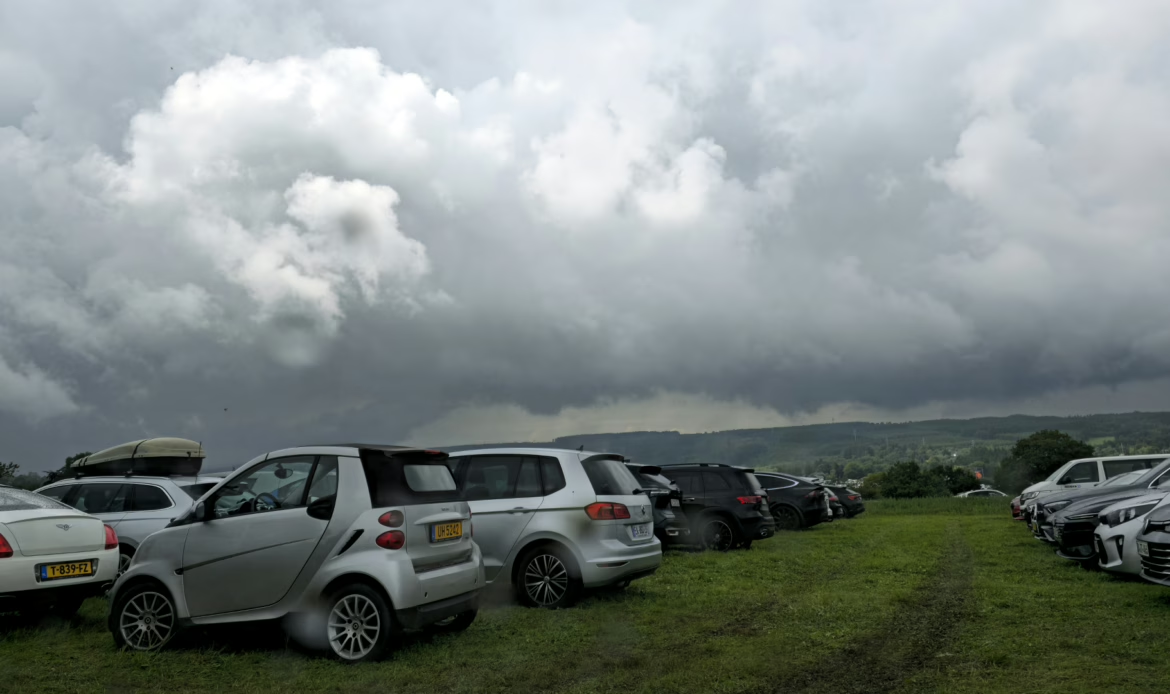
Even with the updated route and earlier slot secured, there was still plenty to coordinate once we arrived at Cologne: refuelling the aircraft, dropping the hire car, meeting the handling agent, clearing customs, and completing the final paperwork. In hindsight, we could have built in more margin, but I was relieved we’d left the circuit early. It allowed us to adapt on the fly and stay ahead of the weather instead of reacting to it.
With the northerly route now locked in and the aircraft safely pointed away from the storms, the tension finally eased. It had turned into a proper race against both the clock and Mother Nature, exactly what you expect from a Spa weekend. In the end, the TAFs confirmed we had a decent window if we left early, which is exactly why we pushed for the 1600z slot.
It was a slightly chaotic end to the trip, but we made it home safely. That’s what counts. Big lesson learned: always stay flexible with both the race weekend and the return flight when heading to the Ardennes. And yes… We’ll definitely be back.
N0127F120 NVO2D NVO M170 LNO L607 GILOM M624 NIK L179 TOBIX
ALTN Flight Plan via Brussels FIR & LTMA East – EDDK-EGSG
N0125F100 NVO2D NVO M170 PODAT DCT SOGRI DCT DENOX L607 KONAN DCT DET
ALTN Flight Plan via Brussels FIR – EDDK-EGSG
N0126F110 NVO2D NVO M170 PODAT DCT DOCAW DCT ROBAL/N0126F100 M617 CMB B3 RINTI L10 DVR L6 DET
ALTN Flight Plan via France – EDDK-EGSG
Weather Forecast –
Cologne started the day well with good weather, but showers and towering cumulus were forecast from late afternoon. The UK arrival TAFs were much kinder, generally good VFR conditions with light northerly winds, high cloud bases and only PROB30 TEMPO showers.
Over Spa-Francorchamps, however, the situation was far more serious. Strong thunderstorms and heavy rain showers were already developing in the Ardennes hills and tracking west, right across the direct Brussels routing. Radar and SIGMETs showed convective cells building exactly where we would have flown, making that route completely unusable. This was classic Spa weather, the kind that regularly disrupts both racing and flying in the region, forcing us to abandon the Grand Prix, then on the drive, commit instead to the longer, safer northerly route via Amsterdam to stay clear of the storms.
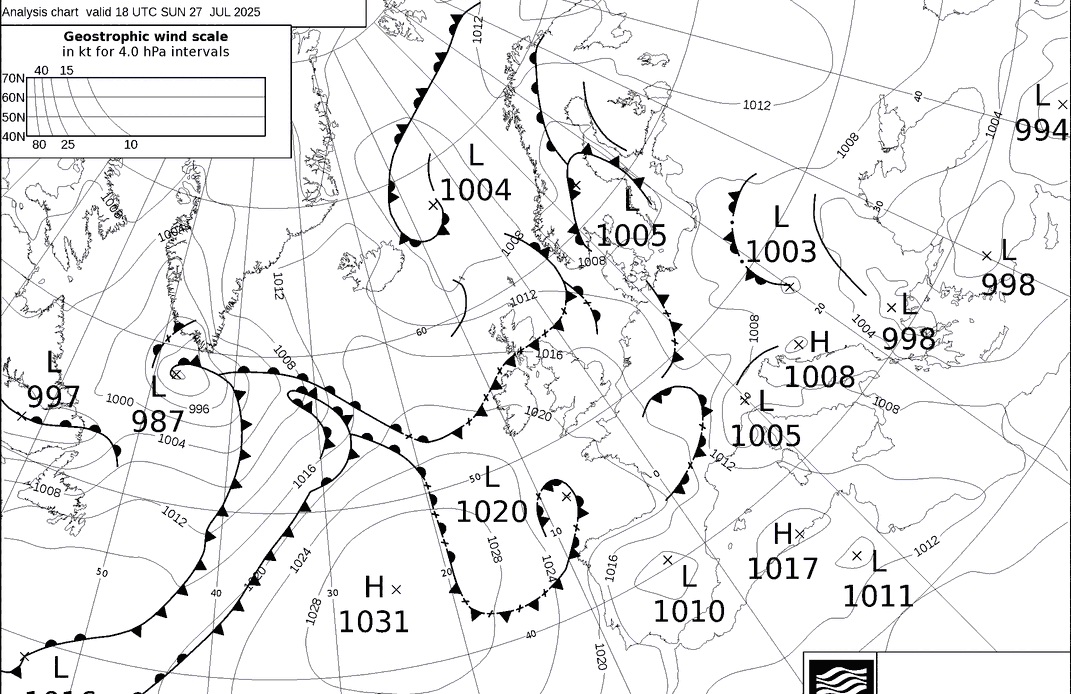
TAF EDDK 271100Z 2712/2818 33008KT 9999 SCT020 BKN035 TEMPO 2717/2723 32013KT SHRA SCT012 BKN025TCU BECMG 2800/2803 BKN011 PROB40 TEMPO 2804/2807 4000 BR BKN006 BECMG 2807/2810 BKN020 TEMPO 2816/2818 SHRA BKN020CB=
TAF for Cologne, Southend & London Stansted on 27th of July 2025
TAF EGMC 271402Z 2715/2724 33009KT 9999 SCT040 PROB30 TEMPO 2715/2720 6000 SHRA=
TAF EGSS 271059Z 2712/2818 35007KT 9999 SCT045 PROB30 TEMPO 2712/2720 6000 SHRA PROB30 TEMPO 2810/2816 7000 -SHRA=
Return Flight to UK –
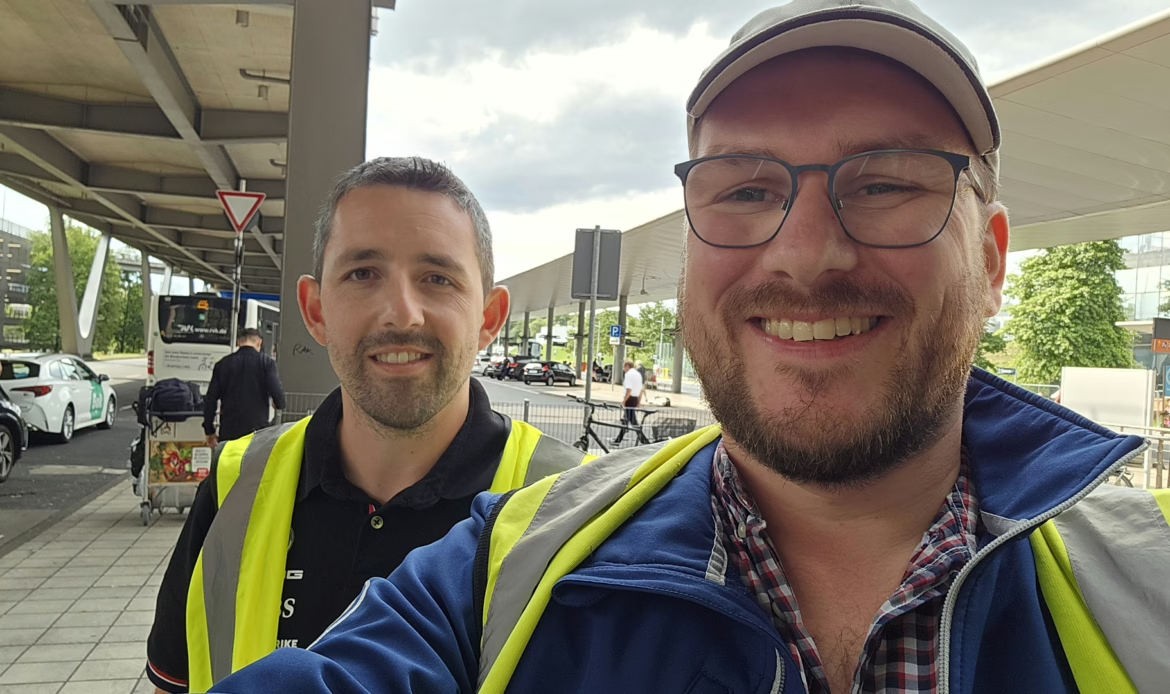
We pulled up at the terminal building to drop off the hire car, and to our relief, the paperwork was quick and painless. With time now ticking, we called the GAT (General Aviation Terminal) for pickup, which they had kindly offered, but it still took a frustrating 15–20 minutes for them to arrive. Once they did, I asked if they could call the Border Police to come and see us off so we could head straight to the aircraft. Unfortunately, they were busy elsewhere. The GAT refused to let us proceed without them, which was really annoying. All the time we’d gained by leaving the circuit early was slowly slipping away, sitting in the handling office.
We finally made it out to the aircraft, and thanks to Ryan’s help, we rattled through the pre-flight checks efficiently and climbed aboard. We were about 27 minutes later than ideal, but ATC didn’t seem bothered, and BACC sounded confident we’d still make our slot. Thankfully, the flow restrictions didn’t kick in until 1700z, so we still had a usable window.
We were assigned the WIPUR departure off Runway 24. It turned out to be perfect, it gave us an excellent climb gradient straight away, allowing us to gain height quickly close to the airfield, before pushing north. As soon as we got airborne, ATC were great and immediately approved a deviation to the east so we could climb above the weather before turning onto our planned route.
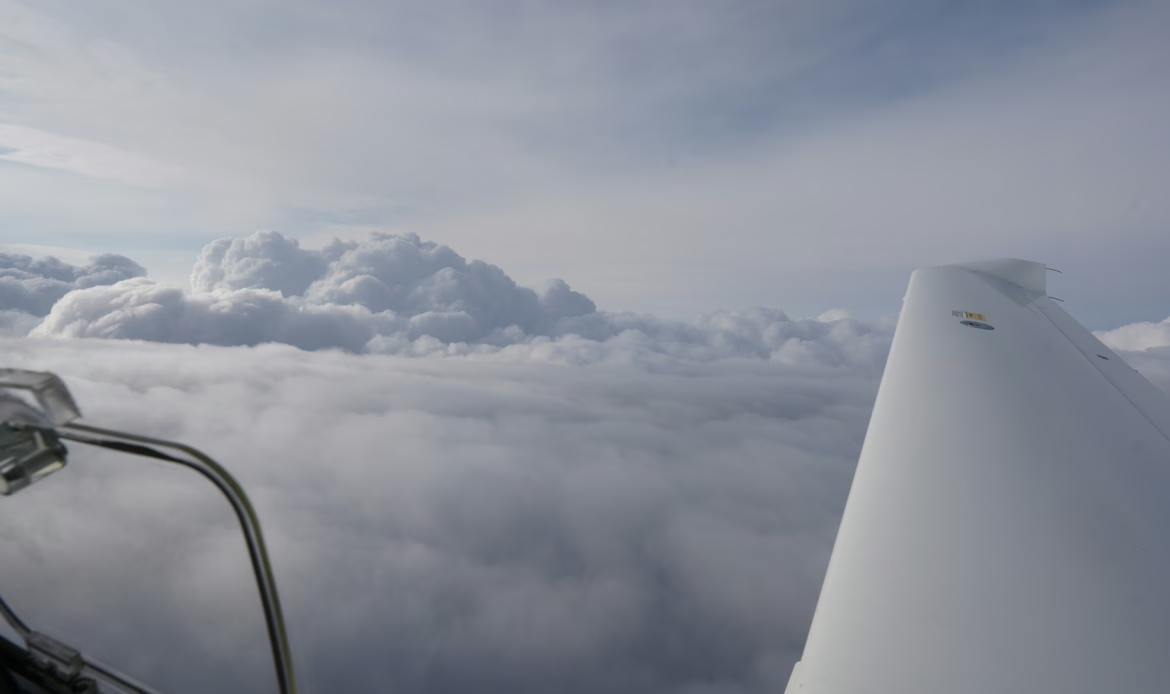
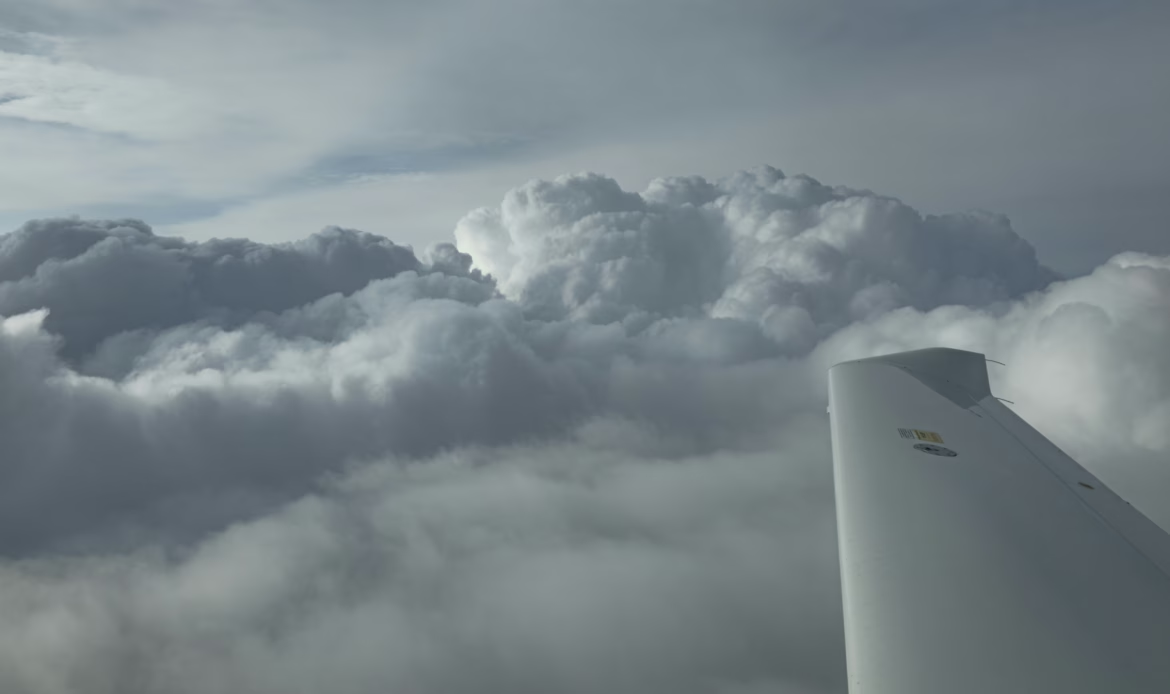
It was frustrating to see the embedded thunderstorms and heavy showers all around us as we climbed, exactly the stuff we had worked so hard to avoid. This was why we’d made that mad dash from Spa, pushing hard on the autobahn as the weather deteriorated exactly as forecast. I wasn’t entirely sure what we’d face once airborne, but the old light-aircraft tactic worked perfectly: climb hard, get on top as quickly as possible, then pick your way through the clearer gaps between the cells. It’s a proven method that works well in GA aircraft without onboard weather radar, especially when flying IFR in convective conditions.
After some back-and-forth with ATC about the best routing, we hit our first proper challenge. They initially wanted us to turn right, but a massive CB loomed ahead, likely topping out around FL160. Ryan and I both agreed there was no way we could outclimb it in time, so we requested (and received) a slight deviation to the west to skirt around it safely before re-joining our planned track.
We settled into the climb and levelled off at our cruise altitude of FL140. Shortly after, we were handed a new frequency that immediately offered a decent shortcut, exactly what we’d been hoping for. It shaved valuable minutes off our ETA and gave us a realistic chance of making it back for a late dinner (a well-earned kebab was definitely on the menu).
The route ahead cleared nicely for a while, with only some embedded weather visible in the distance near Amsterdam. This is where the Golze Weather Radar really earns its place in the cockpit; it overlays current satellite weather (only about 15 minutes delayed) and gives us a clear, big-picture view. We stayed cautious but optimistic. With around 2,000 ft of performance left before topping out and headwinds picking up, we decided not to push any higher.
Amsterdam ATC were excellent, relaxed, helpful, and basically told us “do what you need to avoid the weather.” I’m sure the airliners weren’t getting the same flexibility, but the ease with which the controller issued headings suggested they were vectoring everyone around the build-ups. We picked up some light chop as we passed through the area, but nothing dramatic.
As we continued, Amsterdam gave us more shortcuts, eventually routing us back onto our planned airway into the UK, the same route I’d flown recently with Vanessa on a return from Amsterdam. By now, the light was starting to fade, and weather returns were building again for our arrival in the London area. Amsterdam kept us high as long as possible, which was welcome, before handing us over to London Control.
London was equally accommodating and kept us high until we were ready to begin descent. They cleared us down to FL80 when able for Thames Radar. This arrival corridor is always busy; you’re descending right underneath the Heathrow arrivals (often 10,000 ft above you) while Gatwick traffic and other London airports keep the airspace lively.
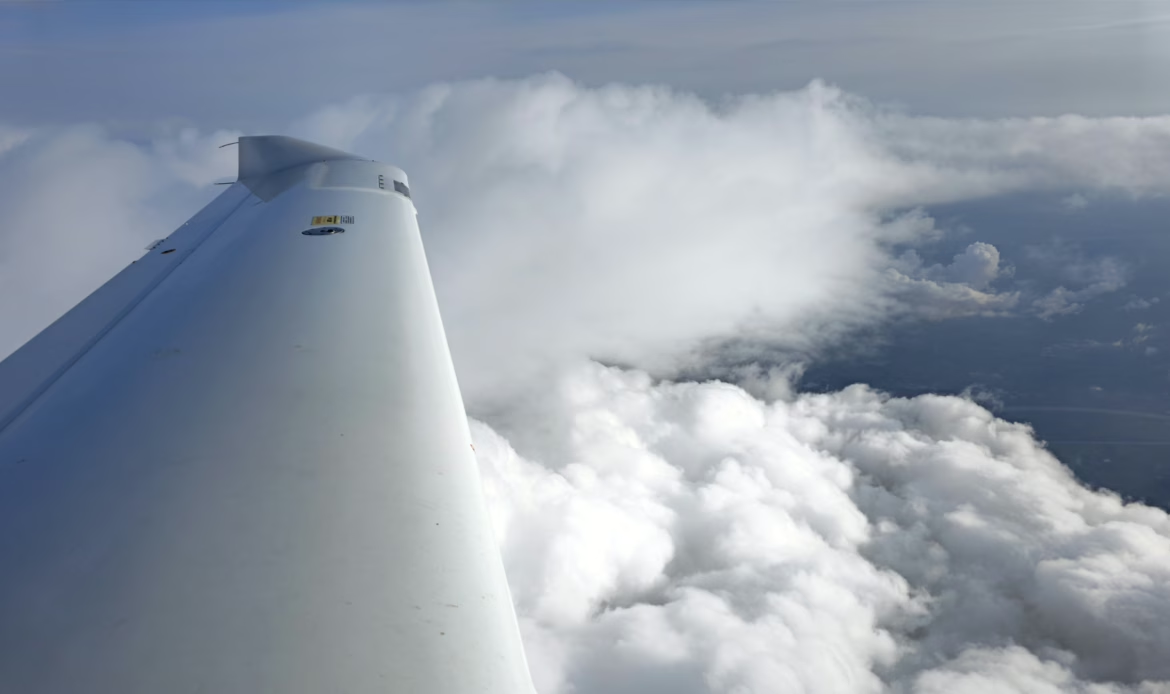
I took the descent nice and slowly at first. The latest Golze update showed some returns ahead, and it was looking quite murky, so I didn’t want to rush. London eventually asked for a slightly quicker descent, and we were soon handed over to Thames Director, who continued guiding us down through the layers toward Stapleford.
On the way down, we spotted something suspicious ahead and, unsure whether it was a high-topped cell, elected to descend around it rather than take any chances. Southend Director kindly gave us the headings we needed, and once we were visual and able to remain VMC, we turned back on course to avoid the weather.
With less than 8 miles to run, I free-called Stapleford Radio, surprised they were still open this late. They were using Runway 21L (I’d expected 03L), so we joined a nice left base for a smooth late arrival back into the UK. Border Force had a slight mix-up; they’d shown up at our original (later) estimated time and missed us, so they had to come out after we’d already landed. Once we’d cleared everything, we loaded the car and headed straight for a kebab shop near Stapleford. It was the perfect end to a very long day.
Ryan still had another five-hour drive ahead of him to get home, while I was back to reality and straight back to work the next morning. What a weekend. Spa had thrown everything at us: amazing racing (while it lasted), classic Ardennes weather, and a proper IFR adventure on the way home.
ATC Flight plan and route flown –
N0129F140 WYP1N WYP P64 TENLI L980 IBNOS/N0129F100 L980 LAM/N0116F100
Filed ATC flight plan for EDDK-EGSG
Conclusion –
In conclusion, a Formula 1 weekend at Spa is definitely possible, even in a small aircraft on a tight three-day schedule. We made it work and created some brilliant memories, but it was a proper adventure rather than a relaxed trip. If I did it again, I would build in far more flexibility to actually enjoy the weekend instead of constantly racing the clock, the traffic, and the weather.
Spa-Francorchamps is challenging to do properly. You’re at the mercy of the unpredictable Ardennes weather, long drives in a hire car, and heavy circuit traffic. It’s demanding, but that’s also what makes it special. Seeing the cars live at Eau Rouge, soaking up the atmosphere, and then flying home while dodging thunderstorms is an experience you won’t forget.
Overall, it’s an adventure well worth chasing, especially if your aircraft can carry a few people to share the costs. With a bit more time or a faster machine, it would be even better. Spa, we’ll be back.
Cologne Airport Costs –
The final bill was split into the following;
BACC Fees
- Terminal Charge €60.00
- Handling Charge €120.00
Sub-Total: €180.00
Cologne Airport Fees
- Landing & Starting Fees (1.2 t MTOW) – €5.50
- Noise Fees €20.00
- Parking Fees €114.64
- Position Fees €26.60
- Landing Fees variable €0.28
- PRM fees €0.95
- Security fees €1.80
- Government Security Fees €14.00
Sub-Total: €169.77
Total Costs incl VAT: €430.23 incl VAT
Jet A1 Uplift: €129.94 EUR (£112.40 (50 Litres) @£2.25 litre
Total Costs Cologne Airport: £488.64
F1& Cologne Costs –
Food, Drink & Leisure Costs: £91.41 each
Car Rental: £329
Fuel for Car Rental: £95.07
F1 Parking: £75
F1 Tickets Spa Grand Prix: £938.50
Accommodation Costs: £312.28 for 3 nights.
Sub-Total: £1850.26
Flying Costs –
Aircraft Charges: £1105.68 (@ £204 per hour (5 hours 25 minutes flown))
Airport Fees: £376.24(As above)
Oxygen Refill – None for this trip
DFS – Nav Charges Cologne – £33.46 (Arrived August 25′)
JetA1: £112.40
(Wet Rate drawback) Credited £47.25 (-) (GZANY) (50 litres at EGSG rate) £0.95
Total Cost –
Total Costs (Non-Aviation): £1850.26
Total Costs (Aviation): £1627.78
Total Costs (All): £3478.04
Version 1.0 – Last Updated 28/04/2026
Aircraft –
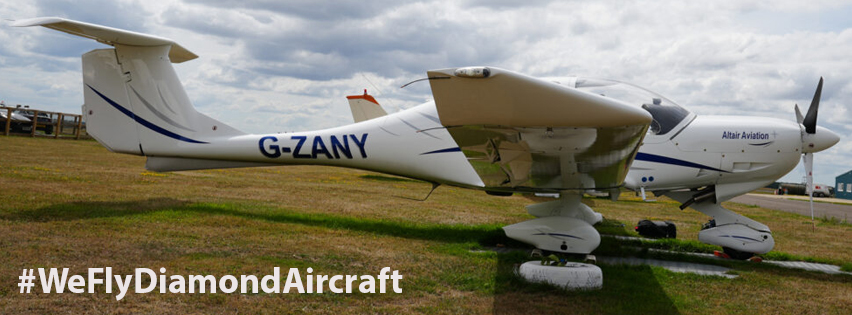
The aircraft is a DA40 TDI, which uses a Thielert “Centurion” 135 hp (101 kW) diesel engine and burns diesel or jet fuel. It has a constant-speed propeller and FADEC (single lever) engine control. G-ZANY is based at Stapleford Aerodrome, Essex, UK and was delivered new in 2003.
Read more about the aircraft on the dedicated page
Supporting the YouTube Channel –
Support the YouTube Channel –
Welcome to The FLYING VLOG…
I am a current PPL(A), SEP (LAND), IR(A) SE/SP PBN, IR(R) & Night holder. Flying around the world, exploring its hidden treasures. Taking pictures and vlogging the journey, I hope I can provide you with an oversight of my progression as I develop my skillset and airmanship in exclusive videos on my YouTube channel.
Now flying IFR in the Airways of Europe & beyond. Bringing you an exclusive niche on YouTube, flying in the same skies as commercial airliners.